





TL;DR
- WhatsApp marketing in 2026 has evolved from a messaging channel into a full-funnel revenue engine driving acquisition, engagement, and conversions in a single conversation.
- To succeed, brands must leverage key features like AI-powered automation, WhatsApp Flows for lead capture, in-chat commerce, and real-time messaging via Direct Send APIs.
- The best WhatsApp marketing tools combine omnichannel orchestration, personalization at scale, and conversational journeys to reduce drop-offs and increase conversions.
- Choosing the right platform depends on your use case, scale, and AI maturity, but the winners will be brands that treat WhatsApp as a conversion engine, not just a campaign tool.
Marketing has officially moved from inboxes to conversations.
In 2026, customers don’t want to fill out forms, wait for emails, or jump between apps. They expect brands to meet them where they already are, and increasingly, that place is WhatsApp.
But here’s the real shift: WhatsApp is no longer just a messaging channel. It has evolved into a full-funnel marketing, sales, and retention engine, where discovery, engagement, conversion, and support all happen in a single thread.
This evolution has created a new category of tools. Traditional marketing automation platforms are struggling to adapt, while a new generation of AI-powered, conversational-first platforms is redefining how brands drive revenue.
In this guide, we break down the best WhatsApp marketing tools in 2026, the features that actually matter, and how to choose the right platform for your business.
What are WhatsApp Marketing Tools?
These are powerful tools that let you send bulk messages to your customers on WhatsApp effortlessly.
With this tool, you can run your entire WhatsApp marketing strategy without the need to save their contact details individually.
It’s like having a secret weapon that helps you reach and engage with your customers on a whole new level. Say goodbye to manual efforts.
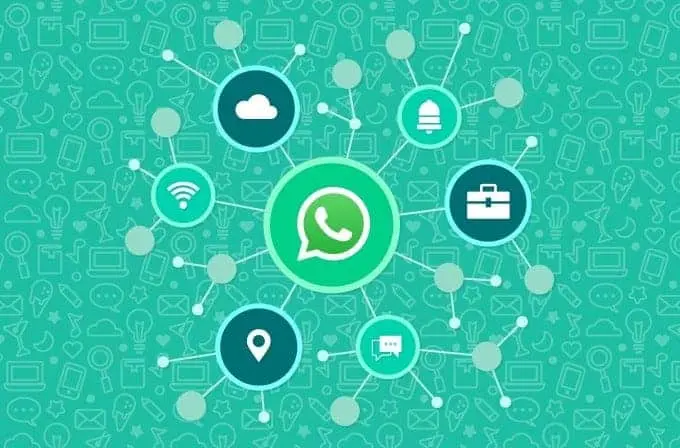
You can create and send captivating messages filled with text, images, documents, and videos. It’s like having a magic wand that brings your marketing messages to life!
And the best part?
You can automate these messages, ensuring they are delivered at just the right time to keep your customers engaged and excited.
Brands leveraging these WhatsApp marketing tools can make a lasting impression on their prospects. They’re using these tools to seamlessly attract a multitude of potential customers, engage with them directly on WhatsApp, showcase product catalogs, process orders, and even provide top-notch customer service.
It’s all about optimizing your sales strategies to maximize profits and take your business to new heights.
The Benefits of Using WhatsApp Marketing Tools
WhatsApp marketing software is your ultimate ally when it comes to building customer loyalty and connecting with potential consumers.
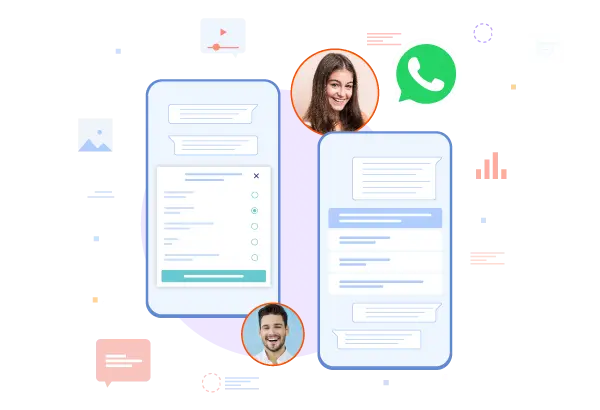
It lets you easily send bulk WhatsApp messages, share captivating images and videos, and even express yourself with unlimited characters.
Remember, sometimes a picture or video can convey a message better than a thousand words!
1. Boosted customer engagement
Consumer engagement has evolved as businesses get more innovative in attracting and retaining customers.
It used to be enough to offer great products or services, but now we know that engagement plays a crucial role in influencing purchase decisions.
Data and analytics show us that actively engaging with customers is key to business success.
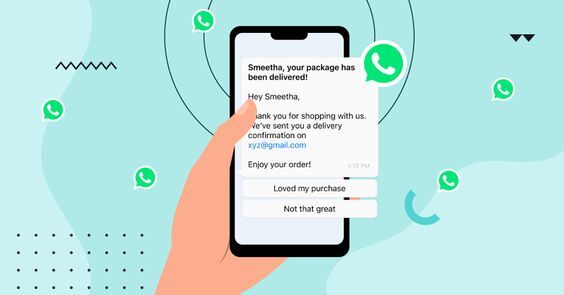
WhatsApp marketing software makes it easier to organize and automate messages and inquiries, ensuring faster response times.
Plus, you can spice up your communication by using different media formats that catch your customers’ attention.
From text messages to videos, images, PDFs, GIFs, and even voice recordings, there are plenty of options to engage your audience in unique and diverse ways.
2. Better brand positioning
In today’s competitive market, simply being “different” from your competitors is not enough. Brand positioning plays a crucial role in setting your company apart and allowing it to stand out.
It enables your brand to communicate its unique value, increase brand awareness, and support pricing strategies, all of which directly impact your bottom line.
WhatsApp marketing software offers a powerful tool to enhance your brand positioning through personalized messaging.
It enables businesses to send customized promotions and updates directly to their customers.
With features like push notifications, group chats, and broadcast lists, WhatsApp Business empowers you to foster stronger customer loyalty and engagement.
3. Build internal teams
To supercharge your communication, why not create WhatsApp groups to discuss everything from new hires and job transitions to work deadlines and meeting schedules?
With this app, everyone in your team, from managers to employees, can easily share information and stay connected.
These WhatsApp groups are perfect for brainstorming, problem-solving, and fostering a strong team spirit, ultimately driving significant growth for your company.
With WhatsApp, you can easily connect and communicate with your team members in a more effective way.
Whether it’s a quick update on a specific project or a motivational message to keep everyone in high spirits, WhatsApp makes it simple to stay connected.
Engaging with your team members not only fosters a sense of camaraderie but also allows for swift problem-solving and finding the best solutions together.
What’s driving this shift further in 2026 is the rise of new WhatsApp capabilities:
- WhatsApp Flows for in-chat forms and lead capture
- In-chat payments for seamless transactions
- Direct Send APIs for instant, non-template messaging
- Carousel messages for rich product discovery
- WhatsApp Calling for high-intent interactions
The result? WhatsApp is no longer a support channel; it’s your highest-converting revenue channel.
Top WhatsApp Marketing Tools in 2026
1) Twilio
Twilio provides global communication APIs, including WhatsApp.
It offers:
- High scalability
- Custom integrations
- Reliable delivery infrastructure
But like Gupshup, it’s not marketer-friendly out of the box.
Best for: Tech-heavy organizations
2) Netcore
Netcore stands out as a complete, AI-first WhatsApp marketing platform designed for enterprise-scale engagement.
It goes beyond messaging to enable:
- WhatsApp Flows + chatbot orchestration
- End-to-end commerce journeys inside chat
- AI-driven personalization (including carousel recommendations)
- Omnichannel orchestration powered by a native CDP
Unlike traditional tools, Netcore leverages agentic AI to automate decision-making—triggering the right message, at the right time, on the right channel.
Best for: Enterprise B2C brands (ecommerce, BFSI, edtech)
3) Interakt
Interakt combines WhatsApp messaging with lightweight CRM features.
It offers:
- Contact management
- Catalog sharing
- Payment integrations
It’s particularly popular among D2C brands in India.
Best for: Small ecommerce businesses.
4) WATI
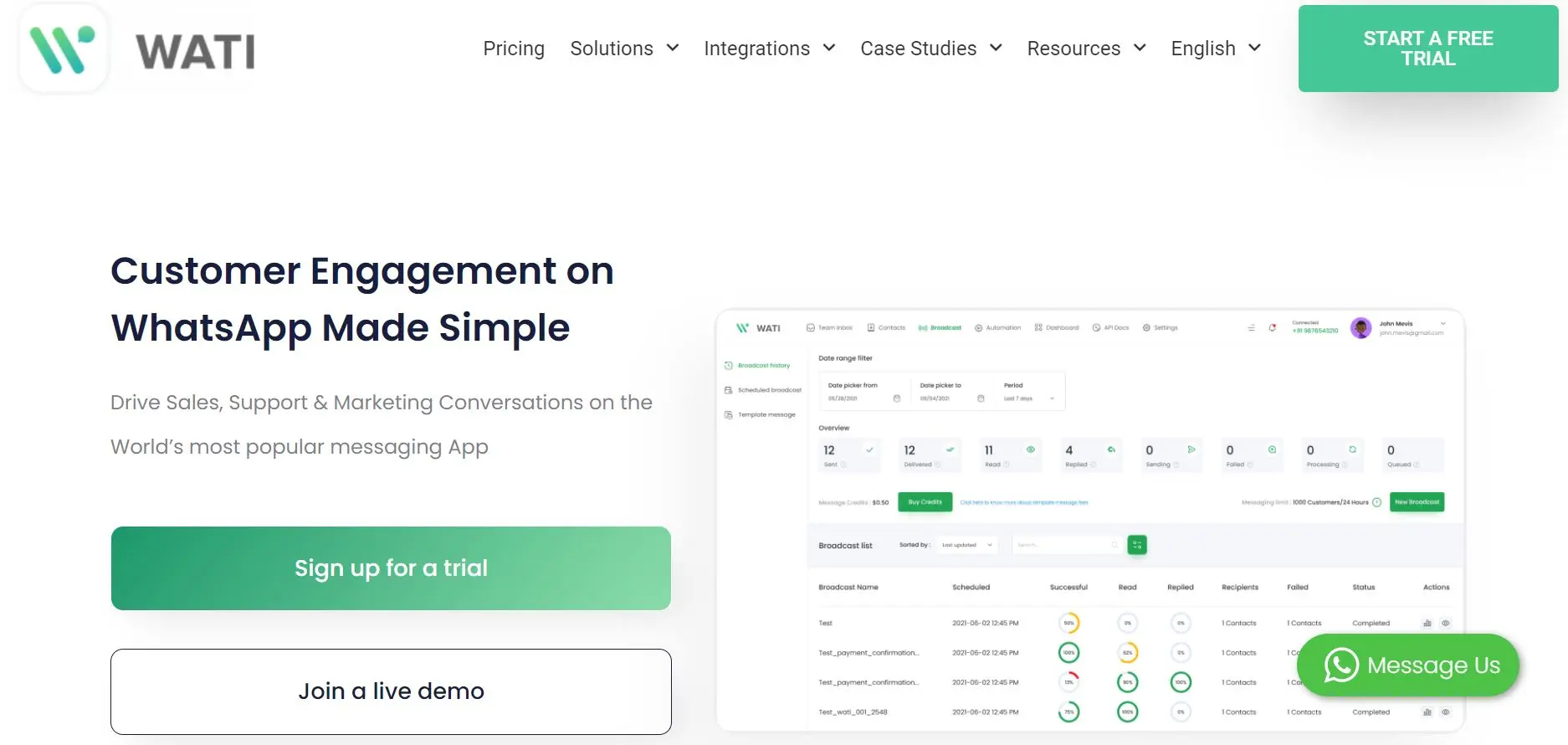
WATI is a popular entry-level platform focused on:
- Shared team inbox
- Basic automation
- Broadcast campaigns
It’s easy to set up and works well for small teams, though it lacks deep AI and personalization capabilities.
Best for: SMBs getting started with WhatsApp marketing.
5) Zoho Marketing Automation
Part of the broader Zoho ecosystem, Zoho Marketing Automation integrates WhatsApp into its CRM-first marketing stack.
Pros:
- Deep integration with Zoho CRM and other Zoho apps
- Solid workflow automation and lead nurturing
- Cost-effective for existing Zoho users
Cons:
- WhatsApp capabilities are not as advanced or AI-driven
- UI and scalability can feel limiting for enterprise use
Best for: Businesses already using Zoho looking to extend automation into WhatsApp without adding new tools.
6) Zoko
Zoko is built specifically for Shopify merchants.
It focuses on:
- WhatsApp commerce
- Customer support
- Order management
Best for: Ecommerce brands on Shopify.
7) AiSensy
AiSensy is a fast-growing platform in India offering:
- Campaign automation
- No-code chatbot builders
- Affordable pricing
However, it lacks advanced AI capabilities.
Best for: SMBs and startups.
8) Brevo
Brevo extends its multichannel marketing suite to include WhatsApp, making it a cost-effective entry point into conversational marketing.
Pros:
- Unified platform for Email, SMS, WhatsApp, and CRM
- Affordable, usage-based pricing
- Strong transactional messaging infrastructure
Cons:
- Limited AI and advanced personalization capabilities
- Basic automation compared to enterprise tools
Best for: SMBs looking for budget-friendly omnichannel marketing with WhatsApp support.
9) Yellow.ai
Yellow.ai is an AI-first conversational platform.
It specializes in:
- Advanced chatbots
- Voice + chat automation
- Enterprise-grade deployments
Best for: Large enterprises prioritizing automation.
10. DelightChat
DelightChat focuses on:
- Customer support
- Shared inbox
- Simple automation
It’s a lightweight solution for managing conversations.
Best for: Support-focused teams
How to Choose the Right WhatsApp Marketing Tool
Not all WhatsApp tools are built the same. Many still operate like bulk messaging platforms. The best ones function as intelligent, real-time engagement systems.
Here’s what actually matters:
1. AI-Powered Automation & Chatbots
Basic rule-based bots are obsolete. Modern platforms use AI to:
- Understand user intent
- Recommend next-best actions
- Personalize conversations dynamically
This is the difference between scripted replies and adaptive conversations that convert.
2. Omnichannel Orchestration
Customers don’t live on one channel. The best tools unify:
- SMS
- Push notifications
- RCS
This ensures conversations continue seamlessly across touchpoints, not in silos.
3. WhatsApp Flows (Native Lead Capture)
Forms are friction. WhatsApp Flows remove it.
Instead of redirecting users to landing pages, you can:
- Capture data directly inside WhatsApp
- Guide users step-by-step
- Sync responses instantly with CRM
In real-world deployments, this has led to:
- 2.5X increase in leads
- 50% reduction in cost per lead
4. Commerce Capabilities (In-Chat Transactions)
The biggest shift in 2026: buying happens inside chat.
Leading tools enable:
- Product browsing
- Decision-making
- Payment completion
All within WhatsApp, no redirects, no drop-offs.
5. Personalization at Scale
Static campaigns don’t work anymore.
Modern tools use behavioral data to:
- Send product recommendations via carousels
- Trigger messages based on intent
- Adapt content in real time
Brands using carousel-based personalization have seen:
- 100% higher click rates
- 70% increase in conversions
- 1.7X revenue uplift
6. Instant Messaging via Direct Send APIs
One of the biggest bottlenecks in WhatsApp marketing has been template approvals.
Direct Send APIs eliminate that.
They allow:
- Instant message delivery
- Dynamic, contextual communication
- Faster campaign execution
This shifts WhatsApp from scheduled messaging to real-time engagement.
7. Advanced Engagement Features
The newest capabilities are pushing WhatsApp beyond messaging:
- WhatsApp Calling for high-intent users
- Interactive buttons and quick replies
- Location sharing and guided navigation
These features transform WhatsApp into a full-service engagement channel.
Final Take
WhatsApp marketing in 2026 is not about sending messages; it’s about closing the gap between intent and conversion. Want to know how you can use WhatsApp for real business impact? Talk to us.
The best platforms are no longer tools. They are decision engines that:
- Capture intent instantly
- Guide users conversationally
- Convert within the same interaction
Brands that adopt this shift will see:
- Higher conversions
- Lower acquisition costs
- Stronger customer relationships
The rest will keep sending campaigns and wondering why they don’t convert.


