




TL;DR
- Choosing an omnichannel marketing automation platform for B2C is a growth decision, not just a tech upgrade
- Legacy marketing automation is channel-centric and siloed; omnichannel is customer-centric and unified
- The right platform should enable real-time customer segmentation and individual behavior tracking
- Predictive analytics replaces guesswork, helping anticipate customer needs and next actions.
- Don’t settle for post-campaign reports, optimize campaigns in real time while the opportunity still exists.
- If your platform can’t unify data, act in real time, and drive measurable outcomes, it’s just automation, not true omnichannel.
Choosing the right omnichannel marketing automation platform for B2C isn’t about ticking off supported channels anymore; it’s about evaluating capabilities that truly align with customer journeys, scale with your growth, and deliver measurable ROI. This becomes even more critical for ecommerce brands where personalization and real-time engagement directly impact revenue. In fact, brands leveraging omnichannel automation see up to 250% higher engagement compared to single-channel approaches. If your platform cannot unify data into a single source of truth and autonomously drive outcomes, it risks becoming nothing more than an expensive messaging cannon. Modern growth leaders need intelligent systems that don’t just execute campaigns, but continuously optimize for revenue and hold themselves accountable to real business impact. We will evaluate how to choose an omnichannel marketing automation platform in this article.
What is Different About Omnichannel Marketing Automation for B2C?
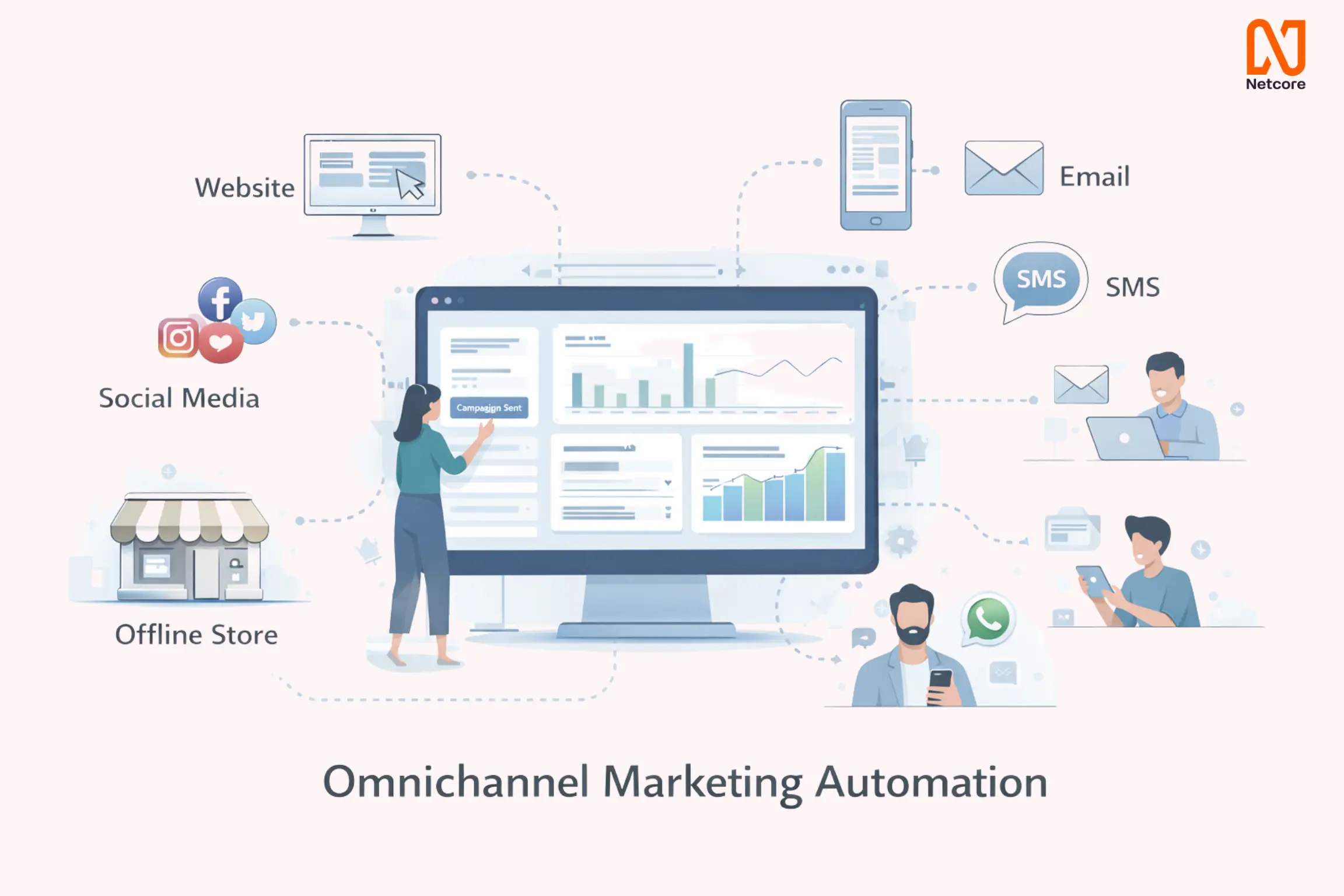
Multichannel marketing uses disconnected tools to blast messages across channels, creating fragmented customer experiences and untraceable ROI. True B2C omnichannel marketing automation unifies all customer data into a single platform, orchestrating a seamless, autonomous journey across email, SMS, push, and WhatsApp that dynamically adapts to individual user behavior.
For years, B2C brands purchased marketing software by counting channels. If a vendor supported email, SMS, and mobile push notifications, it was stamped as “omnichannel” and pushed through procurement. Generic marketing automation and omnichannel marketing automation may sound similar, but they operate at very different levels of sophistication and impact.
Generic marketing automation is typically channel-centric. It focuses on executing campaigns within individual channels like email, SMS, or push notifications. While it can automate workflows and trigger messages, it often works in silos, meaning customer data, engagement signals, and performance insights are fragmented across tools. The result? Disjointed customer experiences, delayed responses, and a heavy reliance on manual optimization or guesswork. Read how to choose a B2C marketing automation platform.
Omnichannel marketing automation, on the other hand, is built around the customer, not the channel. It unifies data from every touchpoint into a single source of truth, allowing you to orchestrate seamless, real-time experiences across channels. Instead of running separate campaigns, you design continuous customer journeys that adapt dynamically based on behavior, context, and intent. This means the platform doesn’t just automate messages; it decides what to send, when, and where to maximize engagement and revenue. Check out what what’s difference between omnichannel Vs multichannel marketing.
| Capability | Legacy Multichannel | True Omnichannel |
|---|---|---|
| Data Architecture | Siloed databases per channel | Unified real-time customer profile |
| Journey Logic | Rigid, rules-based flows | Dynamic, AI-orchestrated paths |
| Performance Metric | Open and click rates | Revenue and Customer Acquisition Cost |
| Customer Experience | Repetitive messaging | Contextual, 1:1 interactions |
How to Evaluate B2C Omnichannel Marketing Automation Platforms?
Navigating the evaluation phase at an enterprise level requires far more than comparing feature lists or sitting through polished sales demos. At scale, the stakes are higher, complex customer journeys, multiple data sources, global operations, and stricter ROI accountability demand a far more rigorous approach.
That’s why you need a structured evaluation methodology. It forces vendors to go beyond generic promises and demonstrate how their platform will perform within your specific ecosystem, integrating with existing tech stacks, handling high data volumes, and supporting real-time, personalized engagement across markets.
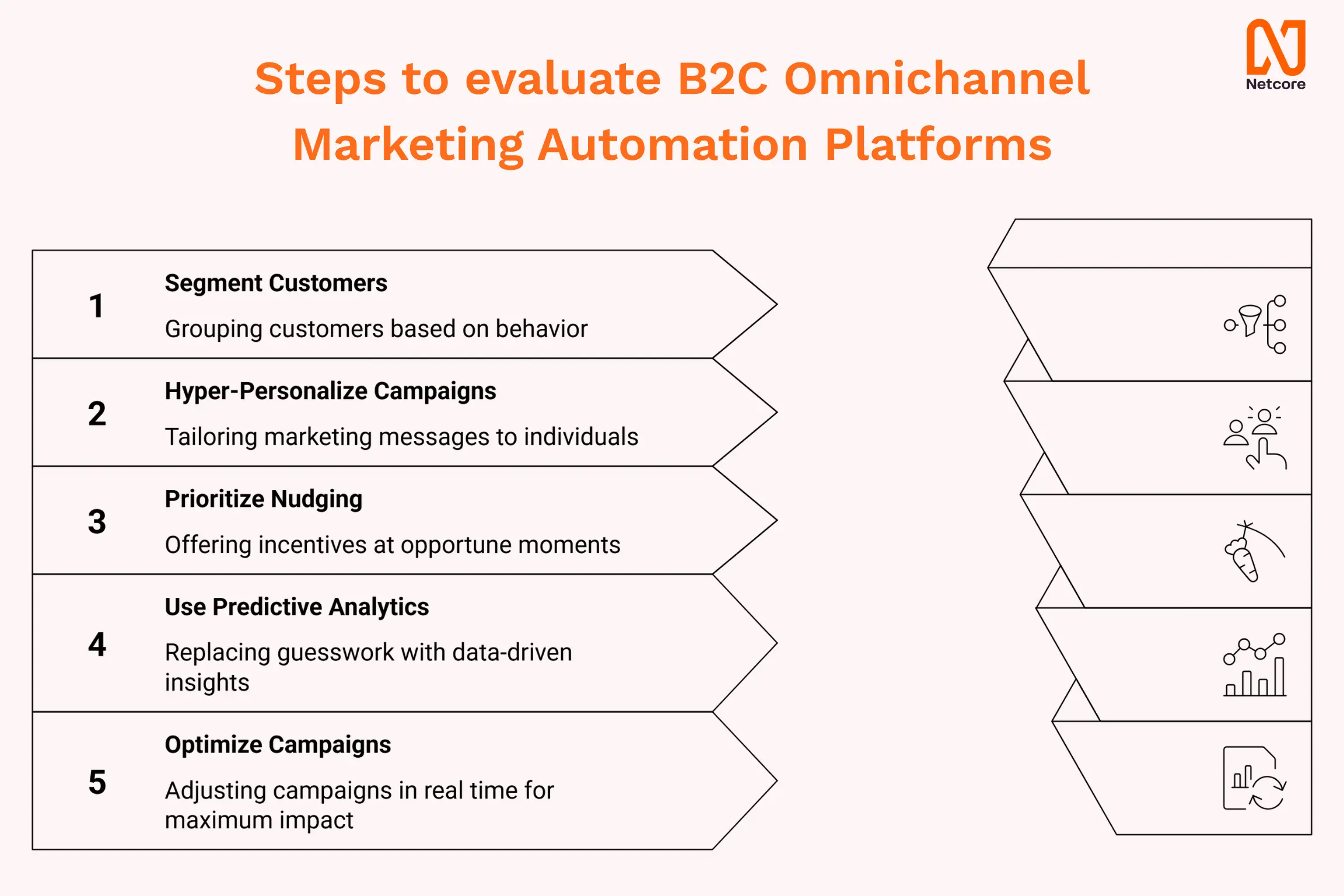
We’ve designed this 5-step framework to evaluate how to choose omnichannel marketing automation for B2C.
1. Segment Customers & Analyze Individual Behavior
At an enterprise scale, your platform must go beyond basic segmentation. It should enable deep, real-time customer segmentation and granular behavior analysis at an individual level, capturing every interaction across channels.
The evaluation criteria: can the platform continuously evolve segments based on live behavior and give you a true, unified view of each customer?
2. Hyper-Personalize Omnichannel Marketing Campaigns
Personalization isn’t a feature, it’s the foundation. The platform should allow you to hyper-personalize campaigns across every touchpoint, including content, timing, channel, and recommendations.
The key here is consistency: can it deliver contextual, individualized experiences across the entire journey, not just within isolated campaigns?
3. Prioritize Nudging with Offers at the Right Moment
Enterprise growth depends on timing as much as messaging. Evaluate whether the platform can intelligently prioritize nudges, offers, reminders, incentives; when they are most relevant in the customer journey.
This means acting on real-time intent signals, not predefined schedules. The question to ask: can it intervene at high-impact moments that drive conversion?
4. Use Predictive Analytics to Replace Guesswork
Your platform should not rely solely on rule-based automation. It must leverage predictive analytics to anticipate customer needs, preferences, and future actions.
Whether it’s predicting churn, next purchase, or optimal channel, the goal is to move from reactive marketing to proactive, insight-driven decision-making.
5. Optimize Campaigns in Real Time, Before It’s Too Late
Most platforms analyze performance after campaigns end, when the opportunity is already lost. That’s a gap.
You need the ability to optimize campaigns in real time, while the “golden window” of engagement is still open, not during weekly postmortems. This includes live performance tracking, automated adjustments, and rapid experimentation to maximize outcomes while it still matters.
If a platform cannot deliver on these five pillars, it’s not truly omnichannel, it’s just automation. The right system should help you understand customers deeply, act at the right moment, and continuously optimize for revenue in real time.
What are the 10 must-ask questions for your B2C martech RFP?
To separate the unified platforms from the legacy multichannel vendors, embed these 10 questions directly into your Request for Proposal (RFP) scorecard:
- Is your Customer Data Platform (CDP) natively built into the execution engine, or is it an acquired integration?
- How long does it take for an in-app behavioral event to trigger an email response?
- Do you charge separately for data ingestion, storage, and message volume?
- Can your AI autonomously alter a user’s journey based on predictive churn scoring, without manual rules?
- Show us exactly how your dashboard attributes incremental revenue to a specific cross-channel campaign.
- What specific resources (engineering, marketing ops) will our team need to supply to operate your platform daily?
- Do you support native channel execution for Email, SMS, WhatsApp, and App Push, or do you white-label third-party APIs?
- How do you handle anonymous user data, and how seamlessly is it merged when a user authenticates?
- Can you provide a case study demonstrating a 90-day time-to-value for a brand of our exact size?
- How does your pricing model change as our active user base doubles?
Why Choose Netcore Cloud?
At Netcore, we deliver your results, not just your messages. We engineered our platform for brands that are tired of juggling between platforms still not getting results and ready to hold their technology accountable for revenue.
We rejected the fragmented approach of bolting channels together. Instead, we built a natively unified platform where our CDP, omnichannel execution, and agentic marketing live in a single environment. This guarantees zero data latency and absolute channel seamlessness.
Final Take
Choosing the right omnichannel marketing automation platform for B2C isn’t just a tooling decision, it’s a growth lever that determines how effectively you engage, convert, and retain customers at scale. The real difference lies in whether your platform can go beyond execution to actually understand individual behavior, unify data into a single view, and act in real time. Capabilities like deep segmentation, hyper-personalization, contextual nudging, predictive intelligence, and in-flight optimization aren’t “nice to have”, they’re what separate revenue-driving systems from basic automation tools.
In today’s high-intent, fast paced world, especially in ecommerce, waiting for post-campaign reports or relying on guesswork is a direct path to wasted revenue. The brands that win are those that make smarter, faster decisions at every touchpoint and optimize while it still matters. If your platform can’t do that, it’s already falling behind. The right omnichannel system doesn’t just run campaigns, it continuously learns, adapts, and ensures you capture every high-impact moment when it counts. Book demo and see that for yourself now.