





Most brands are overspending on acquisition while underinvesting in retention, even though customers clearly expect personalized, connected experiences. This blog breaks down why that imbalance is a structural growth problem and how shifting from paid-media dependence to intent-led, agentic retention is the only sustainable way to protect margins and grow customer lifetime value.
For the last decade, marketing has told itself a pretty comforting story.
Growth comes from acquisition.
Scale comes from paid media.
Retention will sort itself out later.
But has it?
Look at the customers’ behaviour today. They are not short on options. They are short on patience. HubSpot’s 2025 data shows that 69% of consumers expect personalised, consistent experiences across every channel. And when brands fail to deliver on that promise, customers don’t wait around. 65% switch brands because their preference data never turns into a better experience, according to Capgemini.
So here’s the uncomfortable question:
If customers are clearly telling us they want relevance and continuity, why are most marketing budgets still designed for interruption and reacquisition?
Nearly 90% of marketing spend goes into acquisition, while less than 10% is invested in retention. And we all know the math by now. Acquiring a new customer costs five to ten times more than keeping an existing one. Yet brands continue to spend nine times more on the most expensive lever, quarter after quarter.
Paid media has never been more sophisticated. Targeting is sharper. Creatives are smarter. Dashboards are fuller than ever. And still, growth feels fragile. Why does it take more budget every quarter just to stay flat? Why do margins keep tightening even when campaigns “perform”?
At some point, you have to ask: Are we actually growing, or are we just paying to keep what we already have?
The uncomfortable truth is this: retention has outgrown human-led execution. The complexity of modern customer behavior now exceeds what traditional marketing automation—and even the best teams—can realistically manage.
Let’s break down the core challenges that make retaining customers so difficult today, and why agentic marketing is emerging as the only system capable of solving them at scale.
Challenge #1: Lack of Personalized Customer Experience
Personalization is no longer a differentiator. It is a baseline expectation.
According to HubSpot’s 2025 research, 69% of consumers expect personalized and consistent experiences across channels. Yet most brands still rely on shallow personalization tactics: first-name tokens, static segments, and generic product recommendations.
From the customer’s perspective, the experience feels impersonal. From the marketer’s perspective, it feels unavoidable.
Why does this keep happening?
Traditional marketing automation was designed to scale execution, not intelligence. Segments are built manually. Rules are defined upfront. Journeys are locked in place. By the time a campaign launches, customer intent may already have shifted.
Human teams simply cannot personalize every interaction for every individual in real time. The data moves too fast. Know the difference between Tradional Vs Agentic Marketing.
How to solve this with Agentic Marketing?
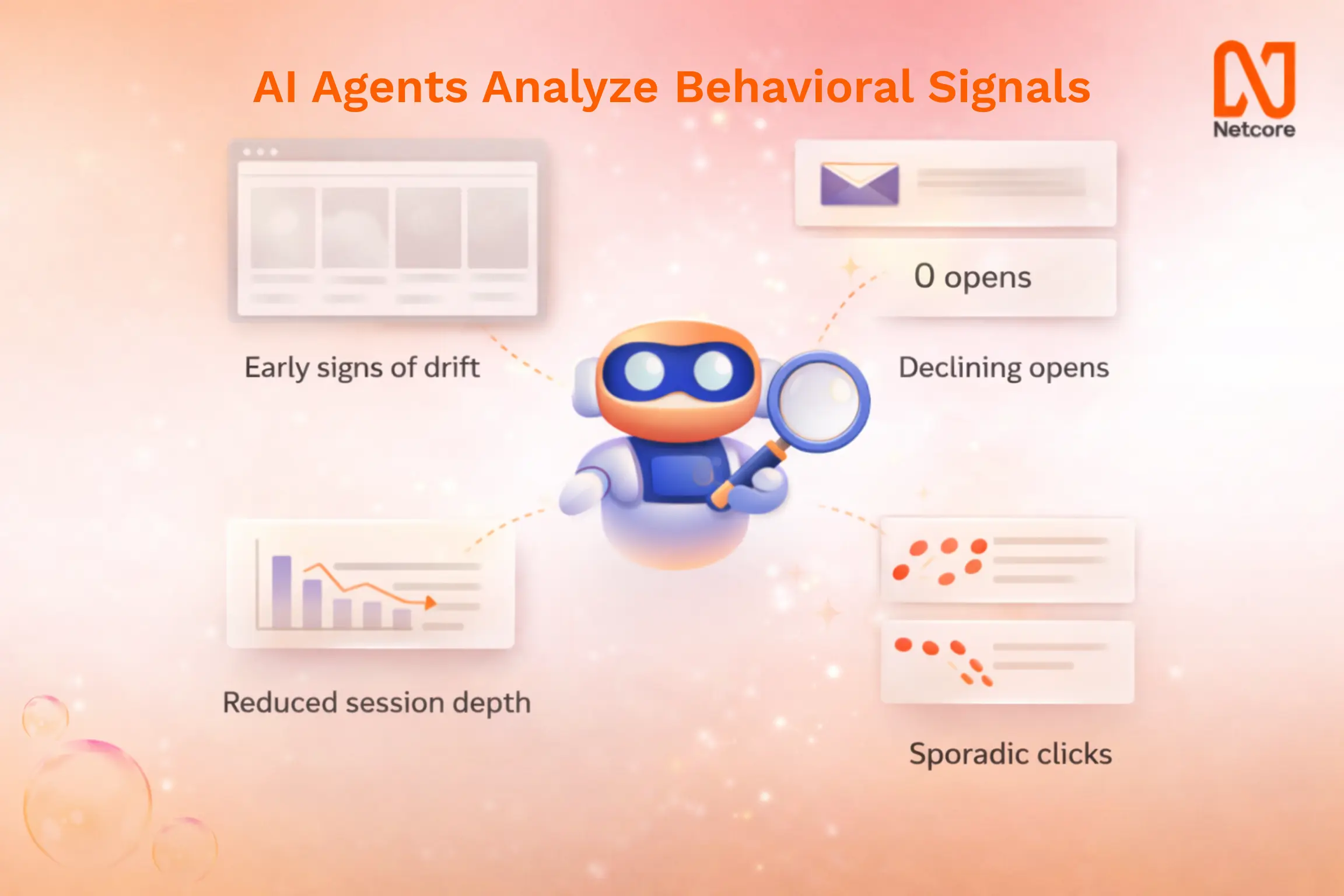
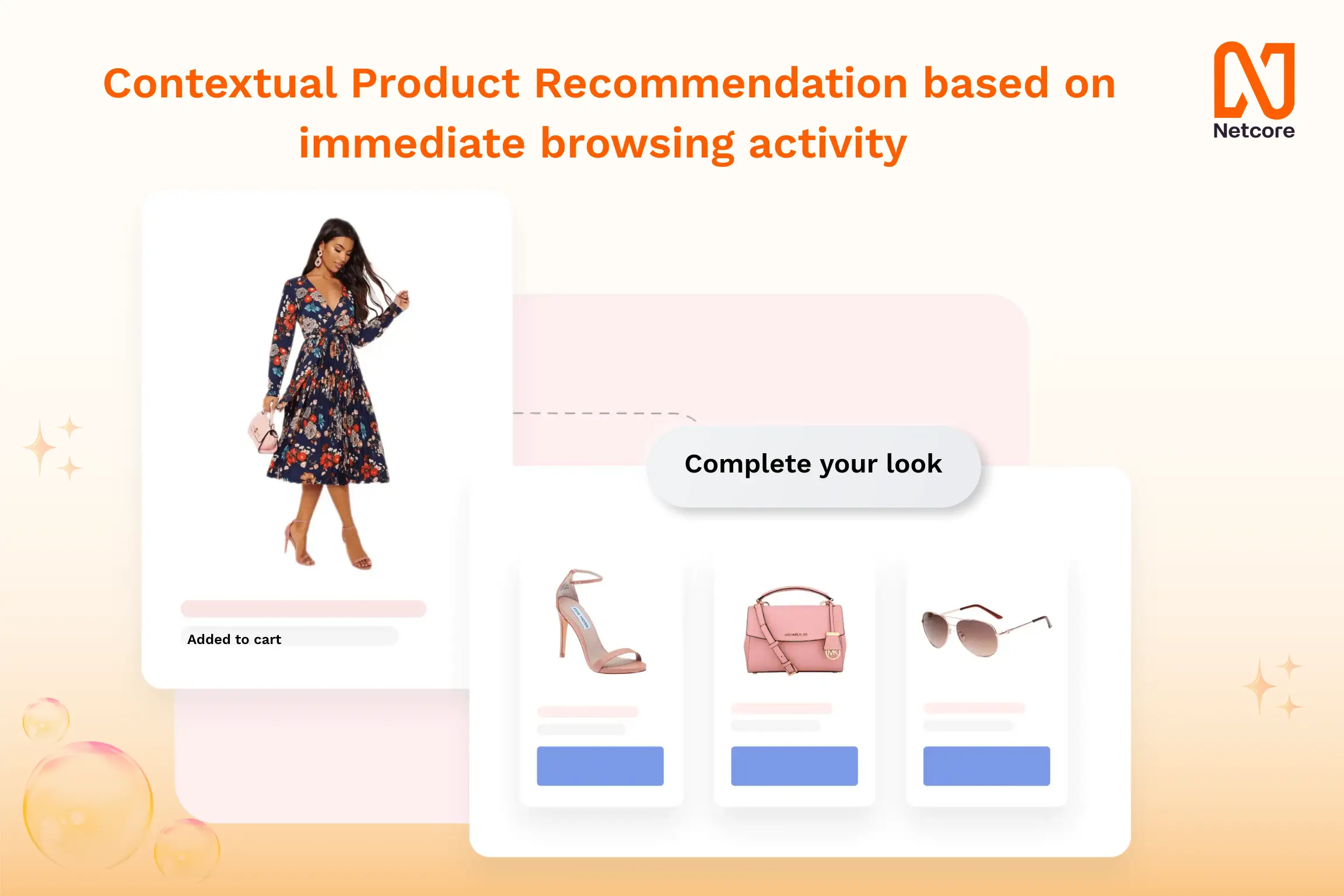
Agentic marketing replaces static segmentation with intent-driven decisioning. AI agents continuously analyze behavioral signals—browsing patterns, engagement frequency, purchase probability, and personalize each interaction dynamically. You can deliver Hyper-personalized Product Recommendations powered by Agentic Marketing based on propensity and affinity signals.
For example:
A customer who typically buys sneakers (Affinity) visits the site on a Tuesday. Under static rules, they see athletic gear. However, an AI agent detects they have spent 40 seconds hovering over a specific evening gown and just arrived via a “wedding guest” search query (Intent).
In milliseconds, the agent pivots. It suppresses the sneaker ads and dynamically serves a Hyper-personalized Product Recommendation for a matching clutch and an exclusive “expedited shipping” offer, knowing the customer’s propensity to buy increases if delivery is guaranteed by Friday.
The result is not just “better personalization.” It is personalization that adapts moment by moment, without waiting for a campaign refresh or a weekly review.
Challenge #2: Inconsistent Experiences Across Different Channels
Customers do not think in channels. Brands still do.
An email promotes one message. A push notification promotes another. WhatsApp sounds transactional. Support has no context of either. To the customer, it feels like dealing with five different companies.
Let’s understand this better with the following real-life scenario:
A customer receives a marketing email for 20% off denim. They click, add jeans to their cart, but run into a payment error. They message WhatsApp support for help, but the agent has no record of the cart or the discount. Frustrated, they leave. An hour later, the SMS system, unaware of the support struggle, sends a generic “You forgot something!” nudge.
The brand didn’t just lose a sale; they lost trust.
Capgemini’s 2025 research highlights the cost of this disconnect: 65% of customers switched brands because their preference data failed to result in a better experience.
Why does this keep happening?
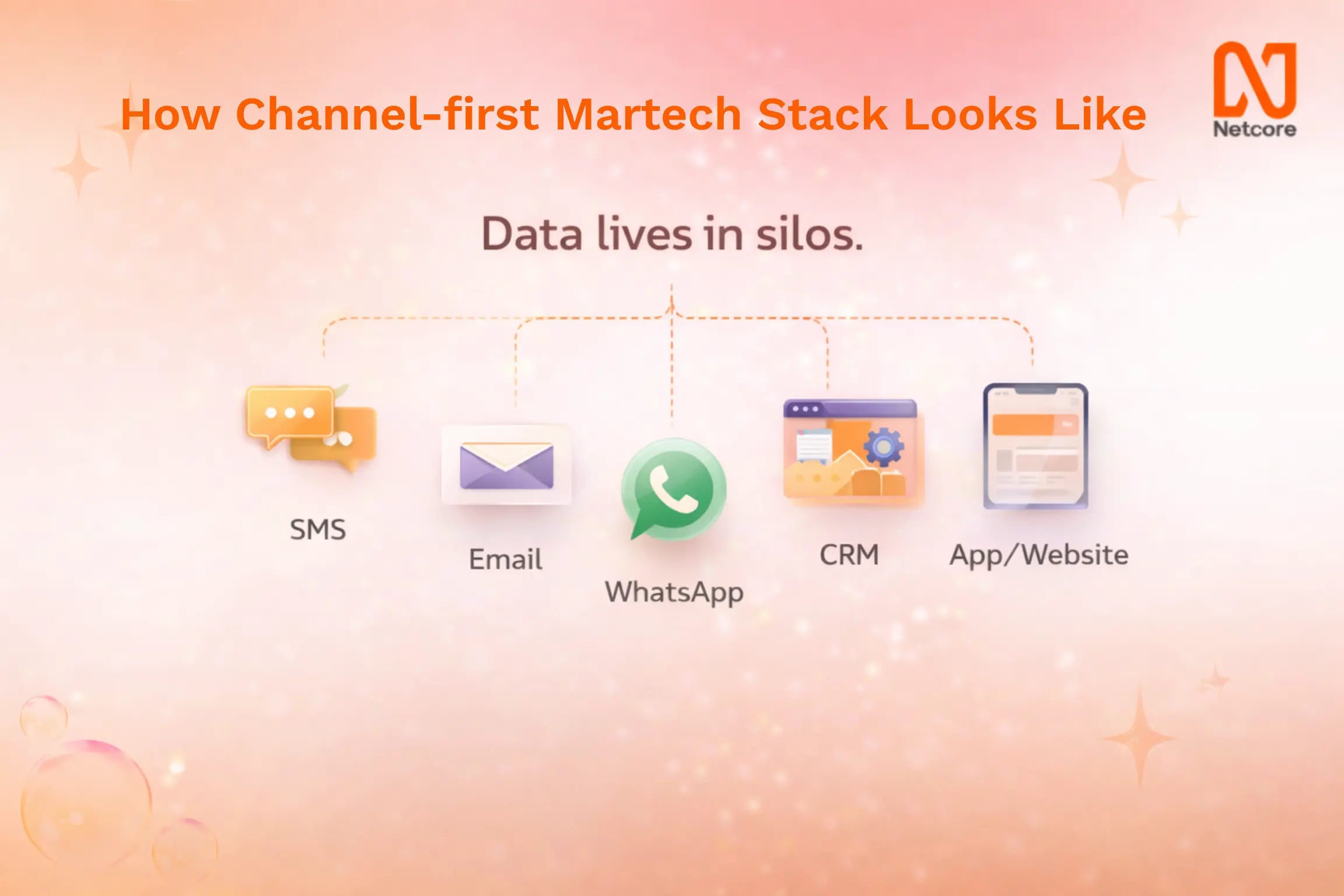
Most martech stacks are built channel-first, not customer-first. Data lives in silos. Journeys are designed per channel. Context is lost between touchpoints.
Even the most well-intentioned teams struggle to keep experiences aligned when tools and data are fragmented.
How to solve this with Agentic Marketing?
Agentic systems orchestrate experiences around the customer, not the channel. A unified customer memory ensures that every interaction builds on the last, regardless of where it happens.
How the same customer experience above would work with Agentic Marketing:
When that same payment error occurs, the AI Agent immediately recognizes the friction. It suppresses the “Abandoned Cart” SMS and instead triggers a WhatsApp message with a direct checkout link that bypasses the error. When the customer opens the app the next day, the In-App message doesn’t pitch denim again, it acknowledges the purchase and suggests a belt that matches their new jeans.
Email, app push, WhatsApp, and SMS stop acting as independent levers and start functioning as one intelligent, continuous conversation.
Challenge #3: Losing Touch With Customers After They Buy
The most expensive moment in the customer lifecycle is often the most ignored.
After the first purchase, engagement drops sharply. Not because customers are unhappy, but because brands go quiet. Over the next 30 to 90 days, customers gradually slip from Best → Rest → Test, often without triggering any alarms.
Most customers do not churn abruptly. They fade.
Why does this keep happening?
Post-purchase journeys are either static or nonexistent. Teams rely on occasional campaigns rather than consistent engagement. Attention decay goes unnoticed until it becomes irreversible.
By the time a marketer notices the drop in engagement, the relationship has already weakened.
How to solve this with Agentic Marketing?
Agentic marketing introduces what can be called Atomic Marketing: small, frequent, value-driven interactions that maintain daily relevance.
AI agents monitor early signs of drift—declining opens, reduced session depth, sporadic clicks, and intervene immediately with personalized content, recommendations, or interactive experiences. Not discounts. Value.
Example: The “Quiet Drift” in Premium Beauty
Imagine a customer who previously bought a 90-day supply of luxury skincare. In a traditional model, they wouldn’t hear from the brand until a “Restock Now” email on day 85.
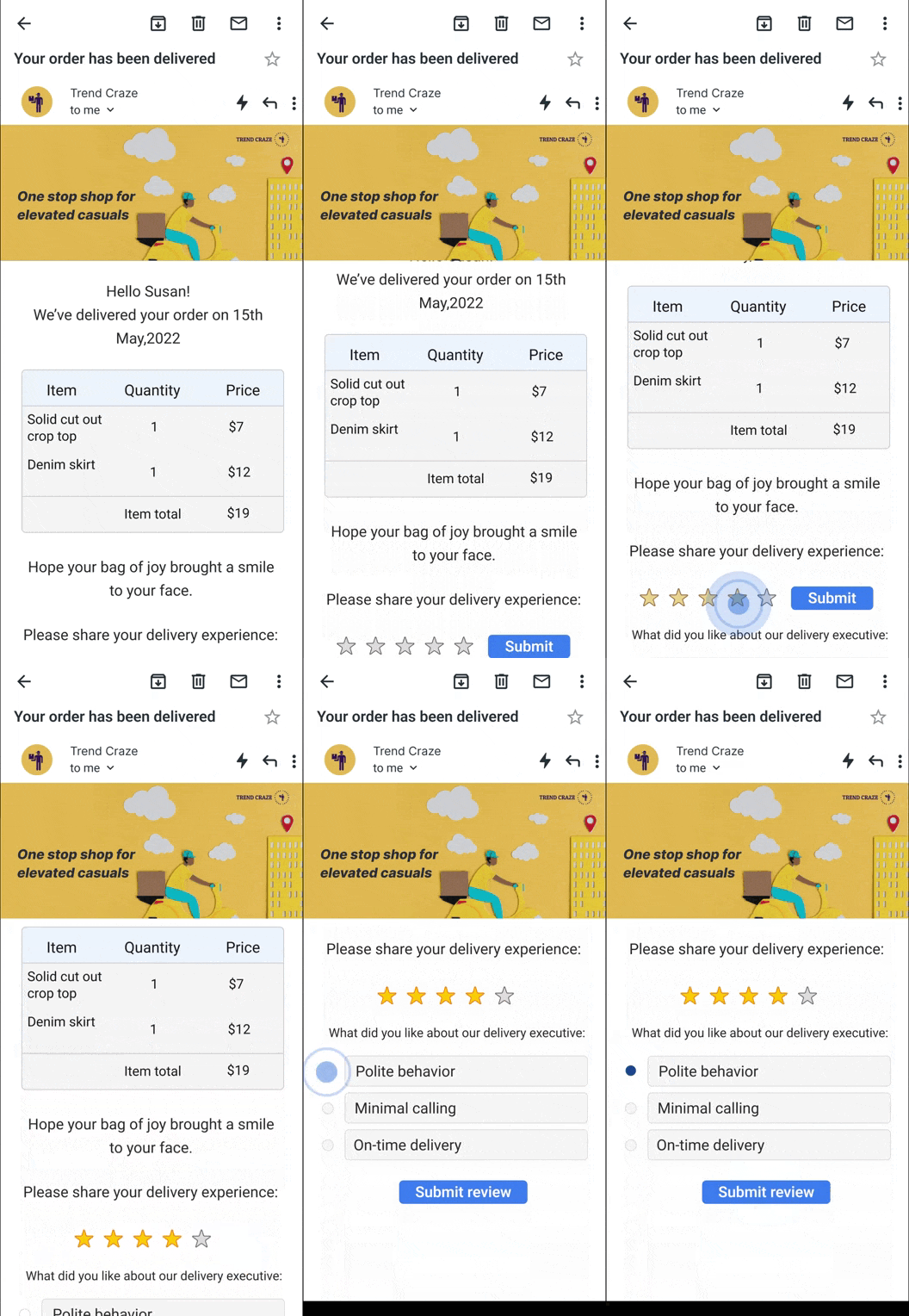
The Atomic Approach: On day 45, the AI agent notices the customer hasn’t opened the last two weekly newsletters (Early Drift). Instead of a generic sales blast, the agent sends an AMP-powered interactive email. Inside the email, without leaving the inbox, the customer can take a 30-second “Skin Progress Quiz” to adjust their routine for the changing season.
The agent then unlocks an exclusive video preview of a new product launch based on their quiz results. By providing a “micro-moment” of utility and exclusivity, the agent recaptures attention and reinforces the emotional bond long before the next transaction is even due.
Reinforcing the Connection
Using AMP emails to deliver interactive messaging—like early access to products, premium support, or exclusive previews. It replaces the “buy now” pressure with genuine brand utility. This keeps the brand top-of-mind through intelligence, not just frequency.
Challenge #4: Missing Opportunities to Collect and Act on Feedback
Most brands collect feedback. Few act on it fast enough.
Insights sit inside dashboards. Reports are reviewed weekly or monthly. Meanwhile, customer intent shifts in hours.
Marketers often face the “7-day segment problem”: it takes days to stitch data, build a segment, and launch a campaign. By the time it goes live, the moment has passed.
No human team can continuously track every intent shift across millions of customers. The scale and speed required exceed manual analysis cycles.
How to solve this with Agentic Marketing?
Agentic systems close the gap between insight and action. AI agents detect behavior changes in real time and adapt journeys automatically.
Feedback stops being retrospective and becomes operational. Learning happens continuously, not quarterly.
I will explain this better with the following example:
Consider a consumer electronics brand launching a new tablet. On launch day, data shows a spike in users adding the tablet to their cart but dropping off at the “protection plan” selection page.
- The Traditional Approach: A data analyst spots the trend on Monday. They present it to the marketing lead on Wednesday. By Friday, the team builds a “Protection Plan Hesitators” segment and launches a manual email campaign. By then, 70% of those leads have already been bought from a competitor.
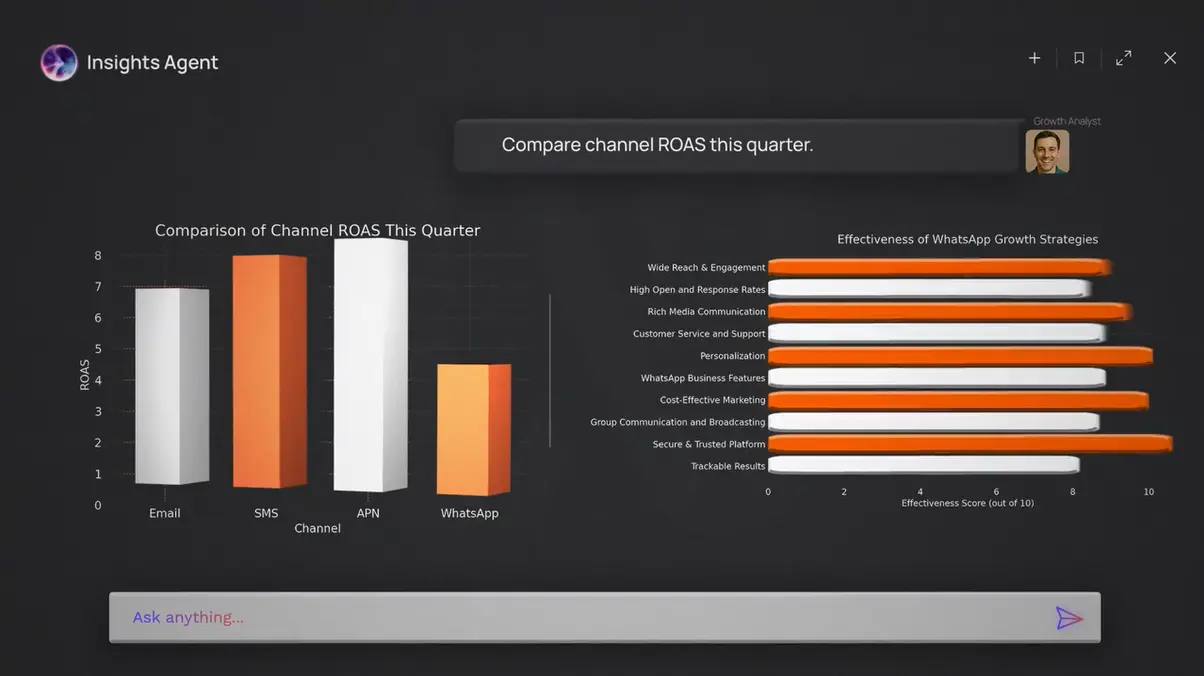
- The Agentic Way: Within minutes, the Insight Agent detects the correlation between the “Add to Cart” and the “Exit” on the protection plan page. It doesn’t wait for a report; it operates. It immediately triggers a suggestion with an overlay for the next 500 users showing a “3-month free trial” of the protection plan. The marketer then acts on the suggestion, then the segment is built by the AI Agent, and the marketer runs the campaign within minutes.
Feedback stops being retrospective and becomes operational. Instead of asking “What happened last week?”, the system asks “What is happening right now, and how do I fix it?” Learning happens continuously, ensuring that the brand evolves at the exact same speed as its customers.
Challenge #5: Forgetting to Show Customers They’re Valued
Many loyalty programs reward transactions, not relationships.
Customers are trained to wait for discounts. Brands erode margins to manufacture short-term engagement. Loyalty becomes a pricing strategy rather than an emotional one.
Why does this backfire?
Discount-driven loyalty devalues the brand and conditions customers to churn when incentives disappear. Attention is treated as free, even though it is scarce.
How does it get solved?
Agentic marketing treats attention as a currency. Instead of panicked promotions, customers receive recognition, relevance, and value aligned to their behavior.
Personalized insights, contextual recommendations, and meaningful rewards replace blanket discounts. Engagement feels earned, not forced.
Challenge #6: Poor Support Systems That Frustrate Customers
Support is often the final test of retention—and frequently the weakest link.
Customers repeat themselves. Agents lack context. Resolution feels transactional rather than empathetic.
Why does this persist?
Support systems are disconnected from marketing systems. There is no shared memory of the customer’s journey, intent, or history.
How does it get solved?
Agentic architectures connect intelligence and memory across the organization. Every interaction reflects a complete view of the customer.
Support becomes a continuation of the relationship, not a reset.
Challenge #7: Reacquire the Customers You Already Had
This is the most expensive problem of all.
Roughly 70% of digital marketing budgets are spent on reacquisition—paying to win back customers who already purchased once. Brands mistake this for growth, but it is leakage.
Customers disengage, disappear, then re-enter via paid ads. The brand pays again. Margins shrink. CAC rises.
Why is this unsustainable?
Paid media extracts a hidden revenue tax. Add ad fraud, rising CPMs, marketplace commissions, and discounting, and brands routinely surrender 20 to 30% of revenue just to maintain topline.
How does it get solved?
The shift is from rented attention to owned relationships.
Owned channels—email, WhatsApp, SMS, app push—allow brands to recover customers without bidding wars or algorithm dependency. Deterministic identity networks like NeoNet enable low-waste reacquisition through authenticated signals instead of probabilistic guessing. These authenticated signals are lookalikes trained on industry data. How does it work? When a customer of Brand D begins purchasing only during sales for 2 quarters, after two initial full-price transactions, the Segment Agent tags them as “price-sensitive.” If this same behavioral pattern is later observed in a customer from Brand X, just after the first two weeks, only that individual is immediately classified as price-sensitive based on the established ‘NeoNet’ model. Netcore empowers brands to transcend traditional ROI benchmarks through the meticulous orchestration of owned channels, underpinned by holistic, end-to-end strategic consultation.
Reacquisition becomes recovery. Cost drops. Quality improves.
How Netcore Slashed Shriram Finance’s CAC by 15% driven by owned channels and personalization.
From Retention Campaigns to Retention Architecture
Solving these challenges requires more than better campaigns. It requires a new operating model.
Agentic marketing replaces rule-based workflows with goal-driven systems. Intelligence is separated from memory. AI agents act as personal advocates for each customer, learning preferences, anticipating needs, and ensuring relevance.
The Live Ledger tracks each customer’s real-time P&L, tying engagement directly to lifetime value. Vanity metrics disappear. Economic truth takes over.
The Outcome: Retention as a Growth Multiplier
When retention becomes systemic:
- Best customers do not drift
- Reacquisition costs fall by 30 to 50%
- Margins expand without discounting
- Churn becomes an anomaly, not a KPI
Marketing stops being a cost center and becomes a profit engine again.
From platforms to profit partners
For the first time in decades, martech has the chance to stop being a toolset and start acting like a true business partner.
The combined model of NeoMarketing changes the economics of growth. Instead of burning budget on reacquisition and discounts, it compounds value where it matters most: your Best customers. Hyper-personalisation accelerates revenue from high-value segments. Deterministic identity and owned-channel orchestration cut AdWaste. Margins expand as discounts shrink. Reacquisition costs fall as relevance rises. And performance starts to approach the Rule of 40, improved performance and sustainable margin expansion.
This is how marketing earns its seat back at the executive table: not by shouting louder or spending more, but by proving it can create profit more efficiently than any other function.
The mission that defines the future of growth: Never lose customers. Never pay twice.

