




In 2025, the average email open rate across industries stood at just 31.22%. That means nearly 7 out of 10 emails sent were never even seen by the recipient.
If you’re reading this, you’re likely asking the million-dollar question: how to increase email open rates in an inbox that’s more crowded than ever?
The truth is, success in 2026 requires a mix of psychology, data science, and a little help from AI. We’ve combed through the latest research to bring you 17 tested methods to improve email open rates, along with a look at how modern tools, like those found in Netcore Cloud’s Agentic Marketing Platform, are making these tasks easier than ever.
What Is a Good Open Rate for Email?
Before we dive into the “how,” let’s establish the “what.”
What is a good open rate for email today? While the industry average hovers around 31%, a “good” rate for a healthy, engaged list should be between 30% and 40%. If you are seeing numbers consistently below this, it’s not just bad luck; it’s likely a gap in your strategy.
Here is how you can close that gap.
1. Segment Like You Mean It (The “Relevance” Rule)
Blasting the same message to everyone is like using a megaphone in a library, you get attention, but not the kind you want.
- Segmented campaigns consistently achieve 30-50% higher open rates than regular campaigns.
- The Strategy: Don’t just stop at demographics. Look at behavioral segmentation, grouping subscribers based on website visits or past purchases. For example, you can start by focusing on subscribers who have engaged in the last 120 days.
Educational Tip: Start small. Even breaking your list into just 2-3 key segments can have a massive impact.
2. Master the “Information Gap” in Subject Lines
Your subject line is a storefront window. If it doesn’t spark curiosity, people walk right past.
- The Trick: Create an “information gap”, a disconnect between what the reader knows and what they want to know.
- Did You Know? Subject lines that use “power words” like secret, hidden, or reveal tap into our natural desire to discover the unknown.
The E-Commerce Example:
The Boring Version: “New waterproof hiking boots are in stock.” (Fully informational; no reason to open if I’m not buying boots today).
- The “Information Gap” Version: “The one item you need for your next adventure…”
- Why it Works: The reader knows it’s about “adventure” (relevant to their interests), but they don’t know what the “one item” is. The only way to close that gap and satisfy their curiosity is to open the email.
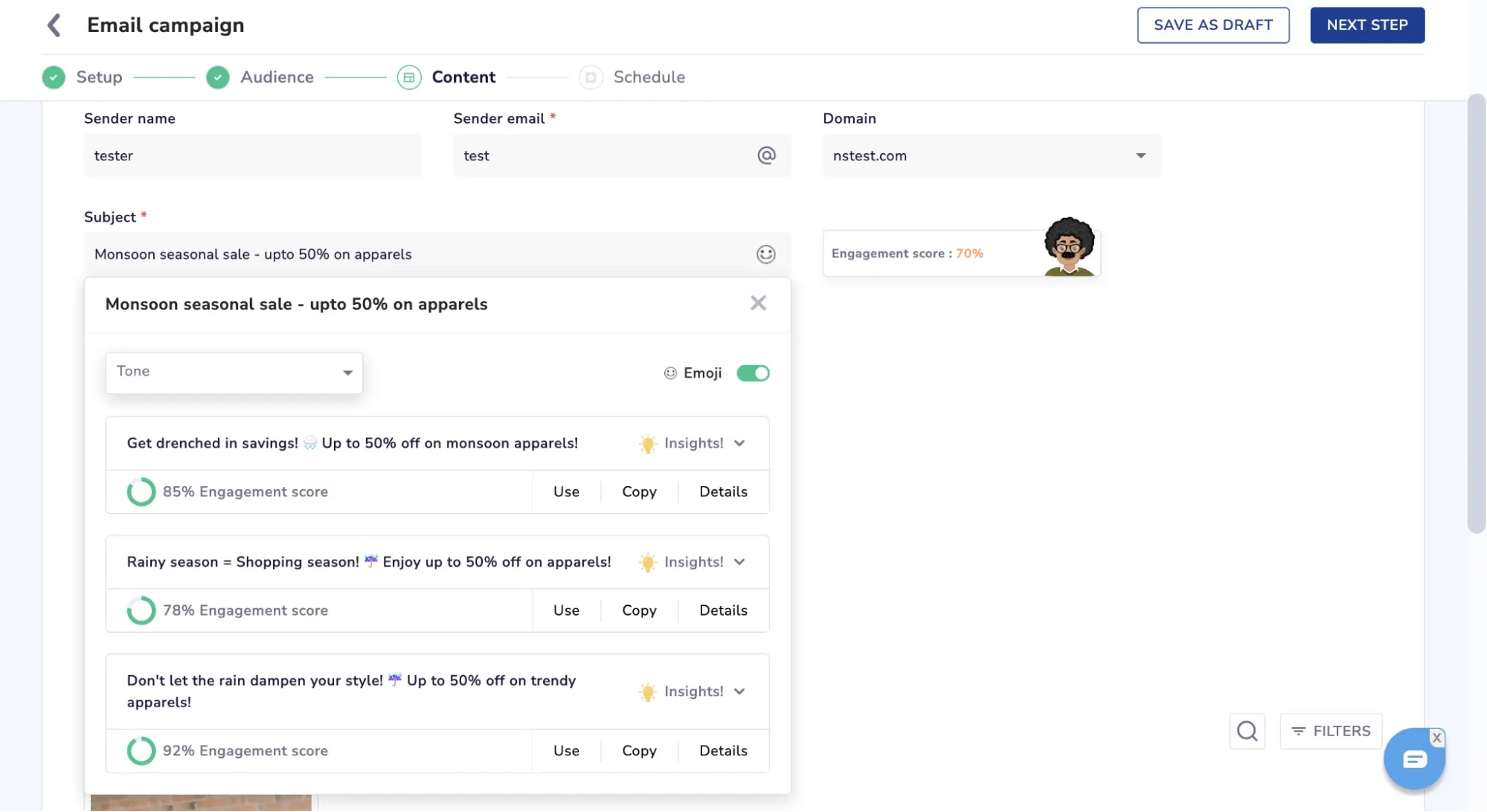
Writing witty one-liners is exhausting. This is where tools like a Subject Line Generator come in handy. By analyzing historical performance data, these tools can suggest the specific emotional hooks that your unique audience is most likely to respond to, taking the guesswork out of the creative process.
3. The “Second Subject Line”: Optimize Your Preheader
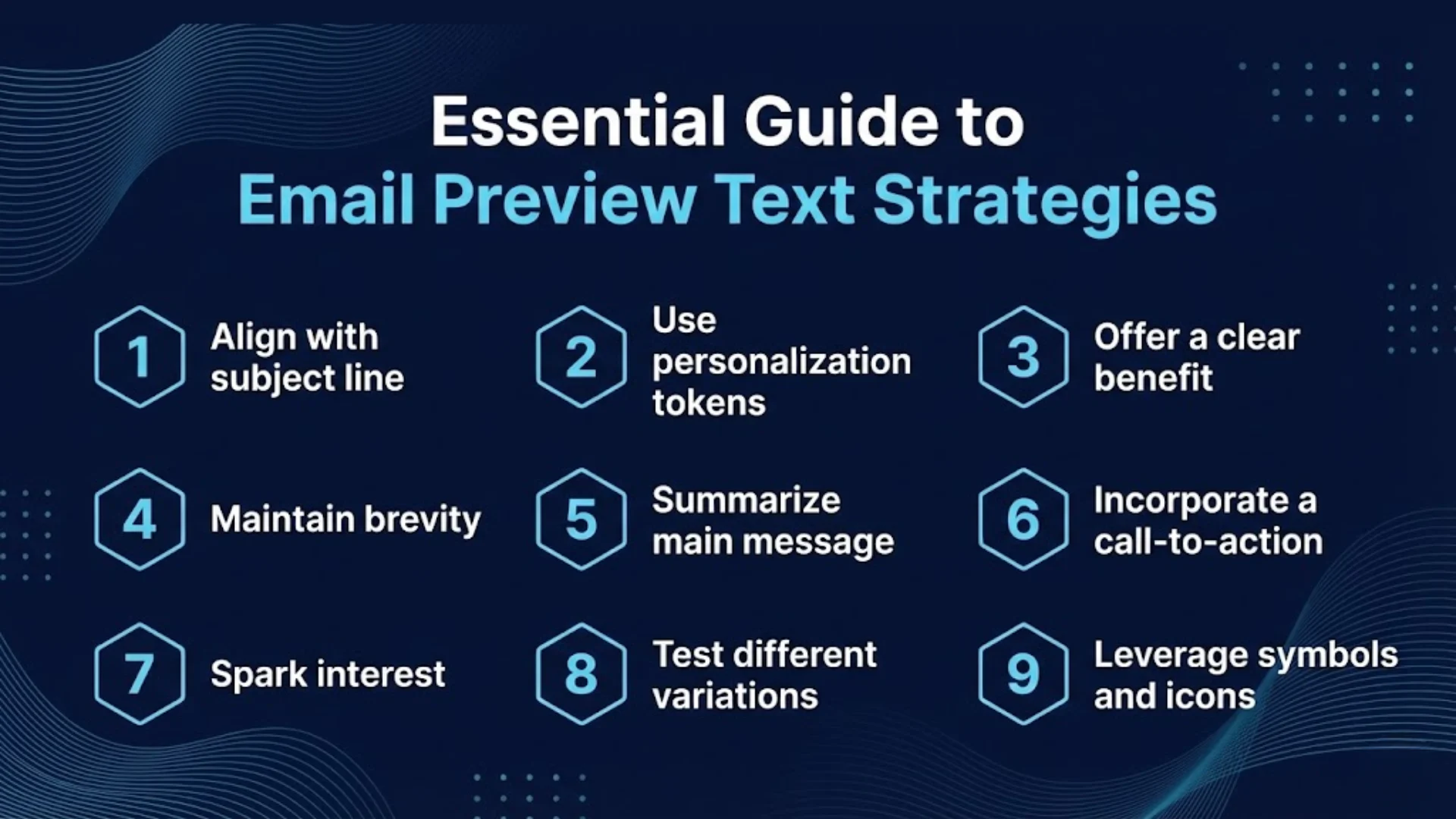
Do you know that snippet of text that appears right after the subject line on your phone? That’s the preheader, and it’s often wasted space.
Example:
- The Wasted Opportunity:
- Subject: ⚡️ Flash Sale Alert!
- Preheader: If you are having trouble viewing this email, click here…
- The Optimized “Second Subject Line”:
- Subject: ⚡️ Flash Sale Alert!
- Preheader: Take an extra 20% off denim + Free Shipping inside 👇
- Why it Works: The optimized version adds a specific incentive (“20% off denim”) and urgency that wouldn’t fit in the subject line alone, giving the user a concrete reason to click.
- Adding custom preheaders can boost open rates by roughly 7% , with some research showing lifts up to 30%.
- Never let your preheader say “View in browser.” Instead, use it to complement your subject line or add a call to action (CTA).
- Keep it between 40-130 characters so it displays correctly across different devices.
4. Stop Guessing: Send at the Right Time
We’ve all heard that Tuesday morning is the “best” time to send email. But is that true for your specific reader? While data shows mid-week (Tuesday/Wednesday) often performs best for B2B, every human is different.
This is where Send Time Optimization (STO) technologies shine. Instead of picking one time for everyone, STO analyzes when each individual user typically opens their email. If User A reads at 7 AM and User B reads at 8 PM, the system automatically holds the email and delivers it at those precise moments. It’s a simple switch that can increase open rates by up to 50%.
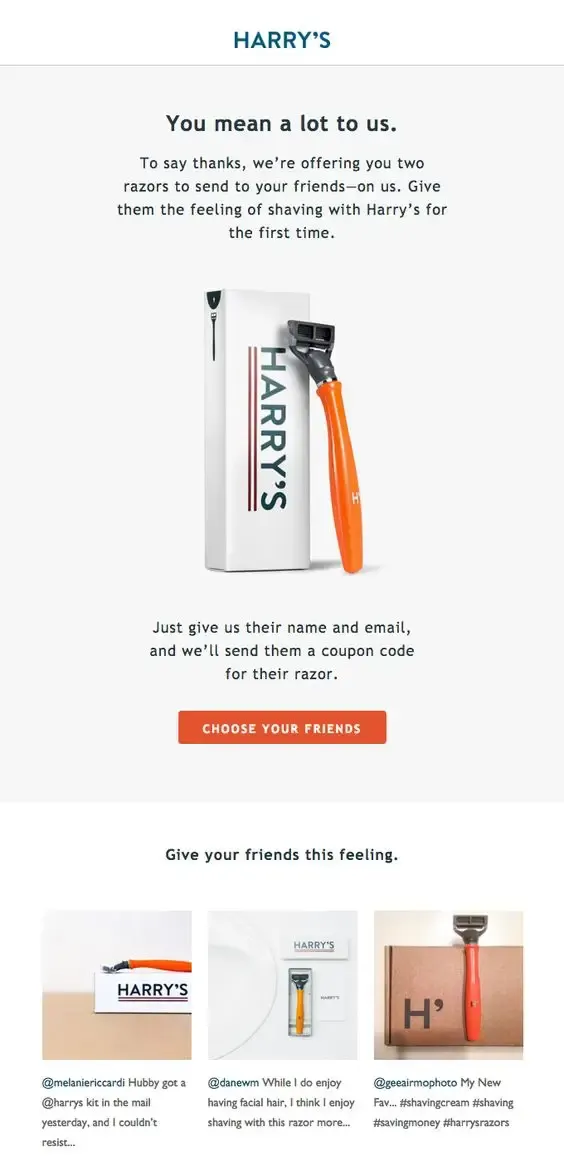
5. Design for Thumbs (Mobile Optimization)
With mobile devices now accounting for more than 50% of all email opens, if your email looks bad on a phone, it’s game over. A responsive design can boost unique mobile clicks by 15%.
- The Checklist:
- Use a single-column layout.
- Keep font sizes at 14-16px for readability.
- Ensure buttons are at least 44×44 pixels so they are easy to tap.
6. Keep Your List Squeaky Clean
It sounds counterintuitive to delete subscribers to increase email open rates, but it works. Email lists decay by about 20-25% every year naturally. Inactive subscribers drag down your engagement metrics, which signals to Gmail and Yahoo that your emails aren’t wanted.
Regular list cleaning can lead to 50% higher open rates. Every 3-6 months, identify users who haven’t opened an email recently and run a re-engagement campaign. If they still don’t bite, remove them.
7. Personalize Beyond “Hi [Name]”
We all know that seeing our name captures attention, but modern personalization goes deeper.
- Advanced personalization can drive 29% higher open rates.
- The “How”: Think about location-based offers or referencing past behavior.
- The Future: This is where an Agentic Content Agent becomes a game changer. Imagine an AI that doesn’t just fill in a name, but dynamically assembles the entire email content based on the user’s predicted interests. It can automatically swap out images, copy, and offers to match the individual profile of every single recipient, scaling 1:1 personalization without you lifting a finger.
8. Dodge the Spam Filters
Sometimes your email is great, but your word choice is fatal.
- The Trap: Words like “Free,” “Cash,” “Guarantee,” or “Act Now” are classic spam triggers.
- The Fix: Be creative. Use “Complimentary” instead of “Free”.
Did You Know? Modern filters care most about your sender reputation, but using too many “salesy” words combined with poor engagement is a one-way ticket to the junk folder.
9. Be Predictable (In a Good Way)
While your content should be surprising, your sender identity shouldn’t be.
- The Impact: Your sender name affects 45% of the decision to open an email.
- The Lesson: If you constantly change your “From” name, you confuse your audience. Stick to a consistent format (like “Sarah from Netcore” or just “Netcore Cloud”) to build long-term trust and brand recognition.
10. Match Expectations
The fastest way to lose a subscriber is to break a promise.
- The Stat: Majority of customers believe that just buying something doesn’t give you permission to send them marketing emails.
The Strategy: Be transparent at signup. If you promised a weekly newsletter, don’t send daily promos. Open rates drop when reality doesn’t match the expectation set during the subscription process.
11. Put Your Email on a Diet
- The Limit: Gmail clips messages that are larger than 102KB.
- The Consequence: If your email gets clipped, your tracking pixel (which counts the open) gets cut off, artificially lowering your open rate stats.
- The Trick: Keep code clean and optimize images. You generally want a ratio of 60% text to 40% images to stay safe from spam filters and clipping.
12. Use Emojis… With Caution 🧐
Emojis can be powerful eye-catchers in a gray inbox.
- The Stat: Subject lines with emojis can see 56% higher open rates.
- The Rule: Don’t overdo it. Use 1-2 emojis max, and try placing them at the end of the subject line to ensure they render correctly across different devices.
- Context Matters: B2C audiences (like fashion or retail) usually respond better to emojis than professional B2B sectors.
13. Make It Interactive (Shoppable Emails)
Why force a user to click “leave” to do what they want?
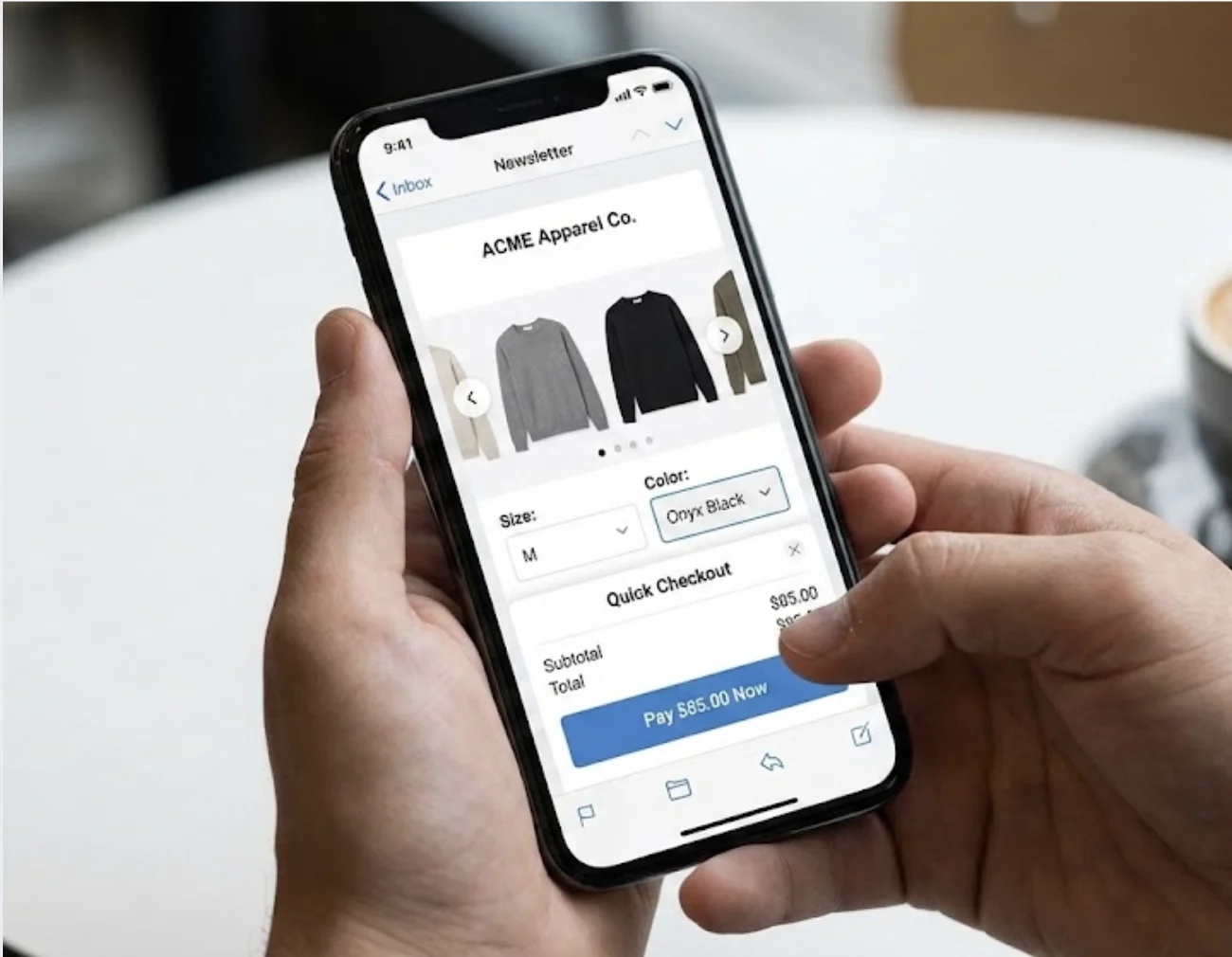
Here’s What Shoppable Emails Look Like in Action
- The Evolution: Traditional emails are static. Shoppable Emails (often powered by AMP for Email) allow users to browse catalogs, fill out forms, or even book appointments directly inside the email.
- The Benefit: By removing the friction of clicking through to a website, you increase the time spent in the email and the likelihood of interaction. While this technically boosts click-throughs and conversions, the novelty and utility of interactive emails keep users coming back to open your future messages.
14. A/B Test Everything
You can’t improve what you don’t measure.
- The Stat: Surprisingly, less than 50% of businesses actually use A/B testing tools.
- The Method: Test one variable at a time, like “Short vs. Long Subject Line” or “Emoji vs. No Emoji”.
- The Goal: You need a statistically significant sample size (usually starting at 1,000 contacts) to get reliable data.
15. The “Oops, You Missed It” Resend
Sometimes people just miss your email. It happens.
- The Trick: Resending a campaign to non-openers can squeeze out an extra 8.7% in open rates.
- The Catch: Don’t just resend the exact same thing. Change the subject line to something fresh. Wait 48 hours to a week before sending the second attempt.
16. Authentication is Non-Negotiable
You can’t open an email you never received.
- The Tech: Protocols like SPF, DKIM, and DMARC act as a digital ID card for your brand.
- Gmail and Yahoo now require these authentications for bulk senders. If you don’t have them set up, your “open rate” problem is actually a “deliverability” problem.
17. Automate Based on Behavior
Triggered emails are the gold standard of relevance.
- The Stat: Emails triggered by a user’s action (like abandoning a cart) get 70% higher open rates than standard newsletters.
- The Takeaway: Stop relying solely on your calendar to decide when to send. Let your customers’ behavior dictate the schedule.
Summary
To increase email open rates in 2026, you need to move beyond basic blasts. It’s about leveraging data to ensure the right message lands in the right inbox at the exact right time.Whether it’s using STO to nail the timing, Generative AI to craft the perfect subject line, or Shoppable Elements to reduce friction, the tools exist to make these numbers a reality. The inbox is waiting. Are you ready to be opened?