





TL;DR
Omnichannel trends in 2026 are being shaped by AI-native architectures, real-time data unification, and agentic automation. Brands are moving beyond channel-centric campaigns to orchestrated, 1:1 customer journeys powered by AI and executing hyper-personalization across digital and physical touchpoints. The winners will be those who unify data, activate insights instantly, and deliver seamless, context-aware experiences across every touchpoint; driving higher conversions, retention, and measurable ROI.
Omnichannel trends for 2025 and 2026 focus on breaking down disconnected marketing silos to establish true omnichannel marketing. Key shifts include deploying AI for predictive analytics, executing hyper-personalization across digital and physical touchpoints, and implementing advanced attribution models to prove tangible revenue ROI rather than surface-level vanity metrics.
Understanding the trajectory of the market requires defining what constitutes a modern retail environment. As noted by Zendesk, omnichannel retail goes beyond simply having a presence on multiple platforms; it demands that those platforms communicate flawlessly to deliver a continuous customer experience. The trends shaping the next two years are entirely driven by the need to resolve backend friction. Marketing operations leaders and digital strategists are moving away from superficial channel expansion and focusing heavily on the operational plumbing required to make these systems work together. Every upcoming trend is rooted in a specific Market Reality, a core tension that forces organizations to adapt or lose market share. Whether it is the demand for personalized experiences at scale, the integration of physical and digital environments, or the absolute necessity of proving revenue impact, these shifts dictate where enterprise investment is flowing. Let’s understand omnichannel marketing trends in the blog further.
Top 11 Omnichannel Trends in 2026
Omnichannel is no longer a competitive advantage; it’s the baseline.
What’s changing in 2026 is how deeply connected, intelligent, and revenue-driven these experiences are becoming. Brands are moving beyond channel presence to orchestrated, data-driven omnichannel customer journeys that adapt in real time.
Here are the 11 trends defining that shift:
1. Unified Commerce Platforms
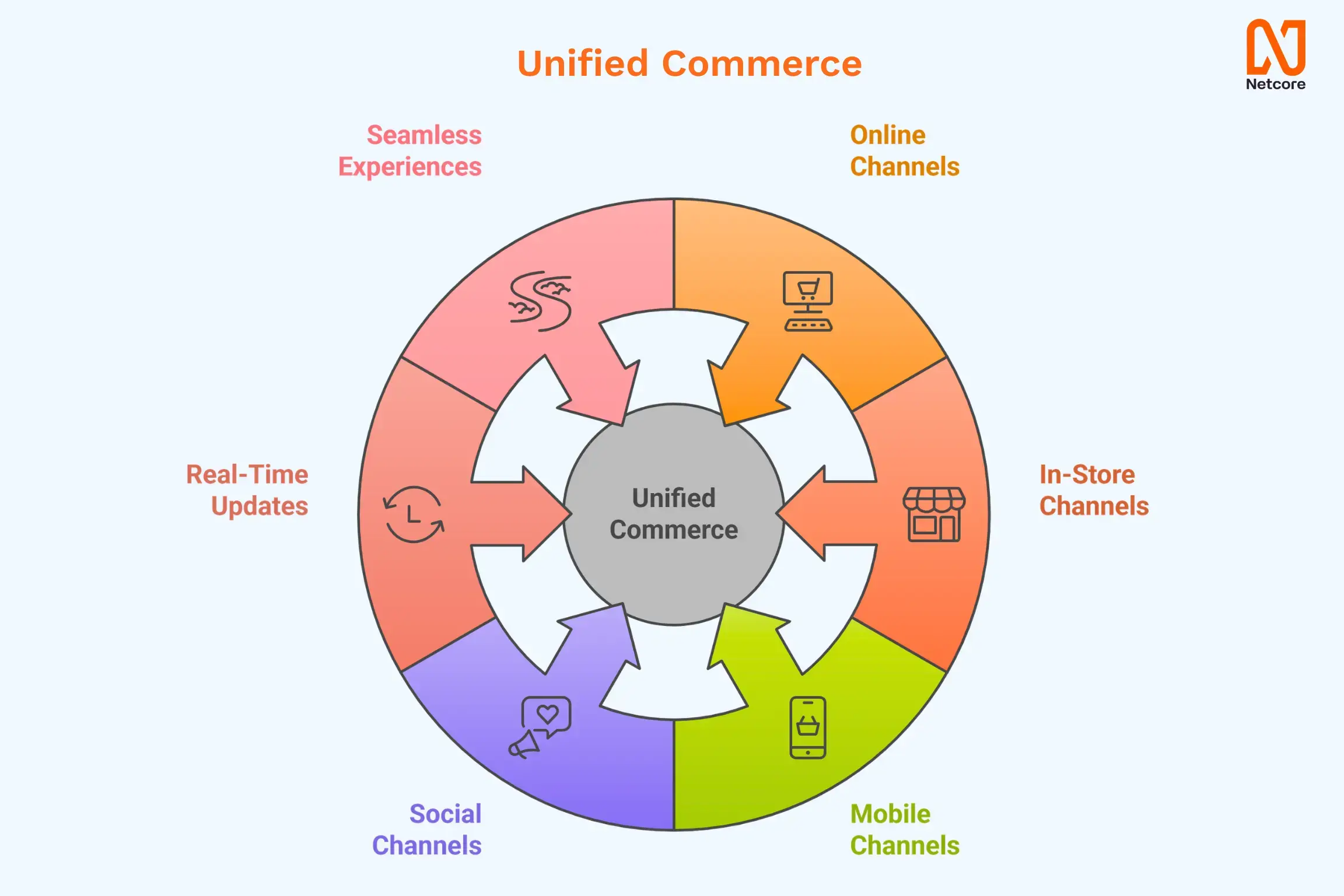
The biggest bottleneck in modern marketing isn’t creativity, it’s fragmentation.
Most organizations still operate with:
- Separate tools for email, SMS, push
- Disconnected e-commerce and POS systems
- Siloed customer data
Unified commerce solves this by creating a single source of truth across all touchpoints.
What this unlocks:
- Real-time customer visibility across channels
- Consistent experiences online and offline
- Faster, data-backed decision-making
Real-world example:
Nike has built a strong unified commerce ecosystem where app behavior, online browsing, and in-store interactions are connected. Store associates can access customer preferences and purchase history to deliver personalized recommendations in-store.
2. AI-Powered Hyper-Personalization
Generic segmentation is dead.
In 2026, winning brands operate at 1:1 personalization at scale, driven by behavioral and predictive data.
What’s changed:
- From demographics → to intent signals
- From campaigns → to individualized experiences
- From static timing → to real-time engagement
Impact:
- Up to 3X higher conversions with affinity-based targeting
- Significant uplift from real-time triggers and contextual messaging
Real-world example:
Amazon uses AI to personalize everything, from homepage recommendations to email triggers—based on browsing, purchase history, and real-time behavior.
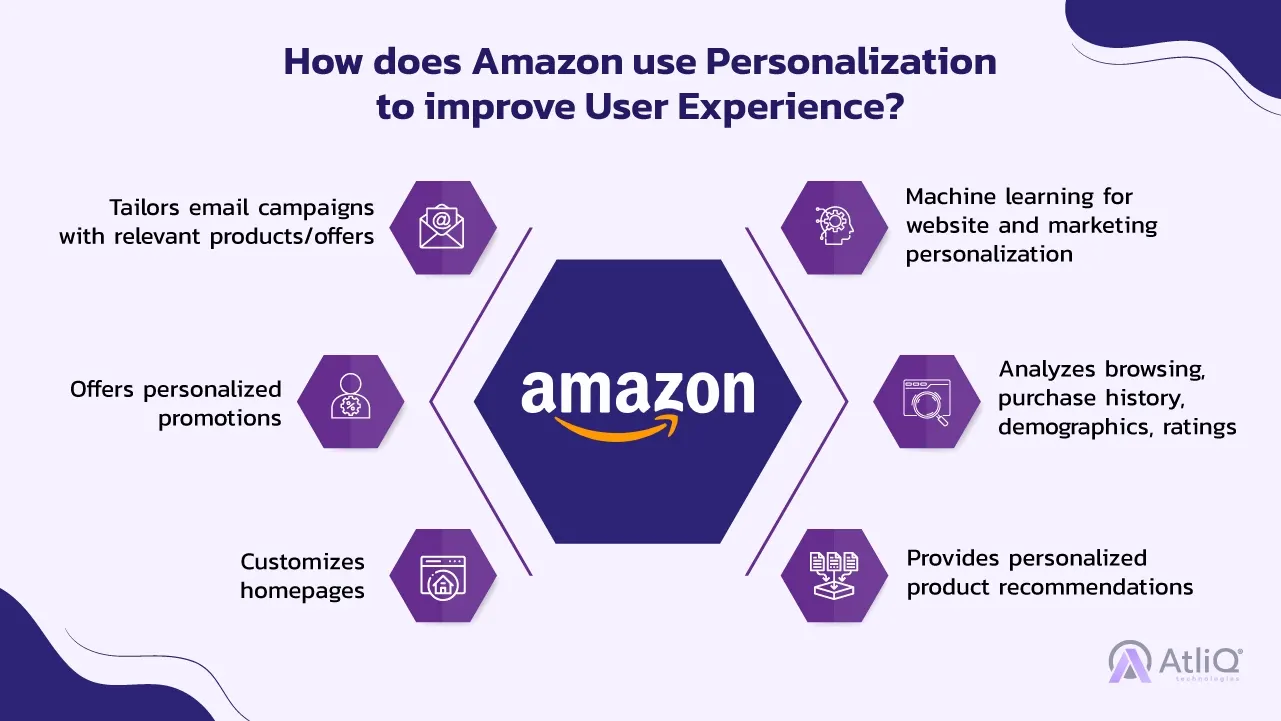
Source: AtliQ technologies
3. Intelligence Over Execution
Marketing is shifting from manual execution to autonomous decision-making.
Instead of building rigid “if/then” journeys, AI systems now:
- Predict customer behavior
- Choose the best channel
- Optimize campaigns continuously
What this means:
- Reduced campaign costs
- Higher lead quality
- Faster experimentation cycles
Real-world example:Spotify uses AI-driven personalization and predictive intelligence to curate playlists like Discover Weekly, driving engagement without manual intervention. Learn more about it here.
4. Seamless Phygital Experiences (Physical + Digital)
The boundary between online and offline is disappearing.
Customers expect their digital behavior to inform physical experiences, and vice versa.
What this looks like:
- In-store personalization based on online activity
- Real-time syncing of returns, purchases, and preferences
- Mobile apps enhancing in-store journeys
Real-world example:
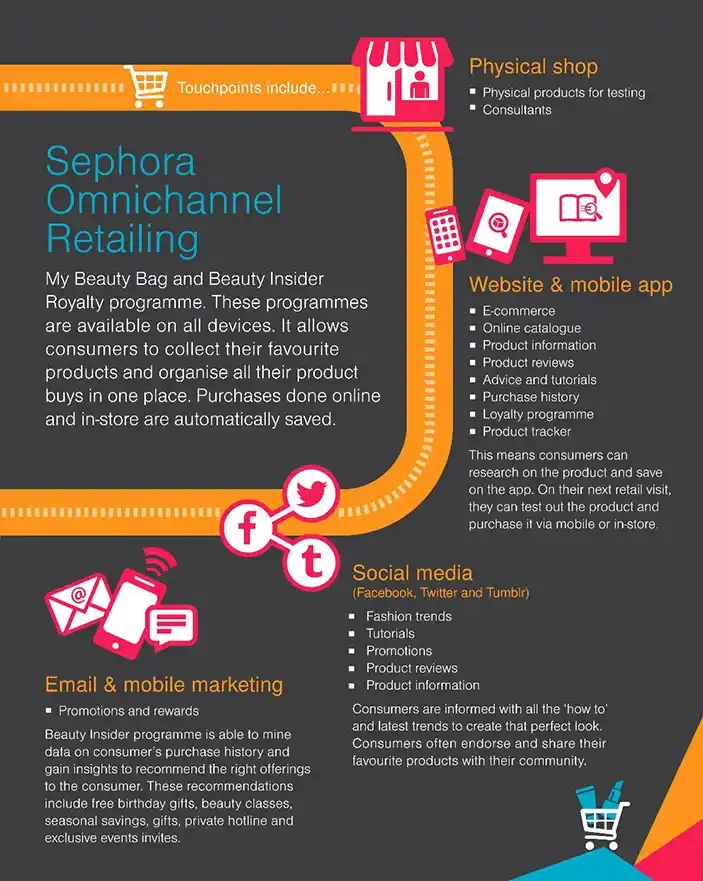
Sephora integrates app data with in-store experiences, offering personalized product recommendations and enabling beauty advisors to access customer profiles.
5. ROI Accountability & Revenue Attribution
Vanity metrics are no longer enough.
Marketing leaders are now accountable for:
- Revenue impact
- Customer lifetime value (LTV)
- Return on marketing spend
Key shift:
- From last-click attribution → to multi-touch and incrementality models
Impact:
- Up to 6X ROI from optimized omnichannel strategies
Real-world example:
Netflix uses advanced attribution and data modeling to understand what drives user acquisition and retention, not just engagement.
6. Social Commerce Integration
Social platforms are no longer just discovery channels; they’re transaction engines.
What’s driving this:
- Native checkout experiences
- Influencer-led commerce
- Short-form video driving purchases
Real-world example:
TikTok has transformed shopping behavior with TikTok Shop, where users can discover and purchase products without leaving the app.
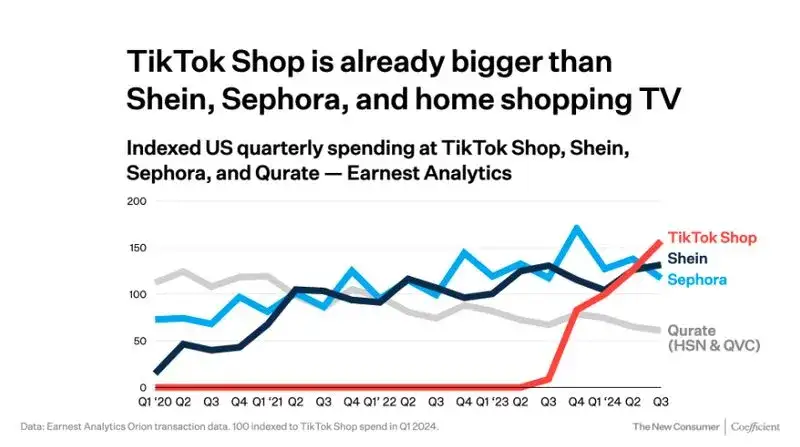
Source: Research from The New Consumer and Coefficient Capital.
7. Immersive Technologies (AR/VR)
Immersive experiences are redefining product discovery.
Use cases:
- Virtual try-ons
- 3D product visualization
- AR-powered in-store experiences
Real-world example:
IKEA allows customers to visualize furniture in their homes using AR through its app, reducing purchase friction.
8. The Always-On Omnichannel Journey
The customer journey is no longer linear; it’s continuous and dynamic.
Customers move fluidly across:
- Devices
- Channels
- Timeframes
What brands must do:
- Maintain context across touchpoints
- Respond in real time to behavior
- Migrate to an omnichannel marketing platform
Real-world example:
Starbucks connects mobile app orders, loyalty rewards, and in-store experiences into a seamless, ongoing journey.
9. Mobile-First (and Mobile-Dominant) Shopping
Mobile is no longer a channel; it’s the primary interface for commerce.
Key trends:
- App-first engagement strategies
- Mobile wallets and payments
- Push notifications driving conversions
Real-world example:
Flipkart built its growth on a mobile-first strategy, optimizing the entire shopping experience for app users.
10. Voice Commerce & Conversational Shopping
Shopping is becoming more conversational.
Enabled by:
- Voice assistants
- Chatbots
- AI-driven messaging platforms
What this means:
- Faster discovery
- Hands-free interactions
- Personalized recommendations
Real-world example:
Amazon Alexa enables users to search, reorder, and purchase products using voice commands.
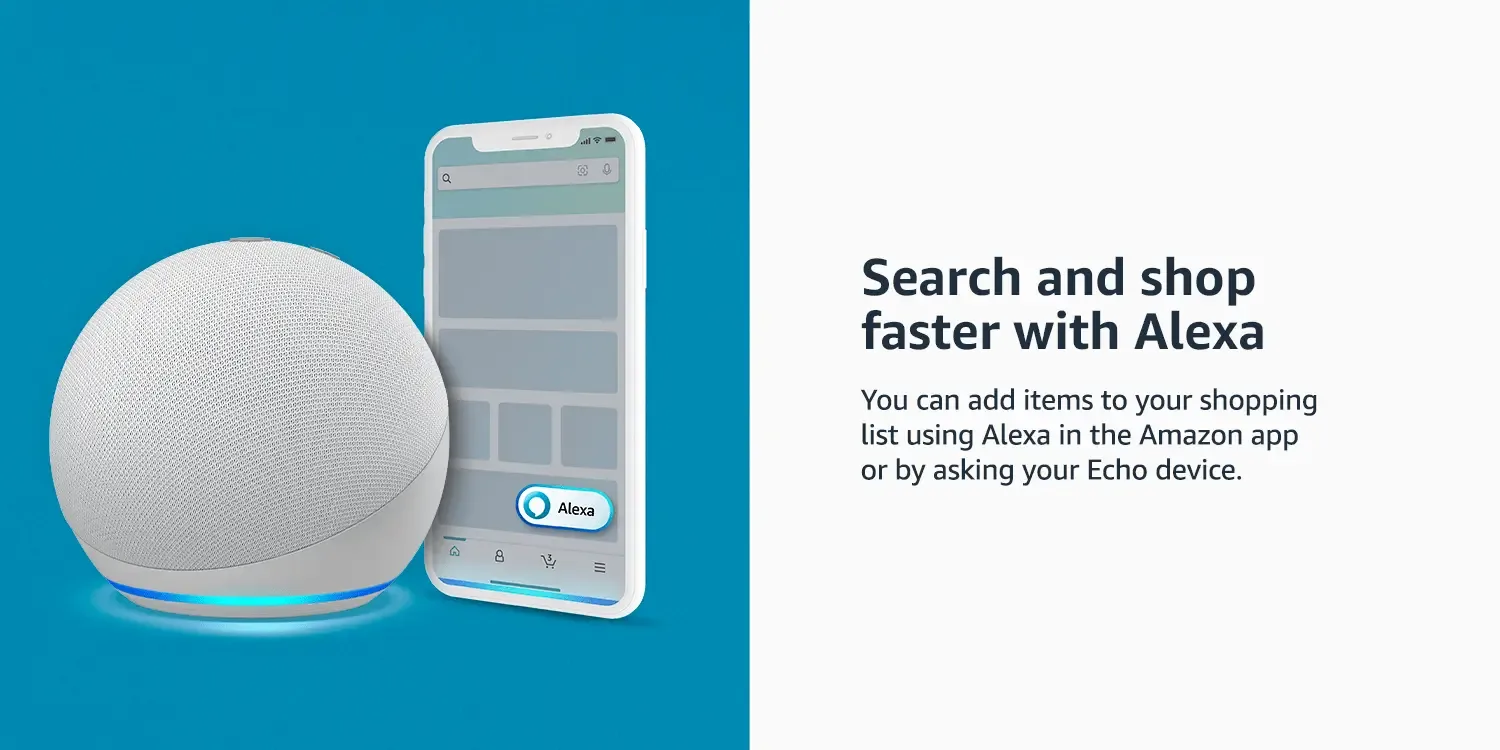
Source: Amazon Alexa
11. Seamless Payment Experiences
Every extra step in checkout is a potential drop-off.
The focus:
- One-click payments
- Digital wallets
- Invisible checkout experiences
Real-world example:
Apple with Apple Pay has simplified transactions to a single tap, reducing friction and improving conversion rates.
How should you audit and upgrade your Martech Stack for 2026?
Preparing for the realities of 2026 requires an honest assessment of your current technological capabilities. Organizations must move systematically to identify gaps, consolidate overlapping tools, and implement platforms that natively support the trends discussed above.
Map Your Current Data Flows
Document exactly how data moves from collection points (website, app, POS) to execution channels. Identify any manual exports or delayed batch syncs that create friction.
Identify Functional Redundancies
Audit your stack for tools that perform overlapping functions. If you are paying separately for an email service provider, an SMS gateway, and a mobile push platform, you have an immediate consolidation opportunity.
Assess AI and Real-Time Capabilities
Evaluate whether your current infrastructure supports real-time behavioral triggering and native predictive analytics. Tools that require manual segment refreshes are obsolete.
Define the Integration Strategy
Before purchasing new software, ensure it features robust, open APIs. The new platform must seamlessly read from your data warehouse and write engagement data back to your central systems.
What are the Real-world Outcomes of Omnichannel Maturity?
Theoretical trends mean little without verifiable business outcomes. Organizations that successfully mature their omnichannel operations experience dramatic shifts in their unit economics. First, there is a marked decrease in customer acquisition cost (CAC). By utilizing advanced identity resolution to convert anonymous website visitors into known profiles and nurturing them through zero-party data collection strategies (such as WhatsApp interactions or pre-filled AMP forms), brands improve lead generation efficiency. Secondly, customer retention metrics, such as Daily Active Users (DAU) and app uninstalls, improve significantly. When customers receive highly contextual, utility-driven messages rather than generic batch-and-blast promotions, platform fatigue decreases. Engaging users with timely service reminders or interactive post-purchase sequences actively reduces churn. Finally, the most critical outcome is the acceleration of revenue velocity. By capturing abandoned intent in real time, such as sending an automated cart recovery carousel via WhatsApp within minutes of a drop-off, brands capture revenue, with omnichannel lead generation that would otherwise be lost to competitors. It is not uncommon to see overall digital revenue contribution double when moving from a siloed approach to an intelligent, orchestrated framework.
Final Take
At the core of this evolution is AI enablement. These trends are not independent shifts—they’re powered by intelligence that connects data, predicts behavior, and drives decisions in real time. From unified commerce to hyper-personalization and autonomous journeys, AI is the layer that makes true omnichannel possible. It’s what allows brands to move beyond fragmented execution and actually deliver seamless, context-aware experiences across every touchpoint.
But success in 2026 won’t come from simply adopting these trends,it will come from operationalizing them for outcomes. The focus must shift to driving measurable ROI, increasing customer lifetime value, and ensuring genuine cross-channel continuity. The brands that win won’t be the ones experimenting with omnichannel, they’ll be the ones using AI to turn it into a consistent, revenue-generating system. Talk to us for a personalized consultation to refresh your omnichannel strategy.


