





The “Inventory Glut” of two years ago taught us a painful lesson: You cannot discount your way to loyalty in 2026. The global sporting goods market is projected to hit $507.7 billion, yet the internal reality for most marketing teams is far less optimistic. Customer Acquisition Costs (CAC) have risen by nearly 60% over the last five years, and the “one-and-done” buyer problem is rampant. The old playbook relied on static demographics: Male, 30-40, likes running.
But in a hyperactive market, that data is stale the moment it’s recorded. A customer buying a tennis racket today might be a “Runner” tomorrow and a “Recovery” shopper next week. If you treat them as a static segment, you lose them.
The new currency of relevance is Marketing Performance Data.
This isn’t just “clicks and opens.” It is the real-time synthesis of cross-channel behavior, app dormancy, time spent on pages, category affinity, and engagement degradation. This data tells you not just who they are, but where they are going next.
Here is how leading sporting goods brands can utilize this data currency to drive retention, along with the specific data engines required to capture it.
1. The Foundation: Unifying “Fragmented” Fitness Journeys
A customer’s journey through a sporting goods store is often messy. They browse hiking boots on the mobile web, buy socks on the app, and read a blog post about hydration on their desktop.
Most brands see these as three different users. They have “Email Performance Data” in one silo and “App Analytics” in another. This fragmentation is why you send a “Welcome” coupon to a customer who has already bought three times.
The Strategy:
You must consolidate performance data into a Single Customer View. You need to stitch the anonymous web browser that viewed “v2 Running Shoes” with the known app user who just upgraded from your loyalty tier. When you unify this data, you stop marketing to a “cookie” and start marketing to a human. You need a central nervous system for your data.
Did you know? Netcore Cloud’s platform ingests data from your POS, App, Web, and CRM to create a unified “Golden Record” for every athlete. It turns scattered signals into a single, actionable profile.
2. Moving from Legacy Metrics to “Predictive Scores.”
Traditional performance data looks backward: Open Rate, Click-Through Rate, Last Purchase Date. Modern performance data looks forward: Churn Probability, Next Preferred Channel, Category Affinity.
In sporting goods, timing is everything. A marathon runner operates on a 16-week training cycle. A casual walker operates on a 12-month replacement cycle. If you use the same generic “30-day active” metric for both, you fail.
The Strategy: Use AI agents to analyze historical data and generate predictive insights.
Don’t just track what they viewed; analyze affinity (color, fabric, price point) to predict what they need. If a user browses “high-cushion running shoes,” don’t just retarget them with the same shoe. The AI should predict their need for “blister-free socks” or “hydration packs” and serve those specific recommendations dynamically.
If a user clicks “Yoga” links 3x more often than “Running” links, their “Affinity Score” for Yoga should automatically suppress running content, even if they bought running shoes last year.
3. Orchestration + Shoppable Recommendations
Having the data is useless if you can’t use it actionably. The final piece is using performance data to dictate the flow of the conversation. If your data shows a user has a “Low Engagement Score” on Email but a “High Engagement Score” on App Push, why are you risking “unsubscribe fatigue” and damaging your domain reputation by forcing another email?
The Strategy: Journey Orchestration fueled by Dynamic Recommendations. Your workflow shouldn’t just decide where to send the message, but exactly what products to recommend inside it.
Let’s assume a user browses a high-end tennis racket but leaves without buying. The system should be able to detect a high “Email Affinity” but a low “Purchase Probability” for the racket alone.
Trigger a Shoppable Email. Instead of just showing the racket, the email uses AI to dynamically insert Product Recommendations for lower-commitment items, like grip tape or a set of tennis balls, that act as an easier entry point. Because it is an interactive email, the user can select the grip tape, choose the color, and complete the purchase directly inside the email without ever clicking through to the website.
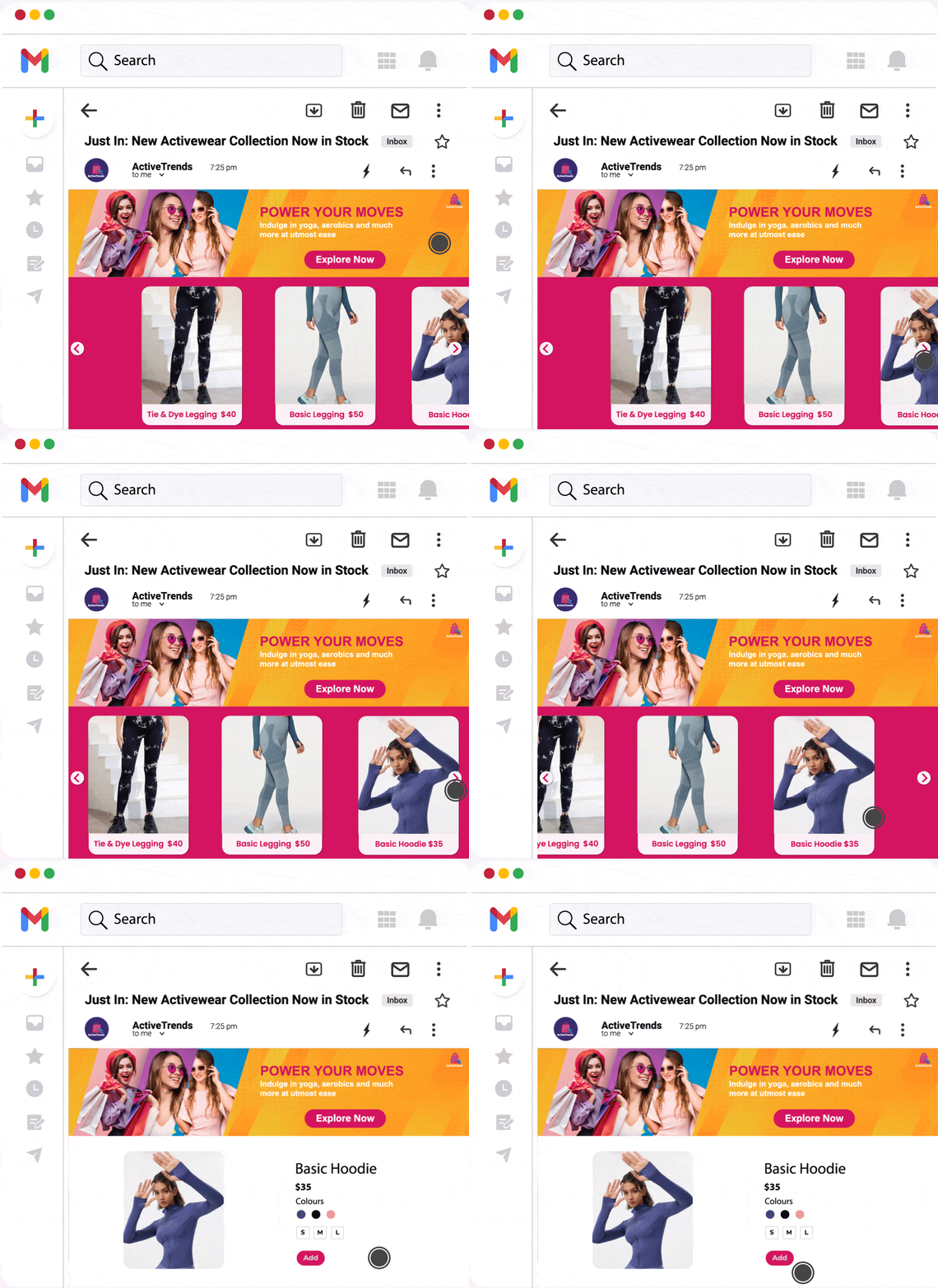
Move beyond simple triggers. Use Automated Journey Orchestration to build fluid paths where the Channel (Email vs. WhatsApp) and the Content (The Specific Recommendation) adapt in real-time to the user’s behavior.
Conclusion:
In 2026, the sporting goods brands that win won’t be the ones with the best inventory; they will be the ones with the best intelligence. When you treat Marketing Performance Data as your currency, you stop guessing. You stop blasting generic discounts to protect margins. Instead, you build a system where every click, every scroll, and every open enriches the customer profile, allowing you to serve the exact right product at the exact right moment.
Check out our solutions tailored for Sporting Goods companies today!