





A new research report reveals that omnichannel enterprises are shifting their focus from channel expansion to signal-driven orchestration, in which customer intent, behaviour, and lifecycle stage determine how and when engagement occurs.
The report from Netcore titled “Signals from the Frontlines: What Leaders from Omnichannel Large Enterprises said in 2025 and What will Define 2026” analysed behavioural signals, engagement patterns, and lifecycle journeys observed across large omnichannel enterprises.
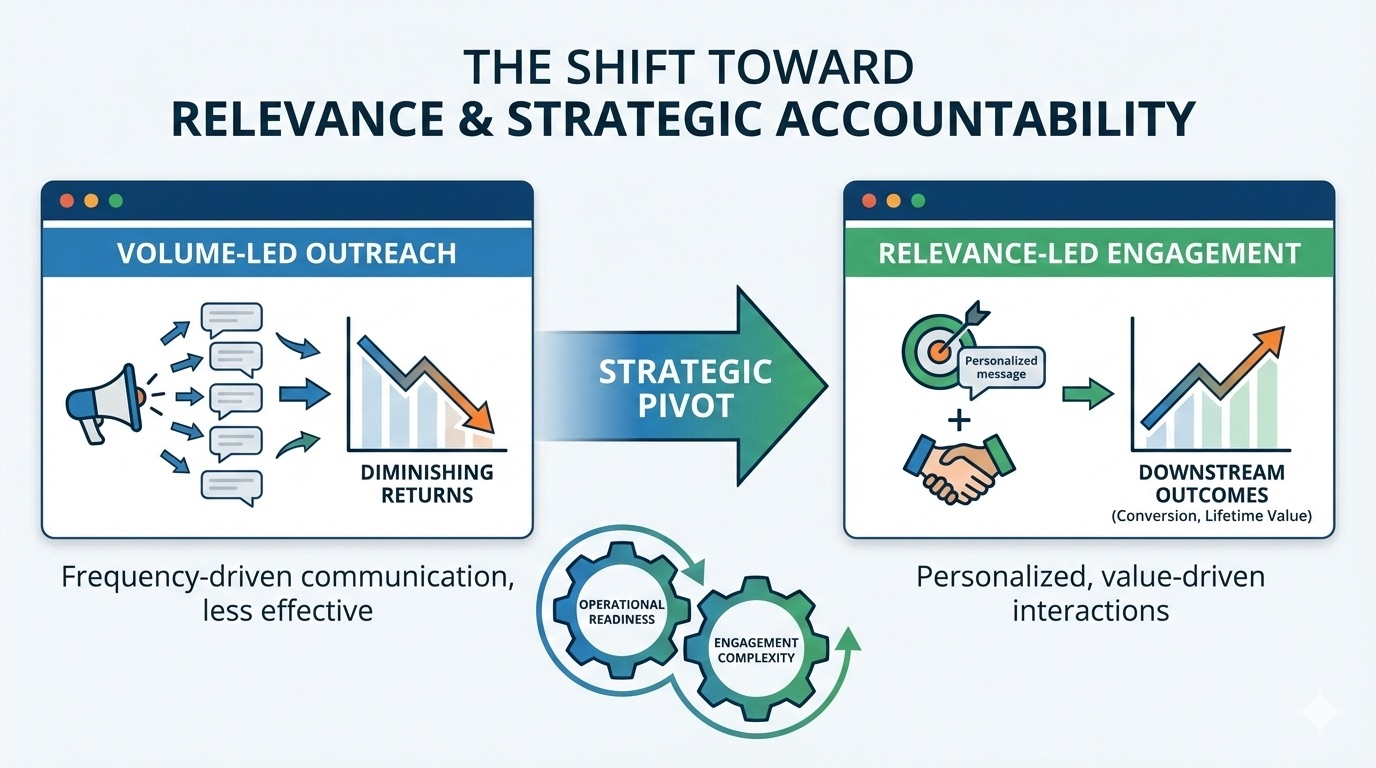
Engagement complexity is accelerating far quicker than the operational readiness across most of these enterprises, though acutely more so in high-consideration sectors with extended decision timelines. The report draws seven insights from leaders spanning three core sectors – auto, home building and real estate.
As traditional, frequency-driven communication yields diminishing returns, enterprises are moving away from volume-led outreach. Instead, there is a strategic pivot toward relevance-led engagement, reflecting a broader recognition that “more” no longer equates to “better” in a crowded market, says Encore in a report summary.
The report also noted that additionally, having a channel presence is no longer guarantee for progress as customers are now demanding absolute continuity through their lifecycle – starting from initial discovery and consideration to assisted interactions and post-purchase support.
This has triggered intensive leadership scrutiny with a focus on connecting engagement initiatives to measurable downstream outcomes like pipeline velocity, conversion rates, and long-term customer lifetime value. The report, put together based on conversations with CXOs across India’s largest omnichannel enterprises, brings out specific signals from the three specific sectors. These include:
Real Estate – The report finds that buyer journeys now span months, often moving between digital research, assisted consultations, site visits, and follow-ups. Enterprises performing better are aligning marketing, sales, and service touchpoints around a unified customer view, reducing drop-offs caused by disconnected communication.
Home Building – With multiple stakeholders involved and extended evaluation cycles, successful brands are moving toward milestone-based engagement models. The report highlights the importance of personalised, phase-aware communication to sustain momentum and build trust across long consideration journeys.
Automotive – As customers conduct extensive online research before engaging dealerships, automotive brands are using real-time behavioural signals to bridge online intent with offline conversion, ensuring sales conversations start with context rather than repetition. Rather than prescribing tactical fixes, the report outlines a strategic reset underway among large enterprises, one that prioritises:
- Unified customer intelligence over isolated channel metrics
- Orchestration across the lifecycle rather than campaign-by-campaign planning
- Measurable business impact over surface-level engagement indicators
The findings suggest that the next phase of omnichannel maturity will be defined not by how many channels enterprises operate, but by how intelligently those channels work together. You can read the full report right here.
