




TL;DR:
The 2026 “K-shaped” economy demands precise, data-driven marketing to win over hyper-intentional, budget-conscious consumers. Focus on execution over increased ad spend:
- Stop Guessing: Unify first-party data and use AI agents to track fragmented shopper behaviors in real time.
- Prioritize Retention: Make Customer Lifetime Value (CLTV) your north star. Re-engaging existing buyers is far cheaper than acquiring new ones.
- Master Omnichannel: Erase digital and physical boundaries. Use intelligent orchestration and Shoppable Emails to eliminate purchase friction.
- Deploy Agentic AI: Use autonomous, multi-agent systems and intent-driven search to optimize segmentation and messaging instantly.
The data is hard to ignore. In 2026, 53% of Americans are using a formal household budget, up from 46% in 2025. This is the biggest one-year jump YouGov has ever recorded.
Deloitte’s 2026 retail report backs this up, showing that 70% of global retailers believe bargain-hunting is a permanent shift, not just a temporary reaction to inflation. Even high-income shoppers, who usually spend reliably, plan to cut back on non-essential items for the first time in years.
This isn’t pessimism. This is the new market. And if you are a marketer, understanding this is the most important task you have all year.
Analysts call this a “K-shaped” economy. Overall spending looks good on paper, but the reality is split in two. High-income households are keeping the total spending numbers high. Meanwhile, a weaker job market and rising living costs are forcing the lower-income half to spend less. Because of this, real consumer spending is only expected to grow by 1.5% in 2026, which is positive, but very slow.
The brands that succeed in this environment won’t just be the ones with the biggest budgets. They will be the ones who truly understand what their customers need right now. That is a marketing challenge, and it is exactly what Netcore Cloud is built to help you solve. Here are some next steps….
Step 1 – Stop Guessing Consumer Behavior
The consumer your marketing assumed existed twelve months ago has evolved. In all retail categories, consumers are visiting more sites and making more trips with smaller transaction totals, a sign of growing fragmentation in shopping behavior.
45% of shoppers now make a list before heading to stores, 44% plan their spending, and 37% compare prices between brands before committing. This isn’t impulsive behavior triggered by a well-placed ad. This is deliberate, researched, intentional buying, which means your marketing has to get there first, not with noise, but with relevance.
Brands need to unify first-party behavioral data from across every touchpoint: web, app, email, SMS, push, and in-store. It creates a continuously updated single customer view that captures not just what someone bought, but how they browse, what they abandon, when they go quiet, and what triggers them to re-engage.
Take Note –
To win, you need real-time orchestration powered by AI. This means relying on Audience and Segment Agents to continuously rebuild your lists as behaviors change. If a high-frequency buyer suddenly stops spending, these agents detect it instantly and orchestrate the right message to keep them engaged. You never have to deal with manual updates or stale data again. The agents do the heavy lifting, orchestrating campaigns in real time to match the market exactly as it is today.
Step 2 – Treat Retention as the New Acquisition
When customer acquisition costs are high and discretionary wallets are thinner, the math of retention becomes overwhelming. A customer you’ve already won, one who trusts your brand, knows your product, and has given you behavioral data, is exponentially cheaper to re-engage than a cold prospect. Yet most marketing budgets still skew toward top-of-funnel acquisition, leaving existing relationships underworked.
Your platform must be built around customer lifetime value as a north star metric. The platform should be able to perform CLTV analysis at the segment and individual level, letting marketers identify who their highest-value customers are, what’s driving that value, and where churn risk is building. Reactivation campaigns, loyalty nudges, anniversary triggers, and milestone rewards can then be deployed automatically, each calibrated to the specific customer.
Eight in ten consumers say they find rewards or cash back important. But loyalty participation and loyal behavior remain flat despite rising investment, a gap between action and intent. The programs that retain engagement deliver real, timely, personalized value. The ones that feel generic lose it. A perfect segmentation and automation layer is what closes that gap, making loyalty feel like a relationship, not a points ledger.
Step 3 – Make Omnichannel Your Defence Mechanism
Consumers are demonstrating behavior that is less predictable, more selective, and less brand-loyal. Retailers who understand these pressures will design strategies, like personalized promotions, that resonate. When a customer can comparison-shop with three swipes on their phone while standing in your physical aisle, your message needs to follow them, not wait for them to come back.
This is where single-channel strategies fall apart. Omnichannel orchestration becomes indispensable when it erases the line between the URL and the POS (Point of Sale). You need to coordinate customer journeys across email, push notifications, SMS, WhatsApp, and web personalization, synchronized with real-time in-store triggers, from a single interface and a single data layer.
Intelligence Over “Spray and Pray”
When a customer abandons a cart, or walks out of a store after scanning a QR code without purchasing, the platform must be intelligent. It shouldn’t fire a generic notification. It must evaluate:
- Channel Preference: Does this user engage with SMS or In-App prompts?
- Physical Context: Are they currently near a storefront?
- Value & Intent: Is the abandoned item a high-value luxury good or a daily essential?
- Timing: Delivering the right message at the exact window when that specific person is most likely to act.
One feature that deserves its own moment is Shoppable Emails. This technology turns a passive email into a fully interactive commerce experience. Customers can browse products, check real-time local store inventory, and complete a purchase without leaving the inbox.
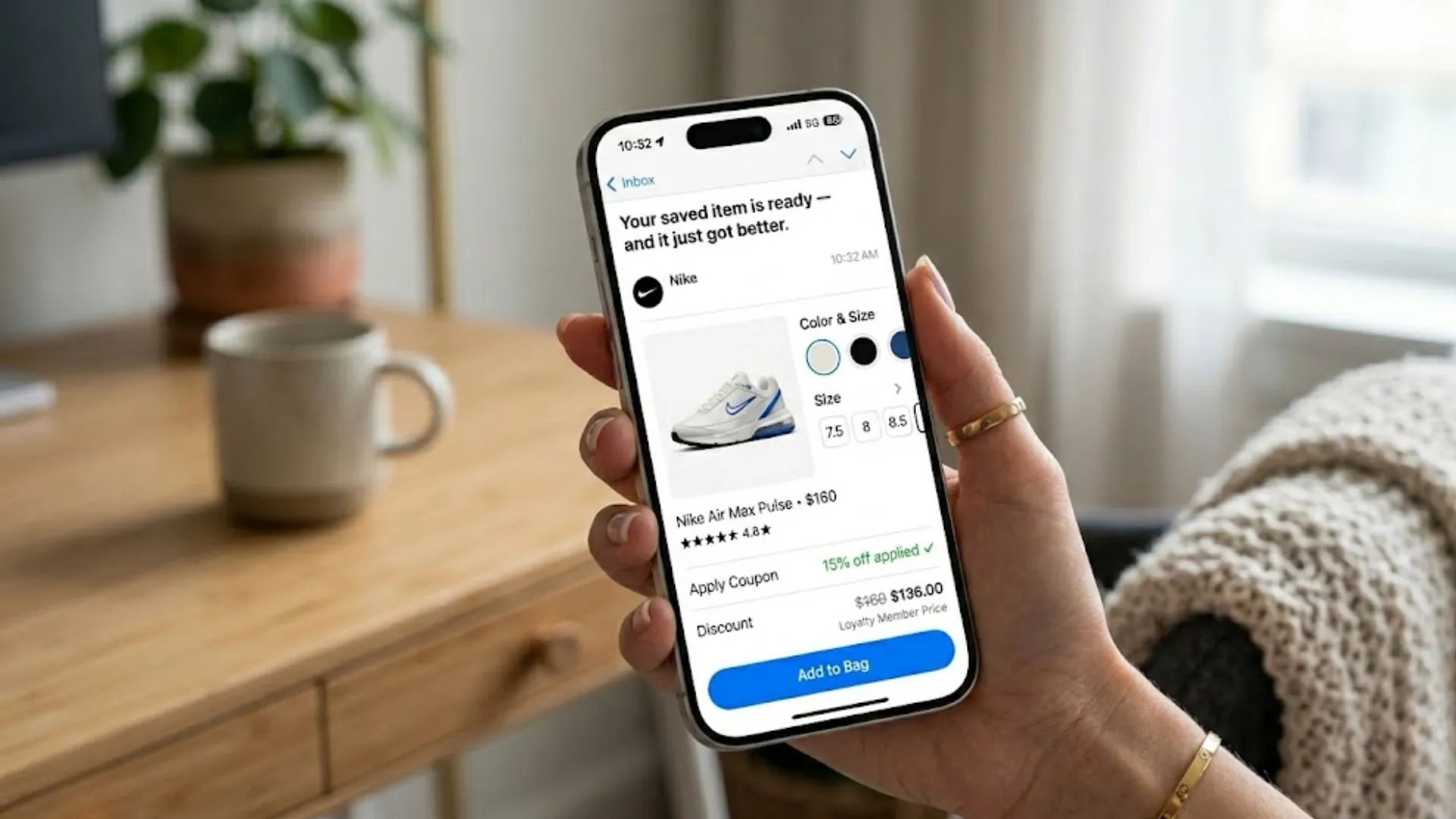
A typical Shoppable Email Powered by Netcore
By allowing a customer to “Buy Online, Pick Up In-Store” (BOPIS) directly from an email, you remove the friction that kills conversions. In a market where the decision point is fleeting, turning an email into a virtual storefront is a massive competitive advantage.
Want to learn more about how top brands are using Shoppable Emails to not only increase engagement but also sales by up to 10x? Read this blog today!
Step 4 – Get On-Board the Agentic Edge
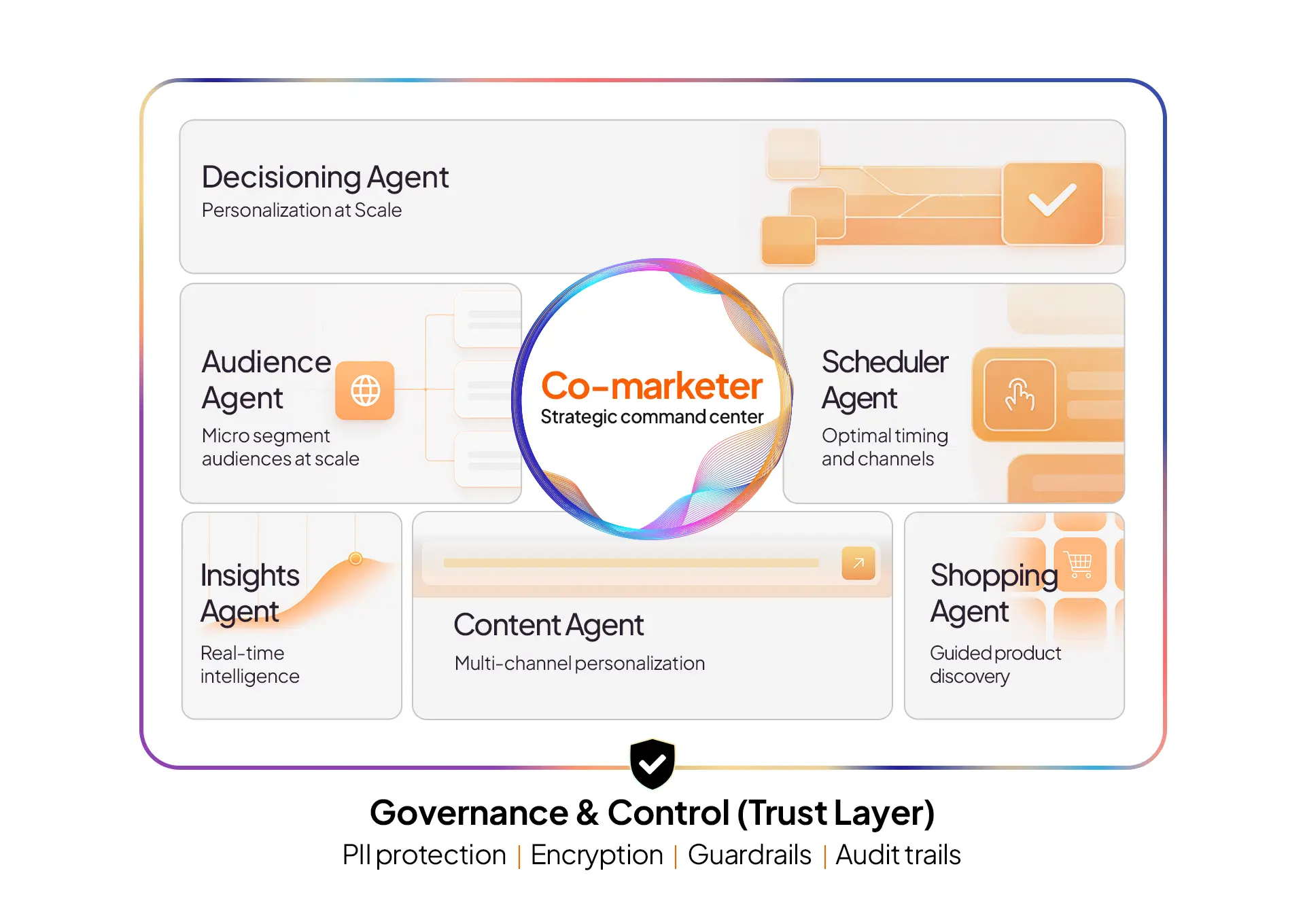
The Agentic Experience a la Netcore Cloud
Most marketing operations are built for normal times. Campaigns are briefed, built, launched, and reviewed in cycles that assume a relatively stable audience. But sentiment shifts fast in 2026. A competitor drops a price. A cultural moment reshapes category perception. By the time a team has briefed on a reactive campaign, the window is gone.
This is the argument for Agentic Marketing, and it’s the direction Netcore is building towards.
The transition from isolated AI tools to orchestrated multi-agent systems means that execution, segmentation, message creation, channel decisioning, and optimization can happen autonomously, continuously, and in real time.
An Agentic Marketing Platform must deploy specialized AI agents across the full marketing lifecycle. An always-on orchestrator monitors customer behavior, triggers appropriate journeys, selects optimal channels and message variants, and continuously optimizes based on outcomes, without requiring manual campaign launches.
Moreover, most revenue loss happens before products are even found. When a budget-conscious shopper searches your site and gets generic results, they don’t try again, they go to Amazon.
Did you know?
Unbxd’s AI-powered search and Shopping Agent understands intent, not just keywords. It personalizes results in real time based on the individual customer’s history, current session behavior, and the broader catalog context. The result: higher conversion from the same traffic, because discovery actually works.

Unbxd’s Shopping Agent in Action
Conclusion
Before we wrap up, we would like you to check out the latest Forrester research, in which Netcore has received the highest possible scores across key criteria.
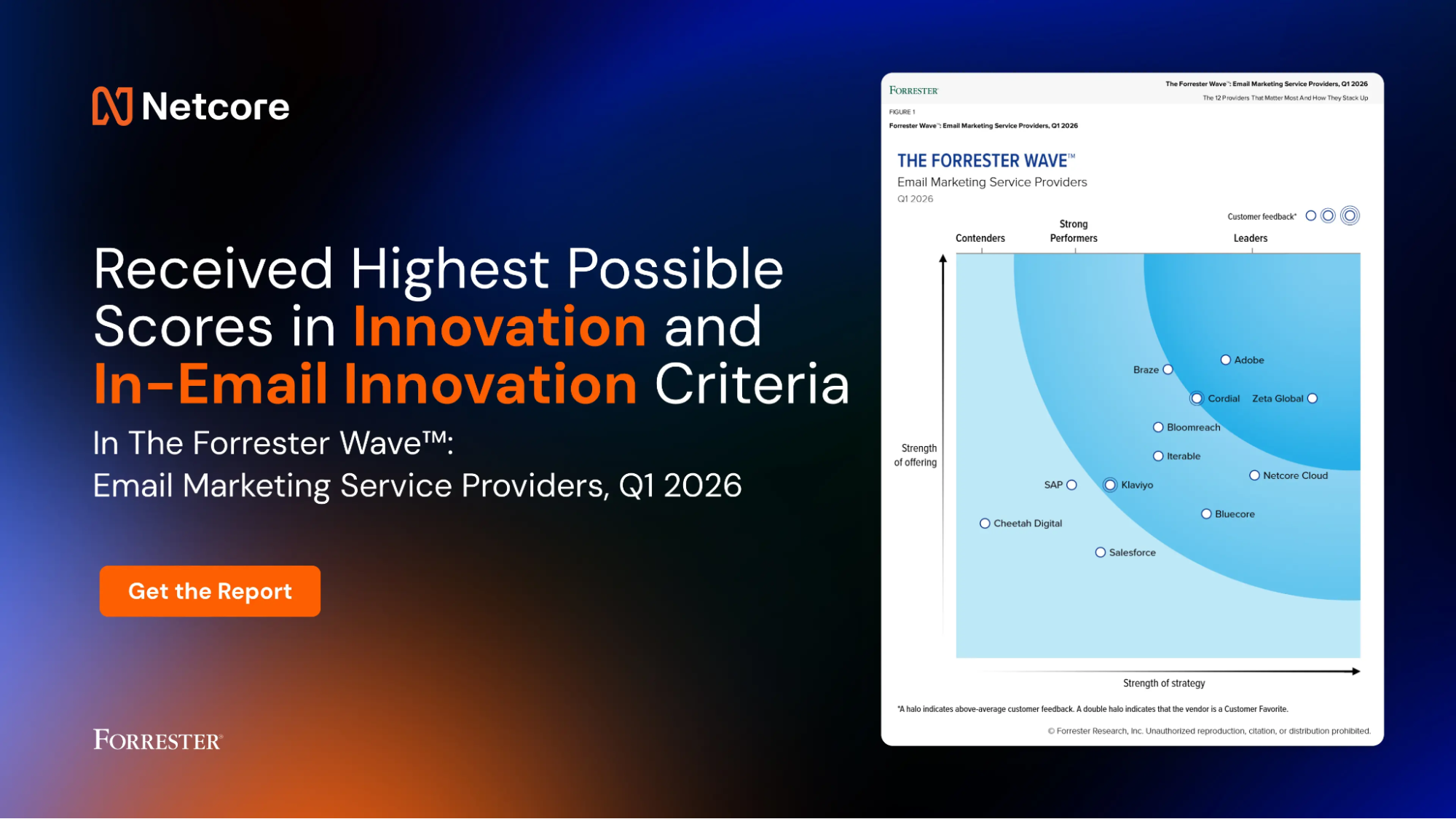
Netcore Forrester Wave Recognition
Your customers haven’t gone anywhere. They’re just more careful about where they go. The brands that win their attention, and their wallets, won’t do it by discounting deeper or shouting louder. They’ll do it by knowing more, communicating better, and showing up with the right message at exactly the right moment.
The brands that pulled ahead were those that fixed execution, not those that spent more. That’s the frame. Netcore Cloud is the infrastructure behind that execution, the real-time data layer, the empathetic AI-powered messaging, the omnichannel orchestration, the discovery engine that removes friction before a budget-conscious shopper has a reason to bounce. The question for 2026 isn’t whether you can afford to invest in smarter marketing. Given what’s at stake, the real question is whether you can afford not to.
Let us show you how to drive higher conversions, stronger retention, and measurable revenue impact.
Request a demo.