 Worried About Your AI Marketing Strategy? Read the Agentic Marketing 2026 Predictions Report! →





TL;DR
- The future of agentic marketing will shift marketing teams from execution to orchestration.
- Multi-agent systems will autonomously plan, execute, and optimize campaigns across channels, while agentic commerce collapses discovery, decision, and conversion into a single intelligent flow.
- As AI-generated content floods every touchpoint, human attention becomes the most valuable, and limited, asset.
- The winning brands won’t just use AI tools; they’ll manage specialized AI agent teams through agentic marketing platforms, enabling faster execution, deeper personalization, and measurable efficiency at scale.
Look, I’ll be straight with you, the marketing game is changing faster than any of us expected. We’re not talking about “AI will help us someday” anymore. We’re talking about right now, heading into 2026, where AI agents are literally taking over execution while we get to do the fun stuff again.
Remember when we were all excited about ChatGPT writing email copy faster? That was cute. MIT Sloan Management Review just dropped research showing enterprises aren’t playing around with party tricks anymore; they’re deploying full-blown Agentic AI systems that actually reason, set goals, and execute autonomously. Much more use for product development and streamlined customer experience. And honestly? It’s wild to watch.
Netcore’s latest Agentic Marketing Predictions Report 2026 breaks down six predictions that honestly kept me up at night (in a good way). Here’s what’s about to hit.
From Scattered AI Tools to an Actual System That Works Together
Let me paint you a picture of what most of us are dealing with right now:
- One tool for content
- Another for analytics
- Something else for segmentation
- Yet another platform for personalization
- And don’t get me started on optimization
Sound familiar? We’re basically running a digital Frankenstein operation, manually stitching everything together while drowning in dashboards.
Here’s what’s changing: Agentic marketing isn’t about more tools, it’s about specialized agents that actually talk to each other. Think of it like having a team where everyone knows their role AND communicates without you playing telephone all day.
These agents:
- Analyze data continuously (not just when you remember to check)
- Make real-time decisions (yes, without asking permission)
- Execute across channels automatically
- Learn from what works and optimize themselves
The kicker? You’re not babysitting workflows anymore. The system runs itself.
Futureproof your Marketing Engine by decoding the Agentic Marketing Predictions 2026.
Six Game-Changing Agentic Marketing Trends You Need to Know About
1. Say Goodbye to Your Fragmented Tech Stack
We’re moving from that nightmare of disconnected tools to orchestrated multi-agent systems that work like an actual team:
- Content agents handle the creation of content
- Segment agents find your audiences
- Co-Marketer helps plan campaigns
- Insight agent helps with strategic decision-making
- Decisioing agent helps decide the next best action
What this means for you: Your day stops being about project management and starts being about actual marketing strategy. Revolutionary concept, I know.
2. Brand Twins Are About to Make Personalization Actually Personal
This one’s fascinating. Imagine having an always-on AI agent for every single customer that:
- Knows their preferences better than they do
- Engages them across every channel in real-time
- Learns from every interaction continuously
We’re not talking segments anymore. We’re talking genuine one-to-one personalization at a massive scale.
Instead of blasting campaigns hoping something sticks, your Brand Twin is having actual, relevant conversations with people. It’s the difference between a telemarketer and your favorite barista who remembers your order.
3. Ecommerce Is Going Agent-to-Agent (Yes, Really)
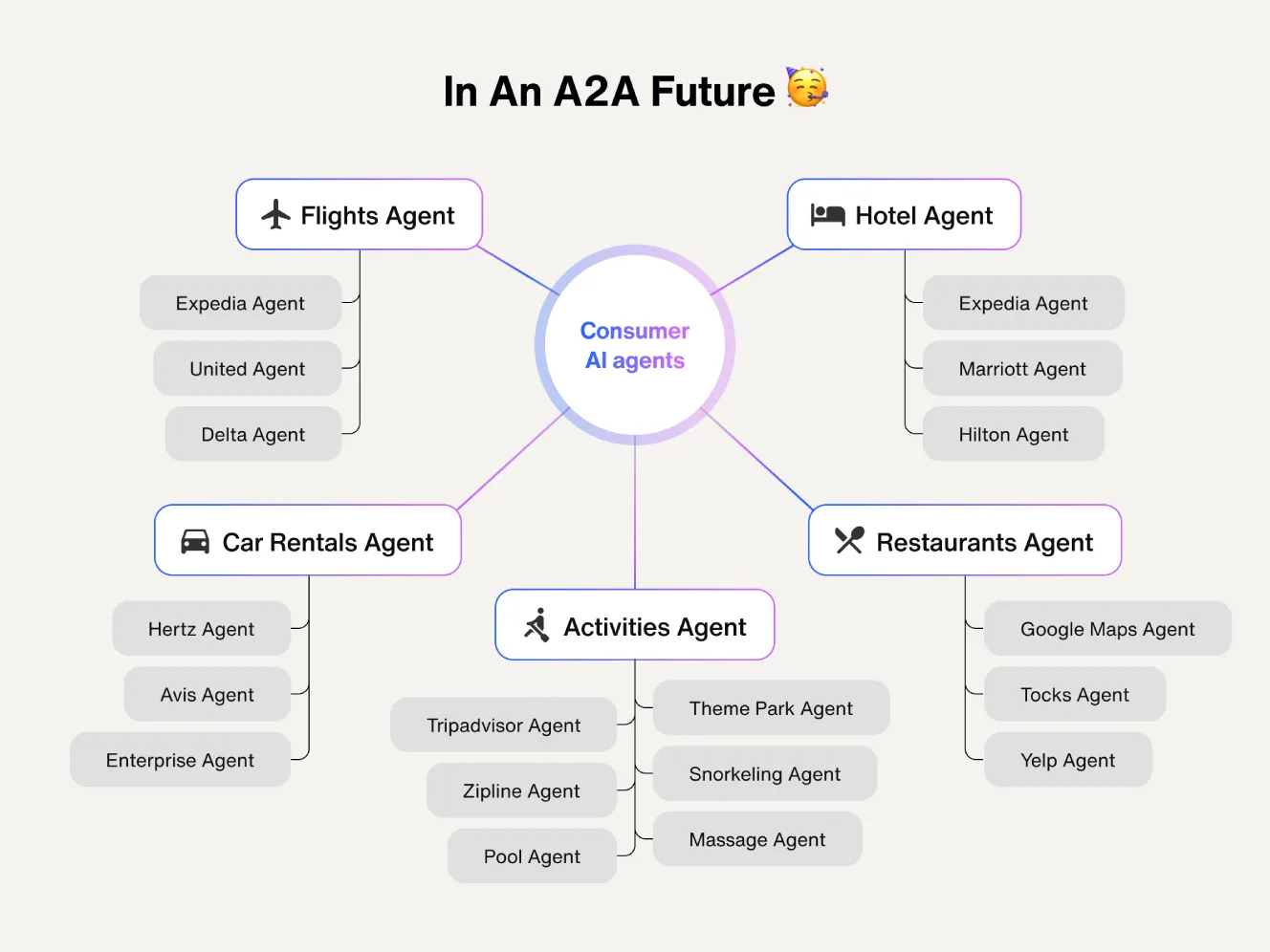
Here’s where it gets sci-fi: By 2026, a lot of shopping will happen through Agent-to-Agent (A2A) commerce.
Picture this: Your customer’s AI agent is negotiating directly with your brand’s AI agent. Pricing, promotions, and inventory are all optimized in real-time before the customer even opens your site.
The impact? Commerce becomes predictive instead of reactive. You’re not waiting for customers to browse, you’re already serving them exactly what they need, when they need it, at the right price.
Honestly, brands are about to compete for agent attention, not just human attention. Wild times.
“Companies have spent decades refining consumer journeys, fine-tuning every click, scroll, and tap. But in the era of agentic commerce, the consumer no longer travels alone. Their digital proxies now navigate the commerce ecosystem, making millions of microdecisions daily. To thrive, brands must rethink the full stack of engagement—not for the people they’ve worked to understand but for the agents now acting on their behalf.”
4. Human Attention Just Became Your Most Valuable Asset
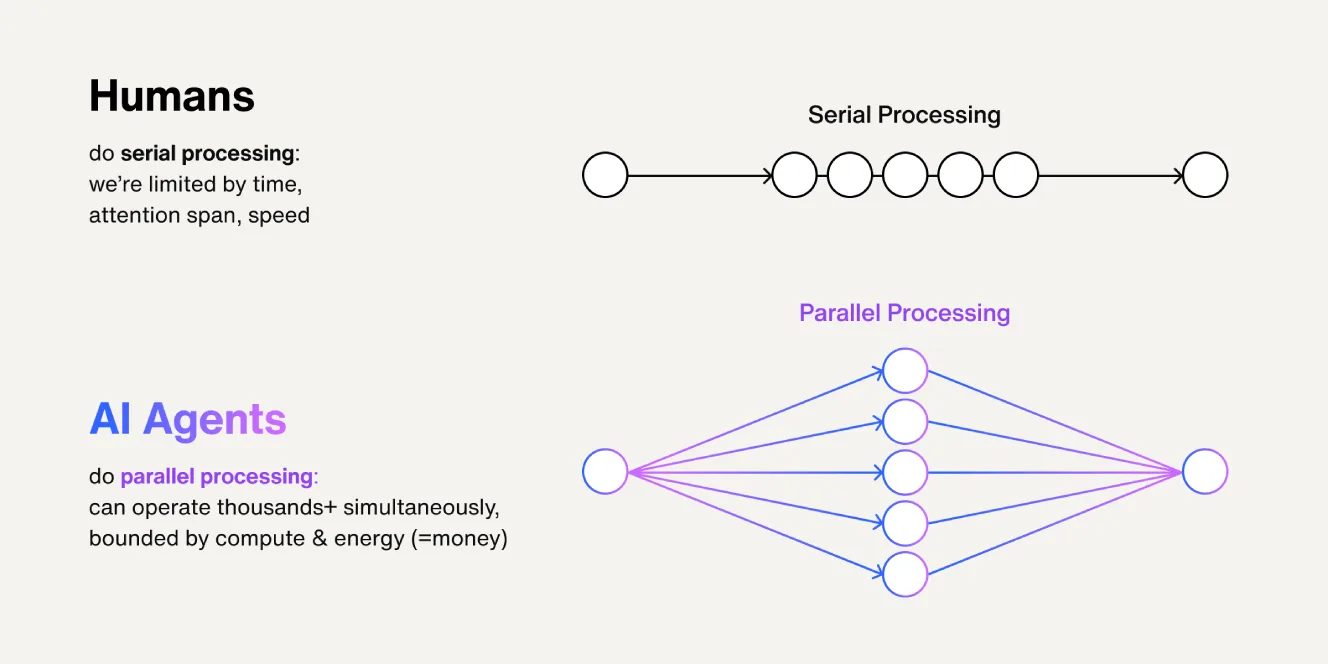
Here’s a stat that stopped me cold: Netcore predicts consumer traffic will split 50-50 between humans and AI agents acting on their behalf.
So now you’ve got two audiences:
- Humans who want emotional connection, storytelling, and values
- AI agents who want structured data, credibility, and clear value signals
You need both. The AI agent is the gatekeeper deciding what even reaches the human. If you can’t talk to the agent in the language it works in, you never get a shot at the person.
Attention, not reach, is the new moat. Get good at capturing both, or get left behind.
5. Pay-for-Value Is About to Disrupt Software Pricing
You know how we’ve been paying for martech? Licenses, seats, feature bundles; basically paying for the privilege of using software, whether it works or not?
Yeah, that’s over.
Outcome-based pricing is coming, and it’s tied directly to actual results:
- Conversions you generate
- Revenue you drive
- Customer lifetime value you create
No more “we spent $X on this platform” conversations. Now it’s “this platform delivered $Y in measurable growth.”
Marketing is about to become radically more accountable, and honestly, I’m here for it. No more budget black holes.
6. CMOs Are Becoming Chief AI & Profits Officers
This is the big one. As agentic systems handle execution, the CMO role is fundamentally transforming into:
- Chief AI Officer: Orchestrating autonomous systems, governing data and ethics
- Chief Profits Officer: Owning revenue, growth, and measurable outcomes
Marketing is shifting from a support function to a primary profit engine. We’re not the cost center anymore, we’re the growth driver with full accountability.
Final Take
Agentic marketing in 2026 is no longer about adding more AI tools to an already crowded stack; it’s about orchestrating intelligence at scale. As multi-agent systems take over execution, marketing shifts from manual optimization to strategic direction, where humans define intent, constraints, and creativity while AI agents handle speed, precision, and personalization.
Agentic commerce will blur the line between discovery, decision, and purchase, while human attention becomes the scarcest currency brands compete for. In a world where agents talk to agents, relevance not reach will determine winners.
The real advantage won’t come from using AI, but from managing teams of specialized AI agents that collaborate across channels, journeys, and moments. Platforms built for agentic marketing will transform marketers into conductors of intelligent systems, setting strategy, overseeing performance, and continuously refining outcomes in real time.
The future of marketing isn’t automated.
It’s agentic, orchestrated, and human-led.

