




TL;DR
- Traditional insurance renewal journeys rely on static reminders that fail to adapt to real-time customer intent.
- Agentic marketing uses AI to predict churn risks, personalize engagement, and optimize renewal journeys automatically across channels.
- Instead of reactive follow-ups, insurers can proactively influence renewals using behavioral intelligence and autonomous decisioning.
- The future of insurance renewals will be driven by intelligent, real-time customer engagement, not generic reminder campaigns.
In the insurance sector, securing renewals can account for up to 60% of total revenue, yet legacy automated reminders consistently fail to prevent policyholder churn. Insurance renewals are no longer just operational reminders; they are moments that directly impact customer retention, lifetime value, and revenue growth. Yet most insurers still rely on static renewal journeys, generic notifications, and reactive engagement strategies that fail to adapt to customer intent in real time. By the time a customer starts comparing competitors, the renewal window is often already lost.
In an industry where trust, timing, and personalization directly influence policy renewals, agentic marketing enables insurers to create more relevant customer experiences while improving retention rates at scale.
Understanding the Major Problem with Insurance Renewals
Most insurance renewal journeys today are still built on static automation.
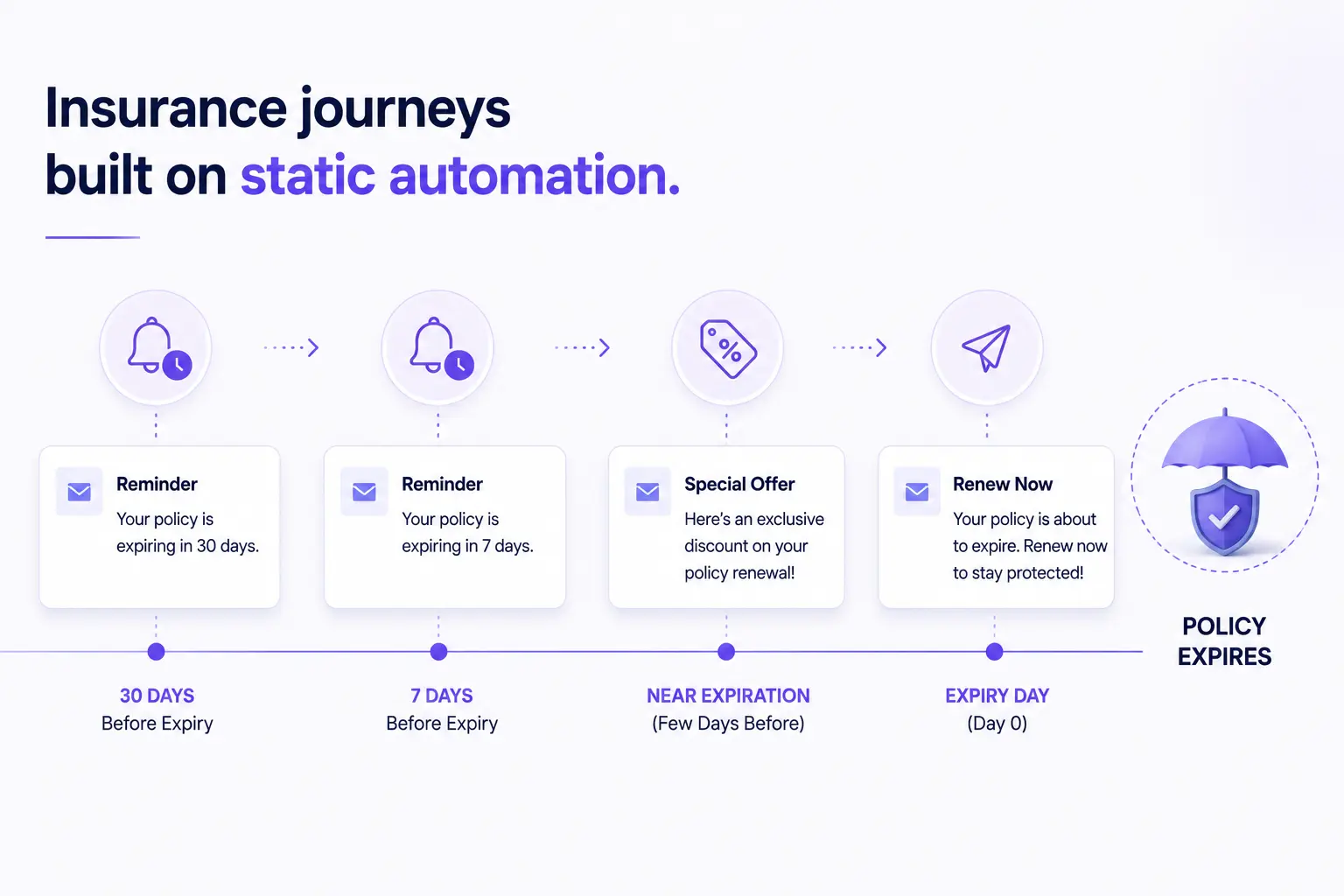
A customer receives:
- A reminder 30 days before expiry
- Another reminder 7 days later
- A discount message near expiration
- A final “renew now” notification
The assumption is simple: send enough reminders and the customer will renew.
But modern customer behavior doesn’t work that way anymore.
By the time a customer starts comparing competitors, searching for lower premiums, ignoring app notifications, or disengaging from communication, traditional renewal systems are already too late. Static workflows cannot detect intent shifts in real time. They operate on fixed timelines instead of customer behavior.
This is becoming a major revenue problem for insurers.
Rising competition, aggregator platforms, digital-first insurance apps, and increasing customer expectations have made renewals far more dynamic than before. Customers now expect insurers to understand their needs, personalize engagement, and proactively simplify the renewal experience across channels.
Generic reminders no longer build loyalty. Intelligent engagement does.
Why Static Renewal Journeys Are Failing
Traditional renewal automation was designed for operational efficiency, not customer intelligence.
Most insurance companies still rely on:
- Fixed reminder schedules
- Static customer segments
- Generic messaging
- Channel-based campaigns operating in silos
- Manual optimization cycles
The result is predictable:
- Low engagement rates
- Declining renewal conversions
- Higher customer churn
- Increased acquisition dependency
- Wasted communication spend
The biggest problem is that static systems treat every policyholder the same.
A high-value customer exploring competitor pricing requires a completely different engagement strategy than a customer who simply forgot their renewal deadline. Yet traditional automation platforms cannot dynamically adapt experiences based on real-time behavior.
This is where the insurance industry is reaching a breaking point.
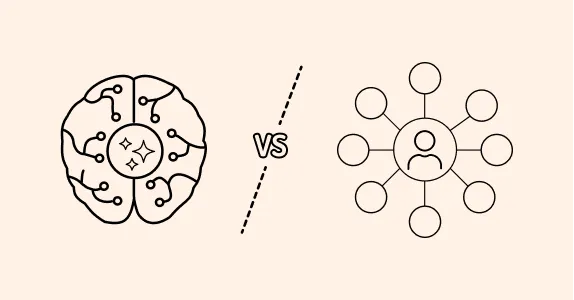
Static Renewal Journeys vs Agentic Marketing
| Static Renewal Journeys | Agentic Marketing |
|---|---|
| Triggered on fixed timelines | Triggered by real-time customer behavior |
| Generic renewal reminders | Personalized engagement based on intent |
| Manual segmentation | AI-driven dynamic audience intelligence |
| Same message for every customer | Contextual communication for each policyholder |
| Reactive retention | Predictive churn prevention |
| Channel silos | Omnichannel orchestration |
| Human-led optimization | Autonomous AI optimization |
| Measures sends and opens | Optimizes for renewals and retention |
Static automation focuses on sending campaigns. Agentic marketing focuses on influencing outcomes.
Why Agentic Marketing Is Becoming a Necessity in Insurance
The insurance industry is shifting from transactional relationships to continuous customer engagement using an Agentic Marketing Platform.
Customers now interact across:
- Apps
- Websites
- SMS
- Digital marketplaces
- Customer support channels
Every interaction creates intent signals.
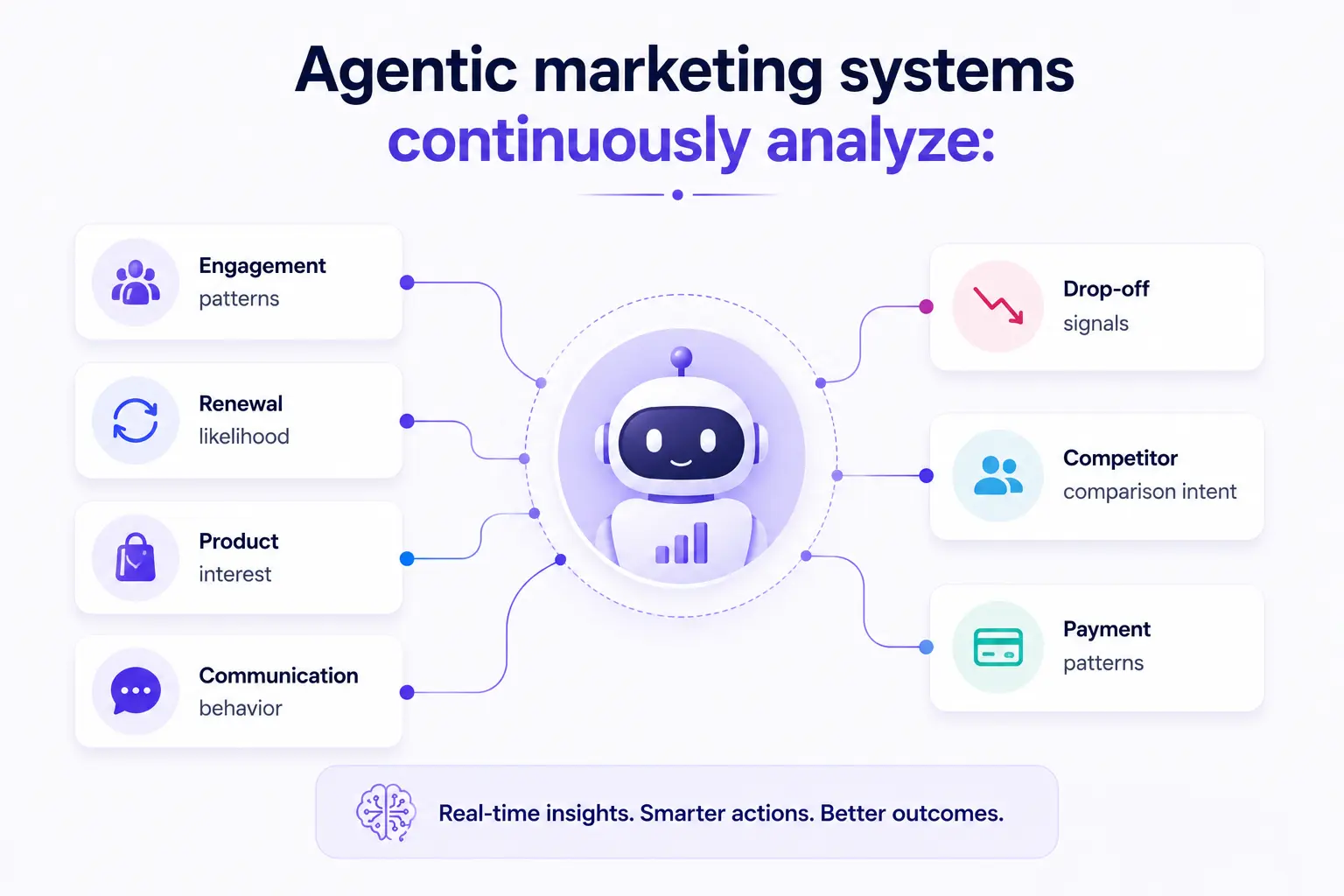
Agentic marketing systems continuously analyze:
- Engagement patterns
- Renewal likelihood
- Product interest
- Communication behavior
- Drop-off signals
- Competitor comparison intent
- Payment patterns
Instead of waiting for churn to happen, AI agents proactively intervene with personalized engagement designed to improve renewal probability.
For example:
- A disengaging customer may receive a personalized retention offer.
- A highly active user may get loyalty-driven incentives instead of discounts.
- A customer browsing health insurance upgrades may receive contextual cross-sell recommendations instantly.
The system continuously learns and optimizes automatically.
This is the shift from reactive renewals to intelligent retention.
Proof Point: Bajaj General Insurance Improved 3-in-5 Digital Renewals
Bajaj General Insurance partnered with Netcore to improve digital renewals and reduce customer drop-offs across its insurance journeys.
The challenge was clear:
- Customers were missing renewal reminders
- Generic communication reduced engagement
- Manual follow-ups created operational delays
- Drop-offs increased due to disconnected customer journeys
To solve this, Bajaj General Insurance implemented intelligent, behavior-driven engagement journeys powered by Netcore.
Key initiatives included:
- Omnichannel renewal reminders across Email, SMS, RCS, and App Push
- Fallback sequencing to ensure uninterrupted communication
- Voice-bot disposition integration to trigger automated journeys in real time
- Personalized nudges based on expiry date, product type, location, and preferred language
- Vernacular messaging to improve customer understanding and actionability
The impact demonstrated how agentic engagement can directly reduce lead and renewal drop-offs:
- 3-in-5 digital renewals driven through automated journeys
- 42% retention improvement in the Two-Wheeler line of business
- 14.8% higher CTR from vernacular SMS compared to generic messaging
- 81X ROI from intelligent engagement initiatives
- 360% increase in conversions
- 80% increase in lead generation
The biggest shift was not simply automating reminders.
It was the ability to continuously personalize communication, optimize engagement timing, and orchestrate journeys dynamically based on customer behavior and context.
The Future of Insurance Renewals Is Autonomous
Insurance companies can no longer depend solely on renewal reminders and reactive retention tactics.
As customer expectations evolve, the winning insurers will be the ones that:
- Detect churn before it happens
- Personalize engagement dynamically
- Coordinate journeys across channels
- Optimize communication in real time
- Build continuous trust beyond policy expiration dates
This is why agentic marketing is no longer an innovation initiative.
It is becoming a retention necessity.
Final Take
Static renewal reminders are no longer enough for modern insurance customers. Insurers need intelligent systems that can predict intent, personalize engagement, and proactively improve renewals across every channel.
That’s where agentic marketing makes the difference. Netcore helps insurance brands use AI-driven personalization, predictive churn detection, and autonomous customer journeys to improve retention, loyalty, and renewal conversions at scale.If you want to turn renewals into a growth engine instead of a retention challenge, it’s time to rethink your customer engagement strategy. Talk to us.