 Worried About Your AI Marketing Strategy? Read the Agentic Marketing 2026 Predictions Report! →





Reimagining Lifecycle Marketing with Agentic Marketing
Customer Lifetime Value is no longer something you measure after the fact. With agentic marketing, CLV becomes something you actively shape in real time by shifting from paid dependency to owned channels.
- Awareness
- Engagement
- Evaluation
- Purchase
- Support
- Loyalty
Modern journeys move too fast for manual execution. Agentic systems adapt messages, timing, and channels based on real-time behavior so engagement stays relevant and profitable.
Track lifecycle outcomes like repeat purchase, churn risk, and CLV uplift in near real time, then let agents optimize journeys continuously instead of waiting for post-campaign reports.
Practical examples include first-time buyer nurturing, replenishment reminders, churn prevention, and loyalty re-engagement powered by real-time intent and personalization.
Lifecycle marketing used to be simple.
You acquired a customer.
You nurtured them with a few emails.
You sent offers when sales were slow.
You hoped they stayed.
That model no longer works in 2026.
Customer engagement is transforming, 65% of customers want brands to adapt to their evolving needs. Their intent changes mid-journey. Their attention resets daily. And their loyalty is earned moment by moment, not through one-off promotions.
The uncomfortable truth is this: lifecycle marketing has outgrown human-led execution.
To maximize CLV today, brands need systems that can think, decide, and act at the same speed as customers.
That is exactly where agentic marketing changes the game.
The Stages of Lifecycle Marketing
Lifecycle marketing is meant to guide customers from first awareness to long-term loyalty. But most brands still treat these stages as static funnels rather than living systems.
Let’s break down each stage of lifecycle marketing and see how agentic marketing reimagines it.
1. Awareness
What typically happens
At the awareness stage, brands rely heavily on paid media. Ads. Influencers. Sponsorships. Discounts. The goal is reach. This is where a customer first discovers your brand, often through ads, search, content, or referrals. The goal is not conversion yet, but relevance, making the right first impression and earning attention without overwhelming them.
The problem is not a lack of visibility. It is attention fatigue. Customers see hundreds of brand messages a day. Most are ignored. 71% of consumers expect personalized interactions, and 76% feel frustrated without them.
What Agentic Marketing Changes
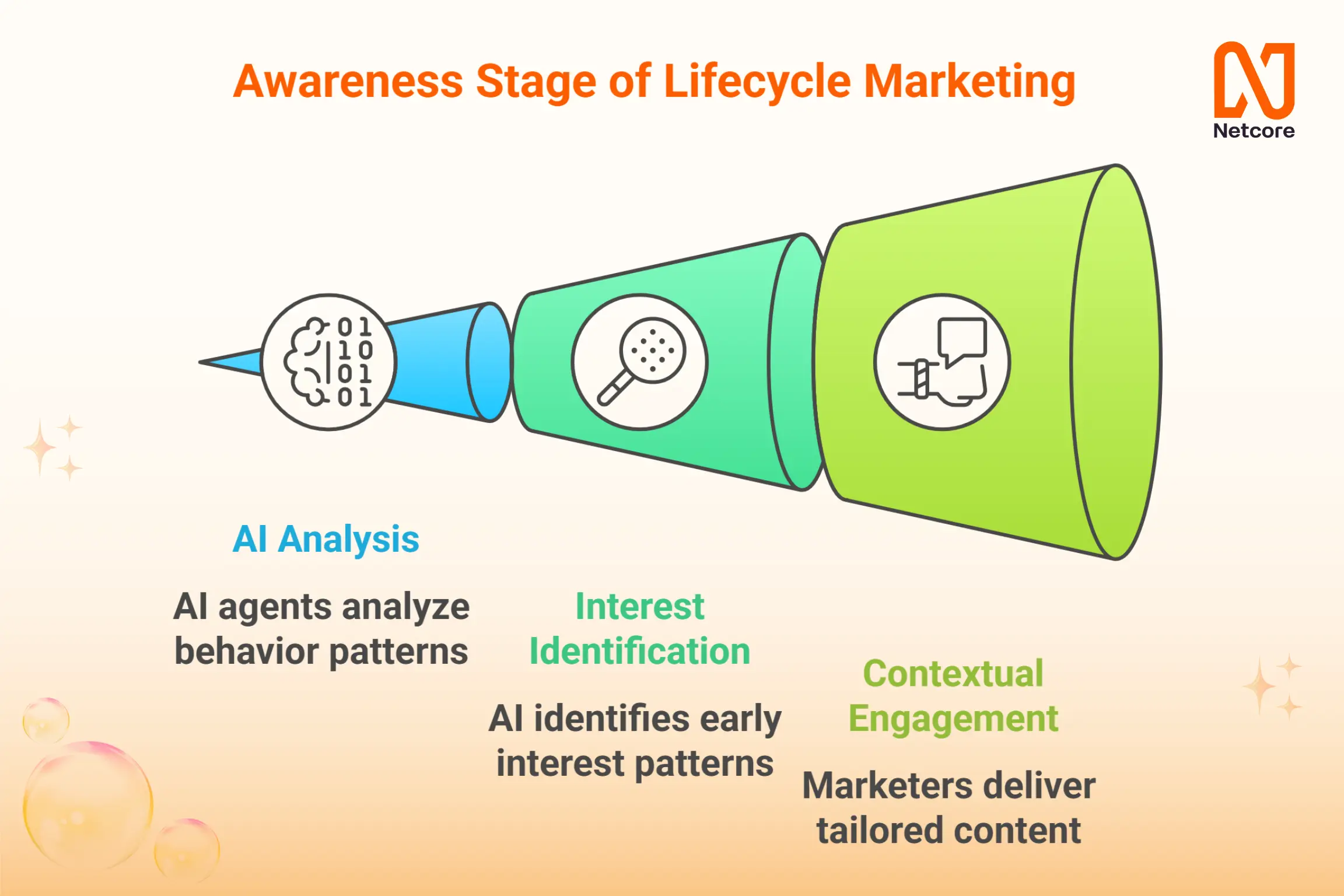
From blasting messages to earning attention.
Agentic systems shift awareness from interruption to relevance.
Instead of pushing generic messages:
- AI agents analyze first-party behavior signals
- Identify early interest patterns across channels
- Trigger lightweight, contextual engagement via owned channels when possible
Awareness becomes less about shouting louder and more about showing up when curiosity already exists.
Result: lower CAC and higher-quality first interactions.
2. Engagement
What typically happens
At this stage, customers start interacting with your brand by browsing products, opening emails, or following you on owned channels. The focus shifts to building interest and familiarity through timely, personalized interactions. Most engagement campaigns rely on:
- Static segments
- Predefined drip journeys
- Fixed send schedules
If behavior changes mid-flow, the journey does not.
What agentic marketing changes
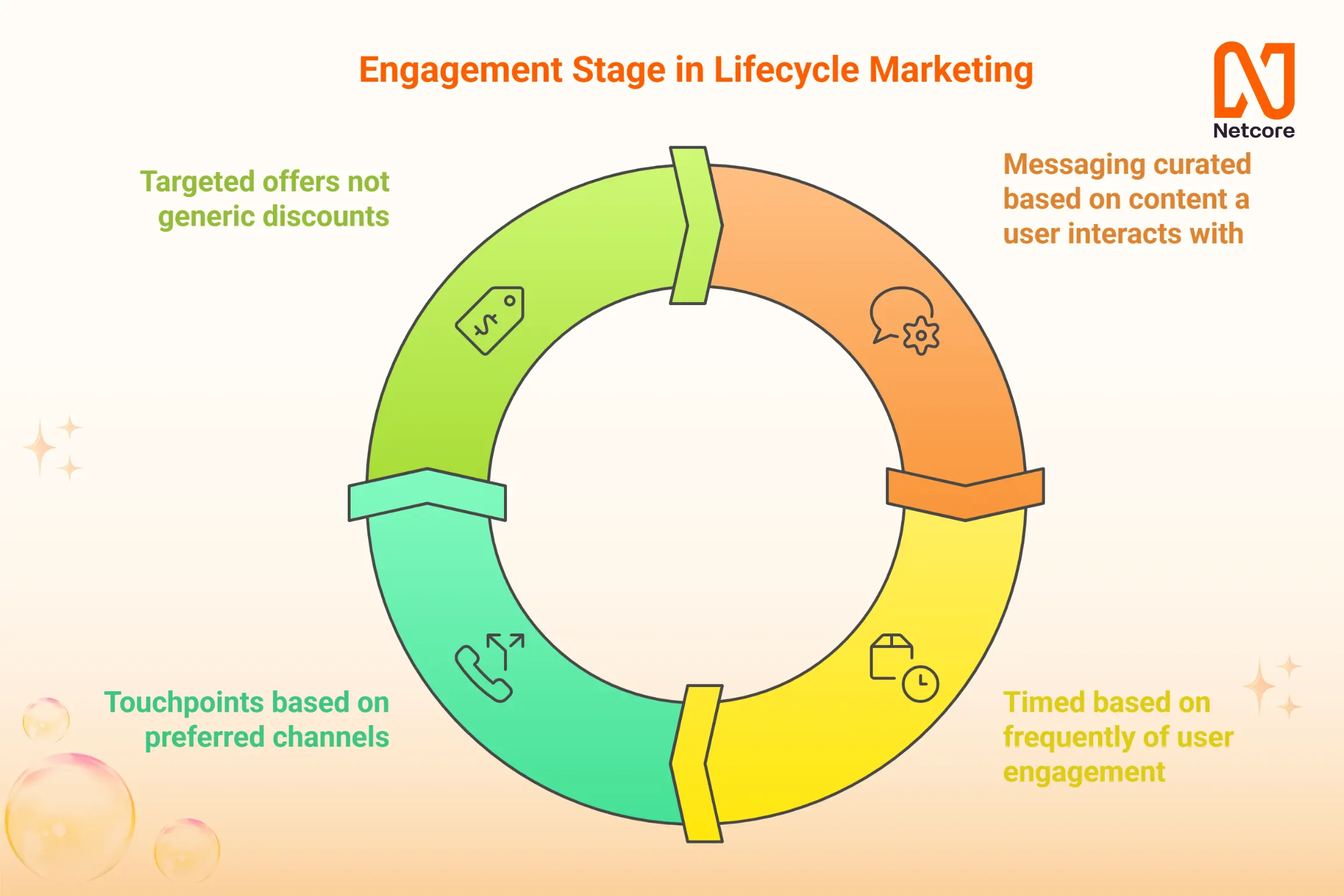
From one-size-fits-all nurture to intent-driven interaction.
Agentic systems continuously monitor engagement depth:
- What content a user interacts with
- How frequently they engage
- Which channels they prefer
- Where attention starts to decay
AI agents dynamically adjust:
- Messaging
- Frequency
- Channel mix
- Content format
Engagement becomes adaptive, not linear.
Result: customers stay engaged longer without feeling overwhelmed.
3. Evaluation
What typically happens
Customers are actively comparing options, reading reviews, and weighing alternatives at the evaluation stage. This is where clear value, social proof, and contextual nudges help reduce hesitation and move them closer to a decision. They read reviews. They open multiple tabs. And many drop off due to decision fatigue.
Marketing teams usually respond with:
- Reminder emails
- Retargeting ads
- Generic comparison content
What Agentic Marketing Changes
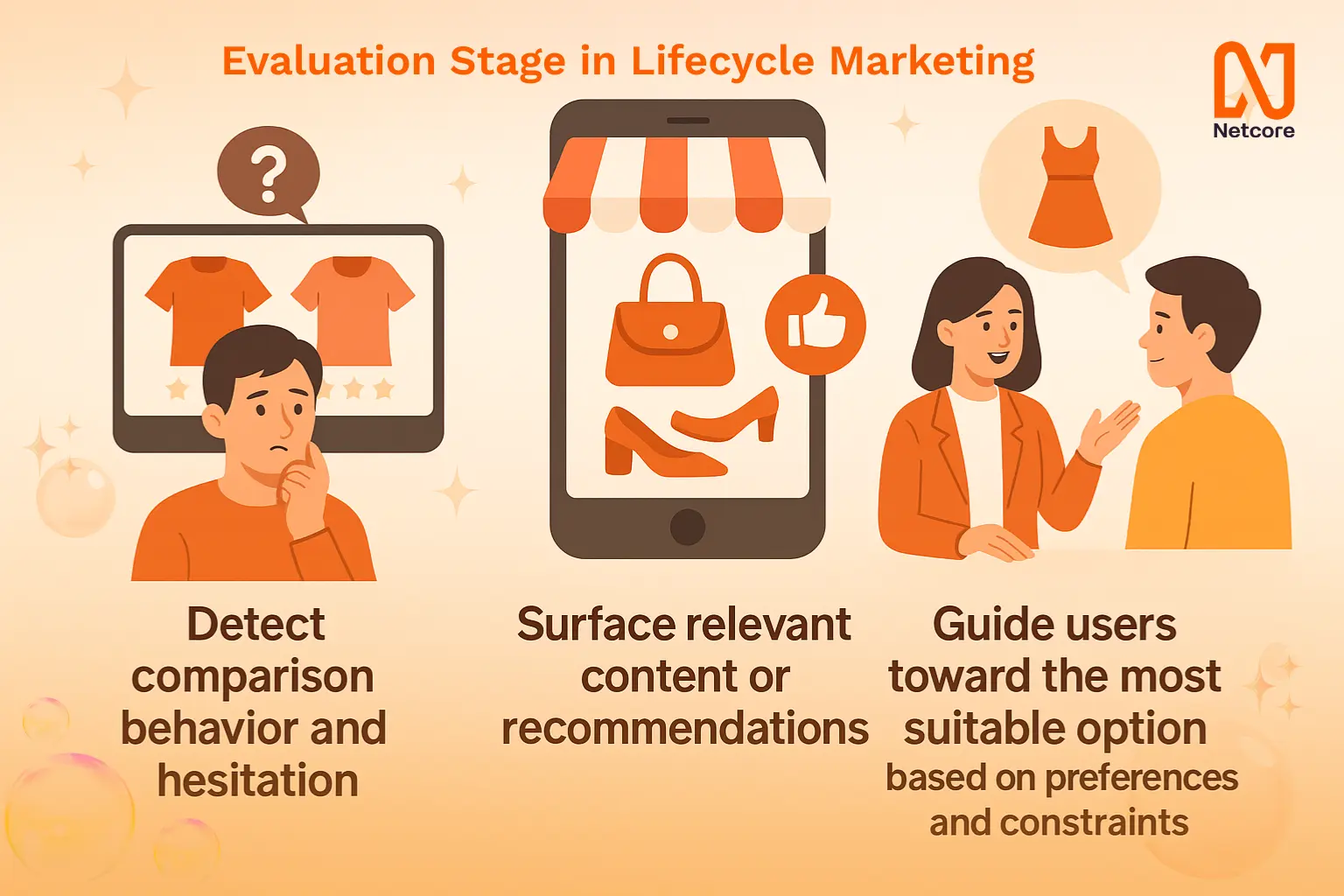
From friction-heavy browsing to guided decision-making.
Agentic marketing recognizes evaluation as a decision problem, not a visibility problem.
AI agents:
- Detect comparison behavior and hesitation
- Surface relevant content or recommendations
- Guide users toward the most suitable option based on preferences and constraints
Instead of pushing offers, brands help customers decide.
Result: faster time-to-purchase and higher conversion confidence.
4. Purchase
What typically happens
The customer commits and completes the transaction. The objective here is frictionless checkout, reassurance, and confidence so nothing derails the moment of intent. Once a customer is ready to buy, brands often:
- Apply blanket discounts
- Push urgency messaging
- Treat all buyers the same
This erodes margin and teaches customers to wait for deals.
What agentic marketing changes
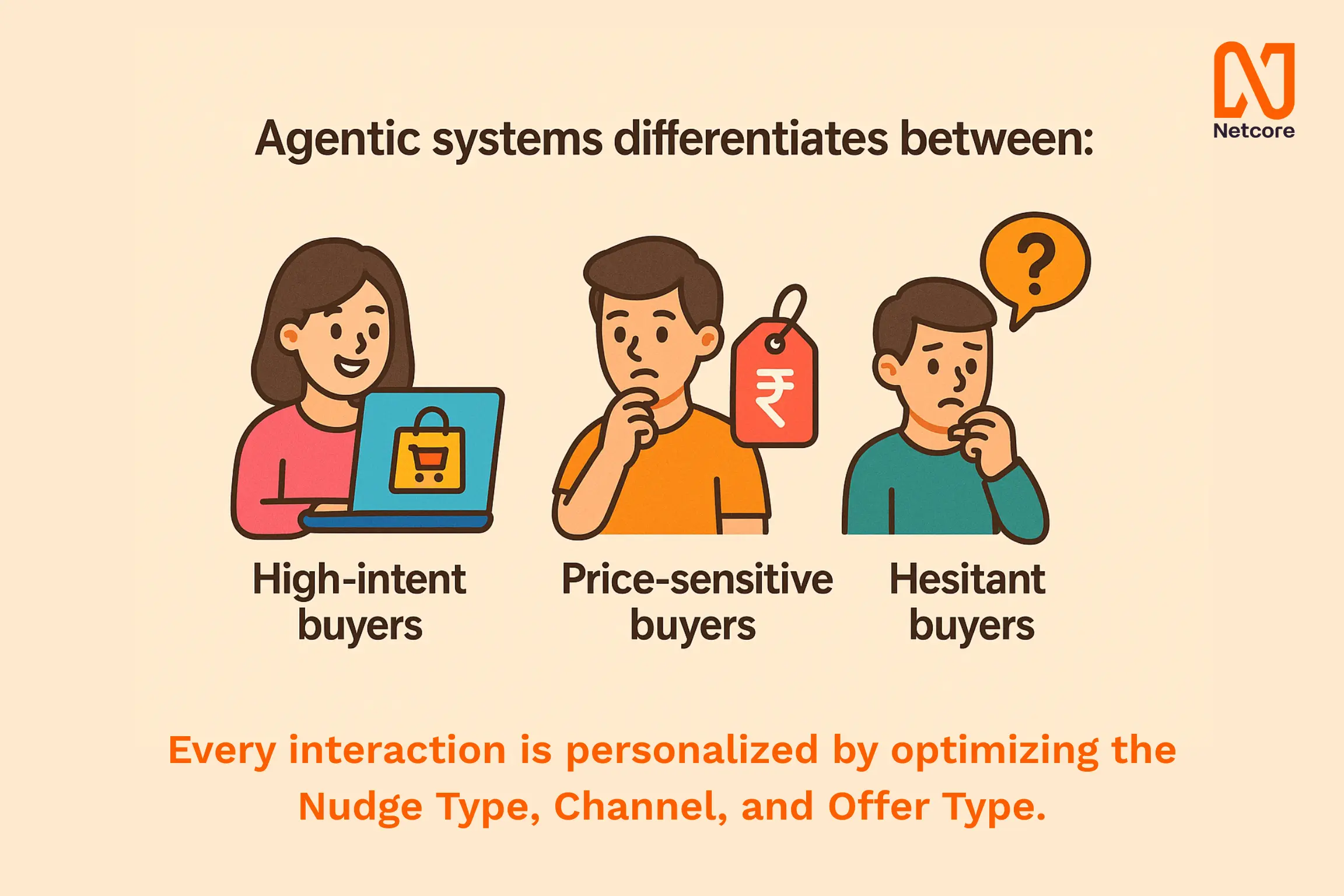
From transaction-focused to momentum-driven conversion.
Agentic systems differentiate between:
- High-intent buyers
- Price-sensitive buyers
- Hesitant buyers
Based on real-time signals, agents decide:
- Whether an incentive is needed
- What type of nudge works best
- Which channel closes fastest
Purchases are optimized for outcome, not volume.
Result: higher conversion rates without default discounting.
5. Support
What typically happens
Support is often siloed from marketing. Issues are resolved only after customers complain. By then, trust is already damaged.
What agentic marketing changes
From reactive service to proactive retention.
Agentic systems treat support as a CLV lever.
AI agents:
- Detect friction signals post-purchase
- Trigger proactive reassurance, tips, or help content
- Follow up after issue resolution to rebuild confidence
Support becomes part of the lifecycle, not an afterthought.
Result: reduced churn and stronger post-purchase trust.
6. Loyalty
What typically happens
Loyalty programs focus on:
- Rewards
- Points
- Discounts
They often fail to recognize emotional loyalty or engagement decay.
What agentic marketing changes
From points programs to relationship intelligence.
Agentic systems continuously evaluate loyalty health:
- Engagement consistency
- Repeat behavior patterns
- Value contribution over time
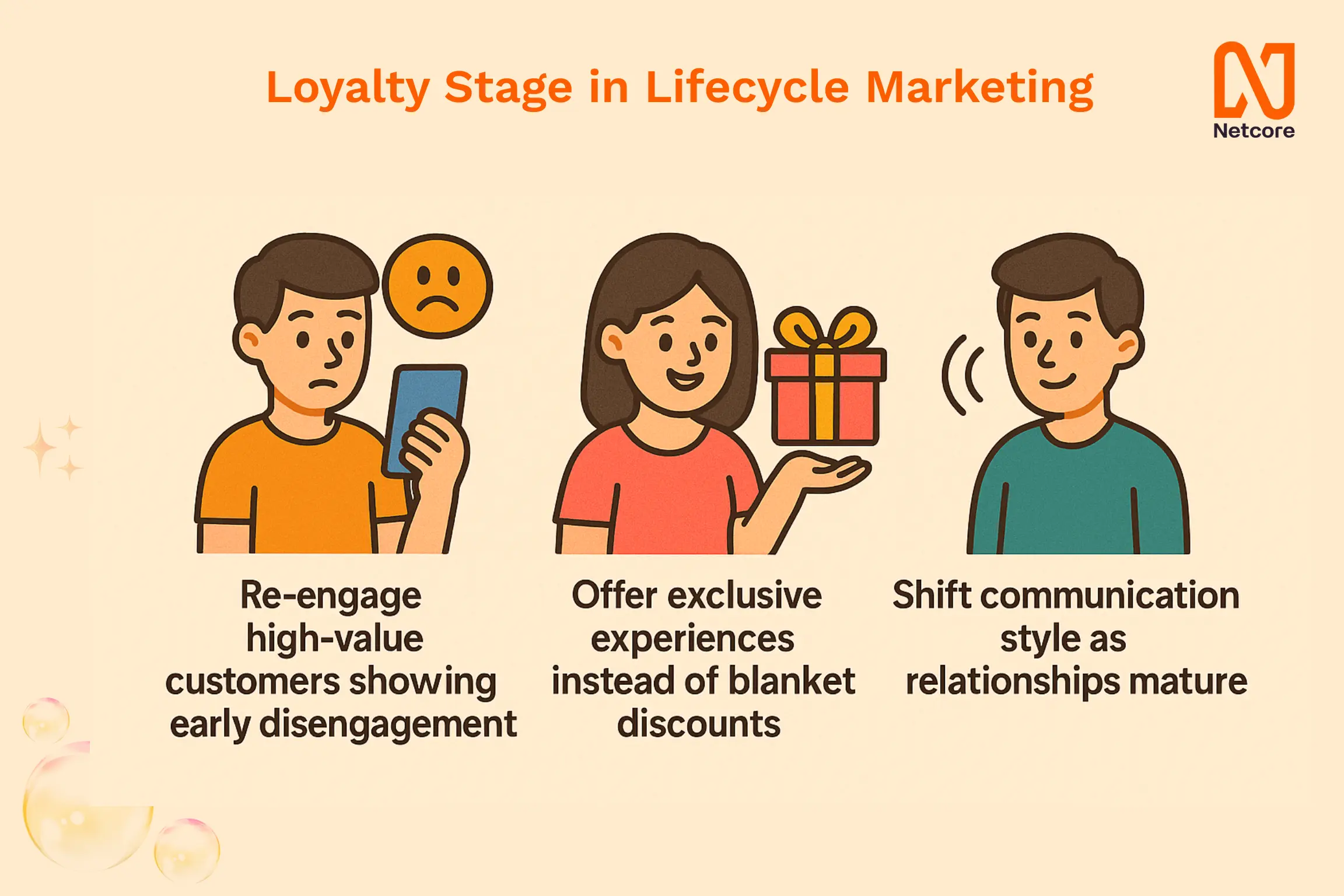
AI agents proactively:
- Re-engage high-value customers showing early disengagement
- Offer exclusive experiences instead of blanket discounts
- Shift communication style as relationships mature
Loyalty becomes dynamic and personal.
Result: sustainable CLV growth, not just repeat purchases.
Why Lifecycle Marketing Needs to Be Automated
Meet Tina.
She’s a senior lifecycle marketer at a fast-growing ecommerce brand. On paper, things look great: traffic is up, campaigns are running across email, push, SMS, and WhatsApp, and the automation platform dashboard is full of green ticks.
But Tina feels constantly behind.
Every morning starts the same way. She opens Slack to a flood of messages:
“Can we tweak the onboarding journey?”
“Cart abandonment is spiking in California.”
“Retention is dipping for repeat buyers.”
None of these are small ask. Each one requires pulling data, checking segments, adjusting journeys, and coordinating across tools. By the time Tina figures out what happened, the moment to act has already passed.
This is the hidden flaw of traditional automation. It helped Tina scale execution, but it never scaled intelligence.
Today, Tina isn’t managing a few campaigns. She’s managing:
- Thousands of customers are moving at different speeds
- Dozens of touchpoints are firing simultaneously
- Hundreds of micro-decisions are happening every second
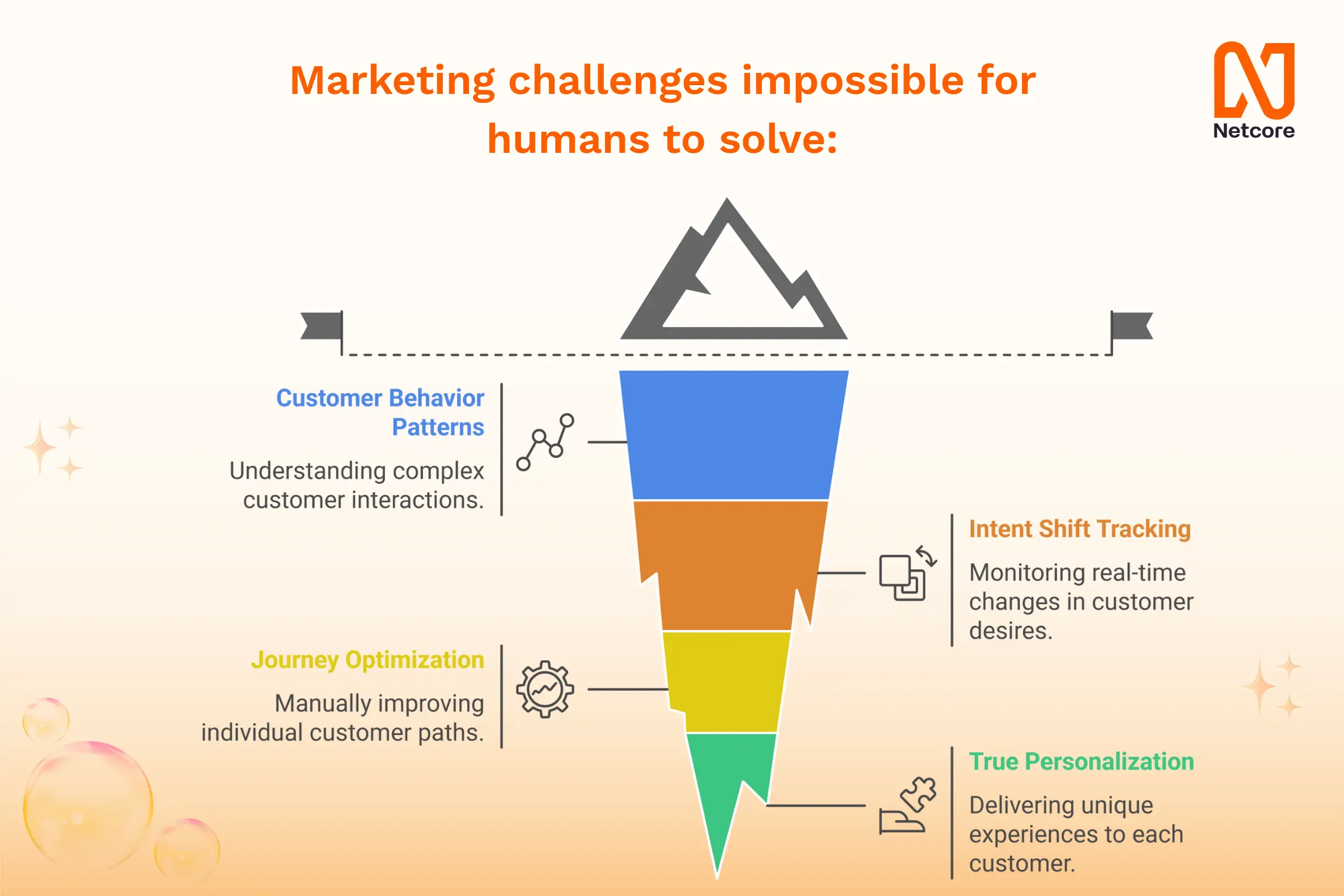
No human team can realistically:
- Track every intent shift as it happens
- Manually optimize every journey
- Deliver personalization that truly feels N=1
So what happens instead? Tina defaults to rules, averages, and delayed reports. Good enough becomes the goal. Growth slows quietly.
Agentic marketing changes Tina’s job entirely.
A week after switching, Tina notices something different. She is no longer starting her day by refreshing dashboards. The system is already working.
When a group of customers starts browsing premium products late at night without buying, the Segment Agent quietly builds a new cohort in real time. These are not static filters, but high-intent users with a rising propensity to purchase. No SQL. No waiting for the data team. The segment exists the moment the behavior does.
The Journey Orchestrator picks it up next. It adjusts touchpoints on the fly, switching from email to WhatsApp for users who have historically responded faster there. It shortens the journey for repeat buyers, adds reassurance content for first-timers, and pauses messages automatically if engagement drops. Personalization stops being cosmetic and starts feeling genuinely one-to-one.
Meanwhile, the Insights Agent works in the background. Instead of showing Tina another open-rate chart, it surfaces what actually matters to the business: revenue impact, repeat purchase lift, and churn risk reduction tied to each journey. When Tina walks into her weekly leadership meeting, she is no longer explaining campaign activity. She is presenting clear outcomes. Growth, margin, and customer lifetime value.
The reaction from leadership is immediate. Fewer questions. More trust. More room to experiment.
Tina is still in control. She sets the goals, defines the narrative, and decides what success looks like. But she is no longer trapped in execution. Her time shifts to strategy, creativity, and long-term growth.
This is not about replacing marketers like Tina.
It is about giving them the leverage to operate at the speed the market now demands.
Measuring Lifecycle Marketing Goals with Agentic Marketing
One of the biggest advantages of agentic marketing is how it changes measurement.
Instead of tracking vanity metrics, agentic systems focus on lifecycle economics.
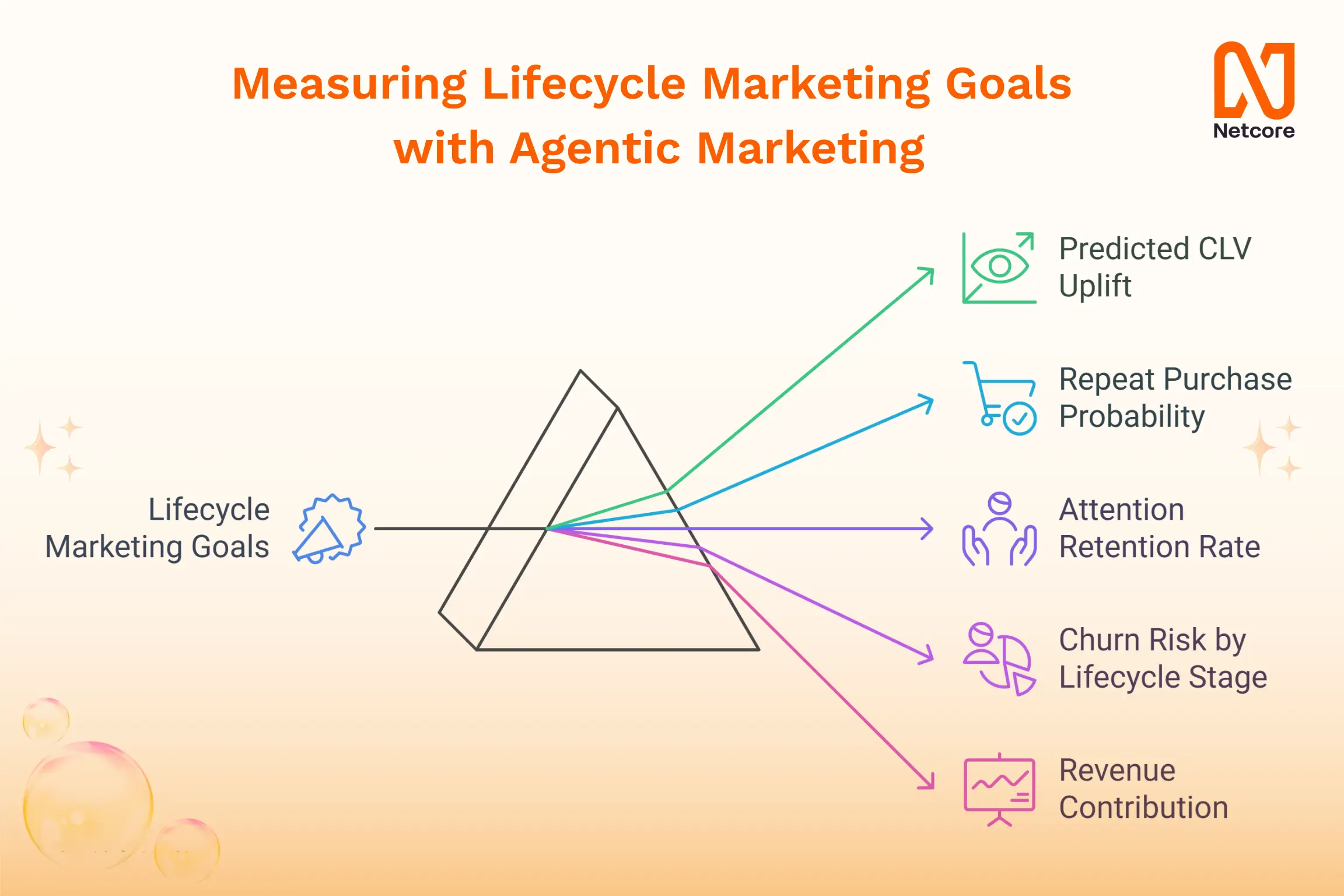
Key metrics include:
- Predicted CLV uplift
- Repeat purchase probability
- Attention retention rate
- Churn risk by lifecycle stage
- Revenue contribution or incremental revenue increase per journey/per campaign
Because AI agents act and measure simultaneously:
- Optimization happens continuously
- Attribution becomes clearer
- ROI ties directly to lifecycle outcomes
Lifecycle marketing becomes measurable, not guesswork.
Examples of Lifecycle Marketing Campaigns Powered by Agentic Marketing
Sharing examples of how lifecycle marketing campaigns can be created using an agentic marketing platform:
Ecommerce: Turning First-Time Buyers into Repeat Customers
Challenge
An ecommerce fashion brand saw strong first-time purchases but weak repeat rates. New customers often went cold help after their first order, despite browsing again.
Lifecycle Phase
Post-purchase → Early loyalty
Strategy
Using agentic marketing, the platform identified first-time buyers with a high probability of a second purchase based on browsing depth, category affinity, and time-to-return signals. Instead of pushing discounts, the agent triggered personalized product education, styling tips, and complementary recommendations aligned with the customer’s first purchase.
Outcome
Repeat purchase rates increased, discount dependency dropped, and Customer Lifetime Value improved as customers returned for value, not price.
Subscription Business: Preventing Churn Before It Happens
Challenge
A subscription-based brand noticed that churn signals appeared weeks before cancellation, but teams reacted too late due to delayed reporting and manual analysis.
Lifecycle Phase
Engagement → Retention
Strategy
An agent detected early disengagement patterns such as reduced usage frequency and skipped interactions. The system automatically adjusted messaging cadence, content relevance, and discount offer timing, without waiting for a churn event or manual intervention.
Outcome
Churn reduced significantly, retention stabilized, and customer save campaigns ran continuously without adding operational load to the team.
Travel & Hospitality: Driving Loyalty-Driven Rebooking
Challenge
A travel brand relied heavily on generic promotions to drive repeat bookings, resulting in low relevance and rising reacquisition costs.
Lifecycle Phase
Loyalty → Re-engagement
Strategy
The agent analyzed past trips, travel styles, seasonal behavior, and booking windows to predict when and where customers were most likely to travel again. Instead of blanket deals, it sent tailored inspiration aligned with individual preferences and timing.
Outcome
Rebooking rates increased, marketing spend became more efficient, and lifetime value grew as customers returned organically rather than through heavy discounts.
Final Take
The uncomfortable truth is this: lifecycle marketing has outgrown human-led execution. One-off campaigns, blanket discounts, and manual optimizations simply cannot keep up with how fast customer intent shifts today.
Maximizing Customer Lifetime Value is no longer about doing more promotions. It is about building systems that can think, decide, and act at the same speed as your customers across every lifecycle stage.
Agentic marketing changes the game by moving beyond execution-heavy automation. It brings intelligence into the system. AI agents continuously observe behavior, predict intent, personalize experiences, and adjust journeys in real time. From awareness to loyalty, every interaction becomes adaptive, relevant, and economically meaningful.
The examples across lifecycle stages show what is now possible. Better personalization without discounts. Smarter segmentation without manual queries. Journeys that evolve without waiting for reports. And insights that connect engagement directly to revenue impact.
This is not about replacing marketers. It is about finally giving them leverage. In 2026, the brands that win CLV will not campaign harder. They will architect smarter, agent-led lifecycle systems that compound value over time.

