




If you ask most marketing leaders about conversion rate optimization, you’ll hear the same answers. Measure campaign interactions. Track clicks and purchases. Optimize landing pages. Run A/B tests. Tweak the checkout flow.
All of this matters. But here’s the problem: it’s incomplete.
The Blind Spot: You’re Measuring Conversions, Not Attention
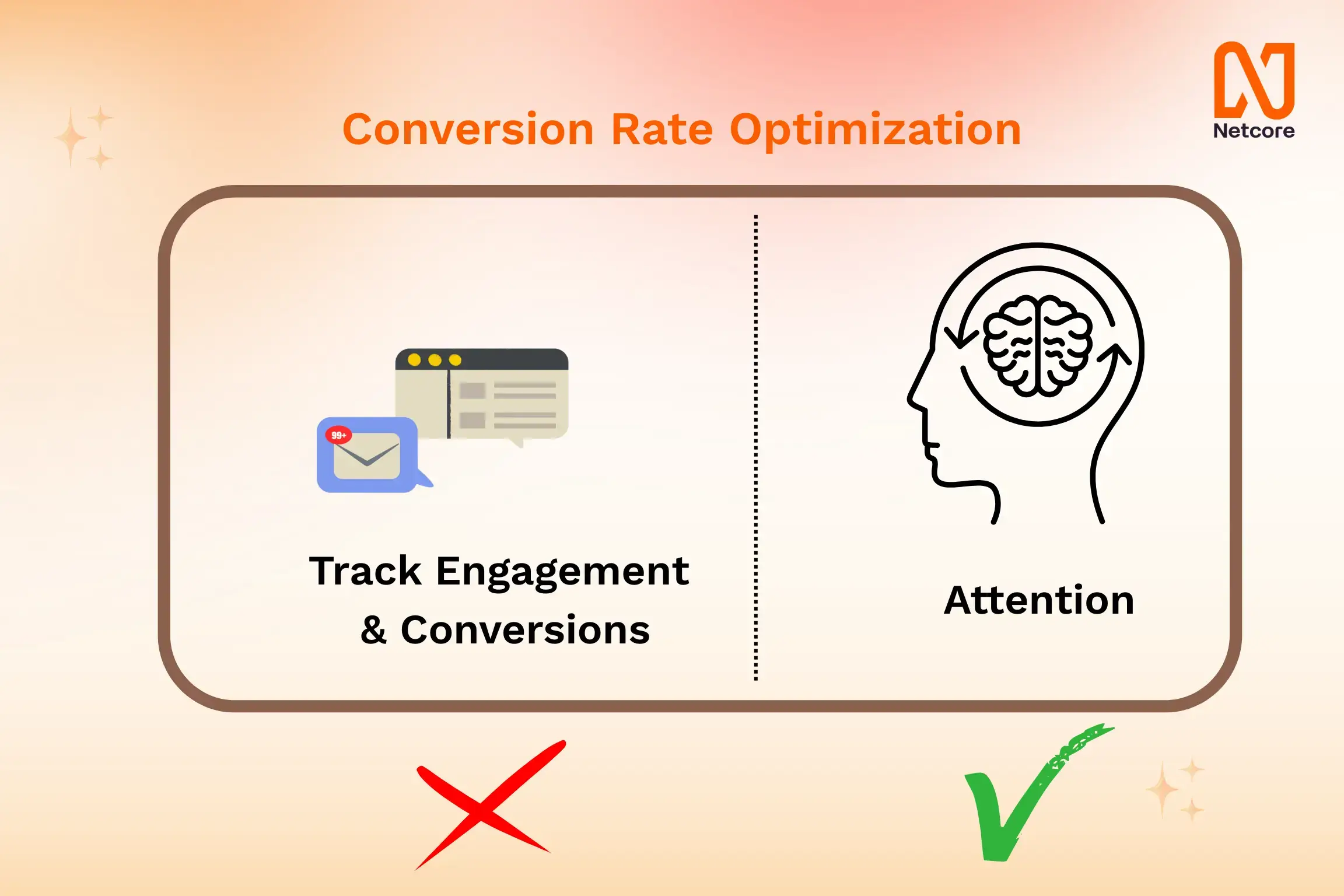
Your campaign conversion rate doesn’t tell the whole story. It only measures the people who actually saw your message and took action. But what about everyone who never opened your email? Never clicked your push notification? Never engaged with your WhatsApp message?
If customers don’t open your messages, they never even enter your funnel. You can have the most optimized landing page in the world, but it means nothing if people aren’t paying attention in the first place.
The Real CRO Problem: Attention Leak
Here’s a metric most brands ignore: real reach. That’s the percentage of users who opened at least one message from you in the last 90 days. Not your total database size. Not your email list count. The actual number of people who are still paying attention.
Silent disengagement is quietly reducing your true conversion pool. You cannot optimize conversions from people who aren’t listening. Every day, your addressable audience shrinks while your metrics pretend everything’s fine.
Core thesis: Conversion rate optimization begins with retaining the attention of your customers, not just optimizing campaigns and funnel tweaks.
Redefining Conversion Rate Optimization in the Attention Economy
The funnel model we’ve used for decades needs an update. Traditional CRO assumes everyone is already in the funnel. But that assumption breaks down when half your database has mentally checked out.
From Funnel Optimization to Attention Optimization
Traditional CRO focuses on optimizing page-level drop-offs. You improve button copy, simplify forms, and reduce friction at checkout. These tactics work, but only for people who made it to those pages.
Agentic marketing approaches conversion rate optimization at a foundational level. Instead of only optimizing steps within the funnel, it continuously improves who enters the funnel and when. By using autonomous AI agents to analyze intent, context, and behavioral signals, it dynamically orchestrates journey paths to engage customers at moments when they are most likely to respond and convert.
Real Reach vs Reported Reach
Your marketing platform tells you that you have 100,000 email subscribers. Sounds great, right? But dig deeper. How many of those people opened an email from you in the last three months? Maybe 40,000. That’s your real reach.
The other 60,000? That’s your ghost database. They’re inflating your metrics and making your conversion rates look worse than they actually are. If you optimize for the wrong denominator, you’ll make the wrong decisions.
The Economics of Attention
Lost attention has real financial consequences. When your owned audience stops engaging, you have to spend more on paid acquisition. Lower engagement drives higher customer acquisition costs. Your conversion efficiency depends entirely on the size of your active audience.
That’s why agentic marketing focuses on attention for better Conversion Rate optimization, not just conversion mechanics.
Why Traditional Automation Fails at Conversion Optimization
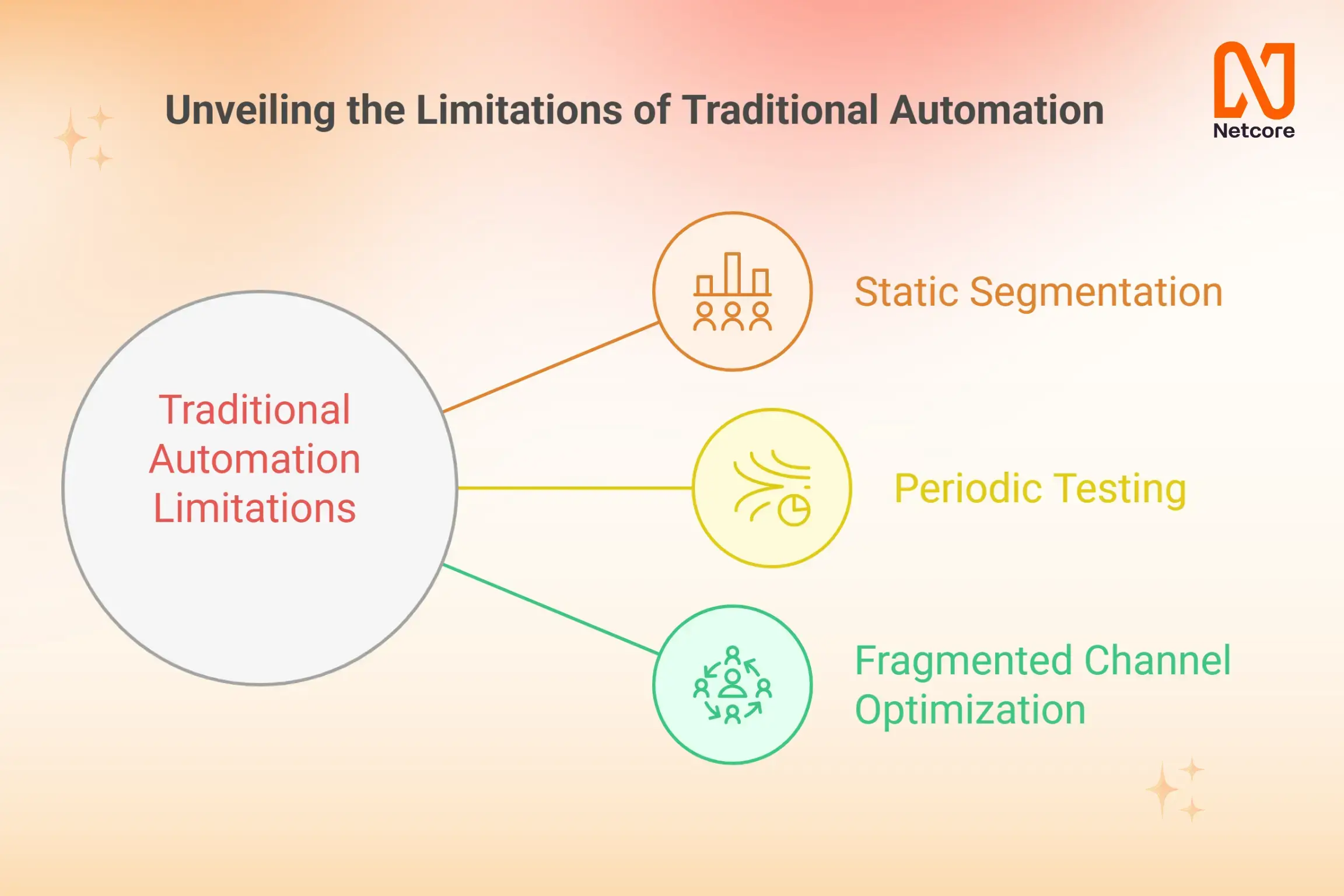
Before we talk about what works, let’s be clear about what doesn’t. Traditional marketing automation has serious structural limitations. Let’s dive straight into them:
1. Static Segmentation Limits Precision
Most automation platforms use fixed cohorts. Someone gets tagged as “interested in shoes” and stays in that segment until you manually update it. But buying intent changes constantly. Someone browsing sneakers on Monday might be shopping for boots by Friday.
Static segments can’t keep up with real behavior. They’re always working with outdated information.
2. Periodic Testing is a Slow Process
A/B testing in cycles means you’re always behind. You run a test for two weeks, analyze results, manually implement what works better, and then start planning the next test. Meanwhile, customer preferences have already shifted.
This approach made sense when manually reviewing campaigns was necessary. It no longer makes sense in the world of agentic marketing.
3. Fragmented Channel Optimization
Your website team optimizes for web conversions. Your email team optimizes for email clicks. Your app team optimizes for push notifications. Nobody has a unified view of the customer journey across all these touchpoints.
You need a single decision engine that optimizes the entire experience, not just isolated channels.
How CRO Changes Inside Agentic Marketing
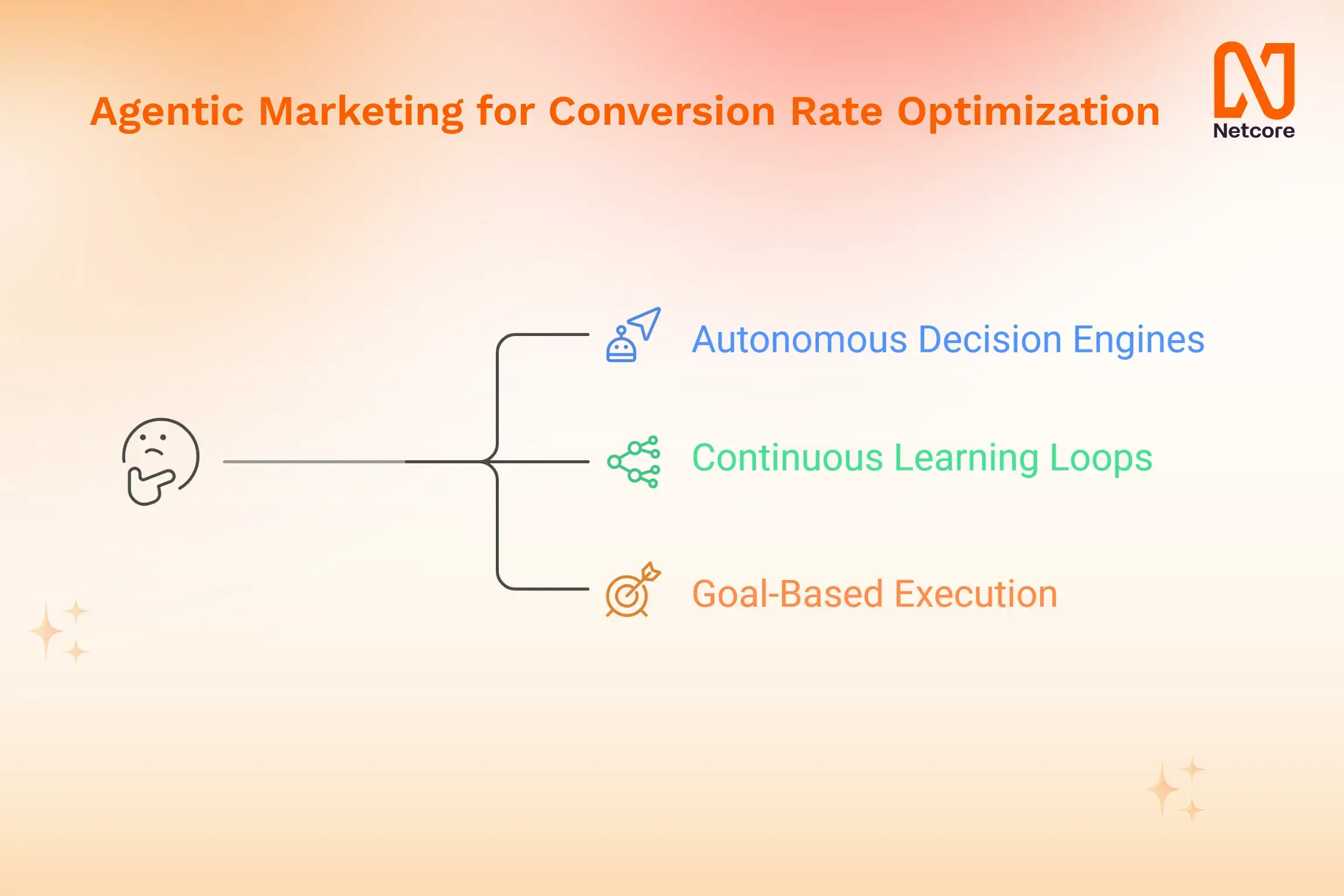
Agentic marketing replaces rule-based triggers and workflows with self-improving decision systems. Instead of “if this, then that” logic, you get AI agents that observe, learn, and adapt.
Autonomous Decision Engines
AI agents constantly observe customer behavior, evaluate context, and decide the next-best action for each individual. No manual rules required. Decisioning Agents learn what works and do more of it automatically.
This is a real-time campaign optimization that works autonomously with oversight of humans.
Continuous Learning Loops
Every interaction refines the targeting. Every purchase, every click, every ignored message feeds back into the system. Optimization never pauses. The agents get smarter with each data point.
Traditional campaigns end, and you extract learnings. Agentic systems learn continuously as they execute tasks.
Goal-Based Execution
You tell the system what you want to optimize for: revenue, conversions, or engagement depth. The AI agents figure out how to get there. They test approaches, identify patterns, and allocate effort to what drives results.
The key shift is moving from rule-based triggers to genuinely intelligent, autonomous systems that improve themselves.
How Agentic Marketing Reimagines the Conversion Problem
Now let’s get specific. Here’s exactly how agentic marketing for funnel conversion uplift actually works in practice.
1. AI-Powered Segmentation: Reaching the Right Audience
Instead of putting customers into broad segments, AI agents like Audience Agent create behavior-based micro-audience segments in real time. They use predictive intent modeling in real-time to identify who’s most likely to convert right now, not who fits a demographic profile three months ago.
This means higher-quality traffic entering your funnel. You’re reaching people when they’re actually ready to buy.
2. AI-Powered 1:1 Personalization With Content & Insight Agents
Content agents generate dynamic, personalized messages for each customer. Not just inserting a first name into a template. Actually, creating offers and product showcases that match individual preferences and browsing history.
Insights agents act as strategic, trusted advisors to provide specific insights, such as ‘why key metrics have changed Y-o-Y’, etc. The result? Higher engagement rates and better click-through performance.
3. AI-Powered Product Recommendations
Context-aware suggestions mean showing the right product at the right time. AI agents use real-time browsing intelligence to trigger cross-sell and upsell opportunities when customers are most receptive.
This drives a higher average order value while simultaneously improving conversion rates. You’re not just converting more people. You’re converting them for more revenue.
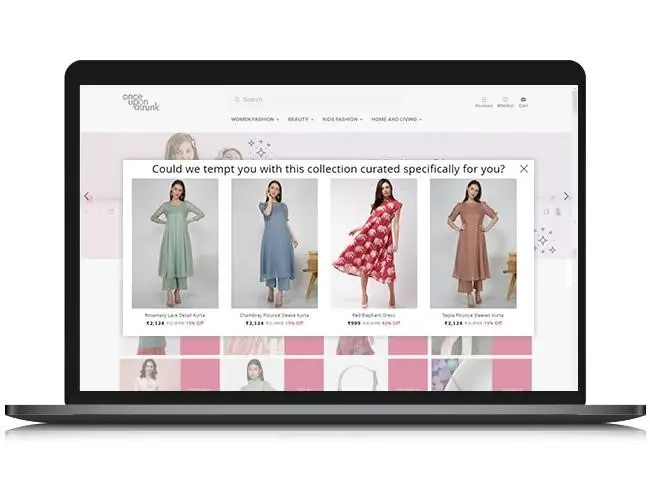
4. Reducing Drop-Offs With Personalized Nudges
Cart abandonment happens. But AI agents can intervene with personalized nudges at exactly the right moment. Not generic “you left something in your cart” messages. Targeted interventions based on why this specific person hesitated.
Maybe it’s price sensitivity. Maybe it’s uncertainty about sizing. Maybe they just got distracted. The AI figures it out and responds accordingly, reducing funnel leakage.
5. Search Personalization for Conversion Intent
When someone searches on your site, AI agents personalize the ranking based on their affinity and purchase history. Someone who always buys premium products sees those first. Someone price-sensitive sees deals.
This reduces friction in discovery and creates a faster path to purchase.
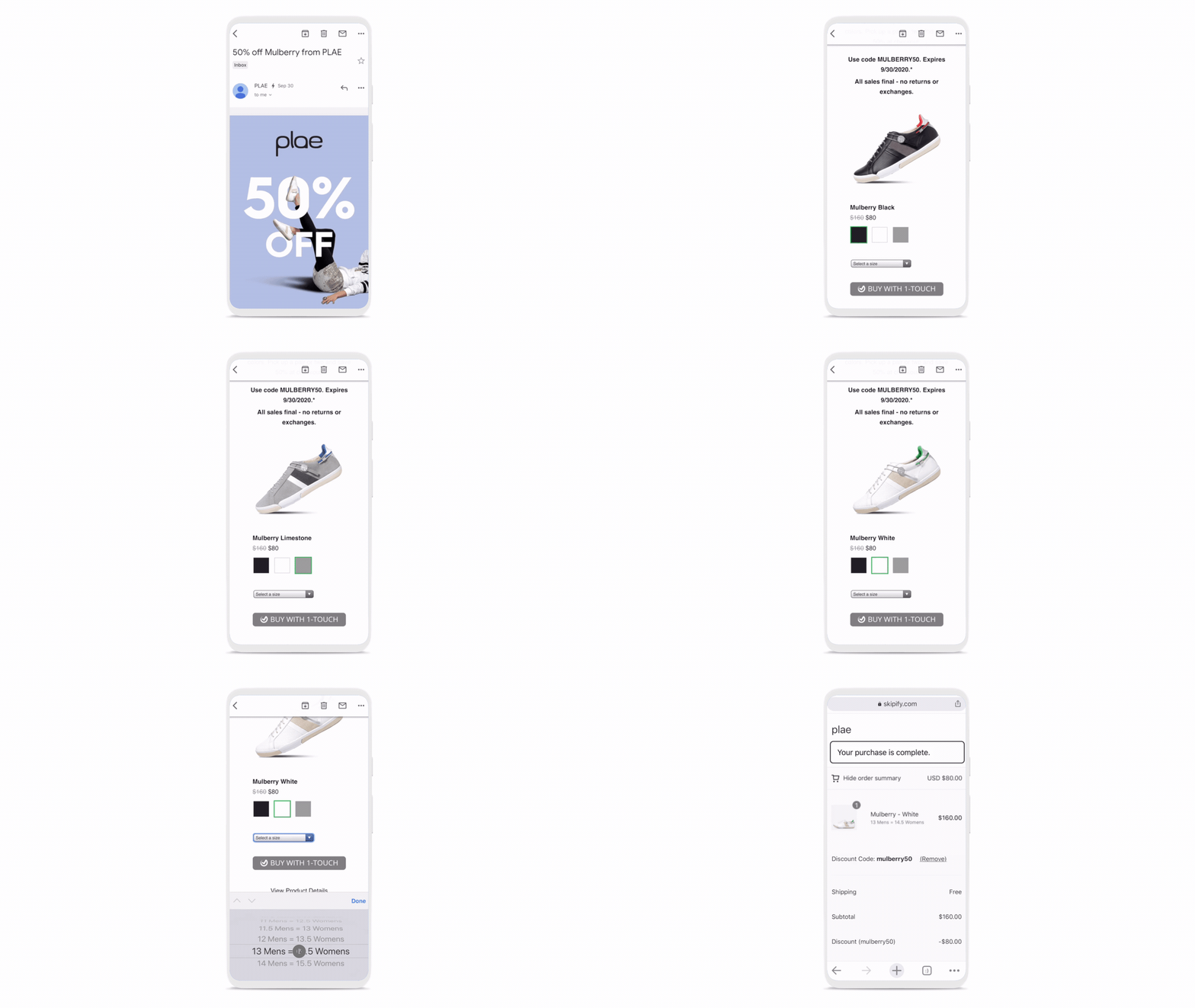
6. AMP & Micro-Experiences Inside Inbox (Email, SMS, WhatsApp)
Why force customers to leave their inbox to convert? AI agents create interactive experiences directly inside messages. Add to cart within an email. Browse products in a WhatsApp chat. Complete checkout without opening a browser.
You convert customers without redirect friction. Every extra click is an opportunity to lose them. Eliminate those clicks.
Attention Retention as the New CRO Multiplier
Here’s something most CRO experts miss: holding attention actually improves conversion efficiency across everything else you do.
Why Holding Attention Improves Conversion Efficiency
Active audiences convert at higher rates. They’re engaged, they remember your brand, and they’re primed to respond when the right offer comes along. Plus, you spend less on reactivation campaigns when people never disengage in the first place.
Real-Time Engagement Monitoring
AI agents identify declining attention before it becomes a problem. When someone’s engagement patterns change, the system triggers proactive recovery efforts. Maybe a special offer. Maybe a different channel. Maybe a break from messaging entirely.
The point is to maintain the relationship, not spam people back into engagement.
Owned Channels as Conversion Engines
WhatsApp, email, push notifications, and SMS become true conversion channels when powered by agentic marketing. Not just awareness channels. Not just reminder channels. Actual places where purchases happen because the experience is personalized and frictionless.
A streaming platform like Netflix uses owned channels such as push notifications, in-app messages, and email to drive user engagement and renewals.
Traditional approach:
Marketing teams create segmented campaigns (e.g., inactive users, genre-based recommendations) and schedule messages manually. Optimization depends on periodic A/B testing and historical performance, often missing real-time user intent.
Agentic marketing approach:
AI agents continuously monitor viewing behavior, engagement patterns, and churn signals. If a user stops watching mid-series, the system autonomously triggers personalized nudges across app, email, or push with tailored recommendations, optimal timing, and messaging. It also adapts frequency and channel selection dynamically.
Campaigns become real-time, behavior-driven, and self-optimizing, improving engagement, retention, and conversion without requiring manual intervention or fixed campaign cycles. That’s the power of agentic marketing.
Metrics that matter for Agentic Marketing Conversion Rate Optimization
You can’t improve what you don’t measure. But you need to measure the right things.
1. Conversion Velocity
How long does it take someone to make a purchase decision? Time-to-purchase and assisted conversion rate show you if your AI agents are creating efficient paths to conversion or if customers are wandering.
Faster velocity usually means better personalization.
2. Real Reach Rate
Track the percentage of your database that’s actively engaged in the last 90 days. This is your true addressable audience. Optimize this number first, and all your other metrics improve.
3. Engagement Depth Metrics
Click-to-open ratio tells you if your content resonates. Session duration and interaction frequency tell you if people are genuinely interested or just passively scrolling.
These metrics predict conversion better than list size ever will.
4. Incremental Revenue Lift
Compare your results to what static automation would have delivered. This shows you the actual business impact of agentic marketing, not just correlation with good market conditions.
Organization Shift with Agentic Marketing
Implementing agentic marketing changes how different roles think about growth.
1. CMOs: Predictable Revenue From Owned Audiences
You can finally forecast owned channel revenue with confidence. When AI agents are continuously optimizing, performance becomes more consistent and scalable.
2. CROs: Conversion Gains Without Rising CAC
Improve conversion rates without spending more on acquisition. You’re getting more from the customers you already have, which directly improves unit economics.
3. COOs: Scalable Optimization Without Team Expansion
Your team doesn’t need to manually build and test hundreds of segments and campaigns. The AI agents handle execution while your people focus on strategy and creative direction.
4. Retention Leaders: Continuous Optimization vs Campaign Cycles
Stop thinking in campaign cycles. Start thinking in continuous improvement. Agentic systems don’t take breaks between campaigns. They’re always learning and always optimizing.
Common CRO Mistakes
Let’s talk about what you can stop worrying about when AI agents handle optimization.
Over-focusing on landing pages. Yes, landing page design matters. But if the wrong people are landing there, or if people aren’t landing there at all, page optimization has limited impact.
Ignoring inactive users. Ghost databases drag down every metric. Agentic systems identify and re-engage declining users before they fully disengage.
Running isolated channel experiments. Cross-channel orchestration happens automatically. No more wondering if your email and SMS campaigns are cannibalizing each other.
Measuring vanity conversion metrics. Total conversions sound impressive until you realize half of them would have happened anyway. Incremental lift is what matters, and AI agents measure and optimize for it.
Final Take
Here’s the truth most CRO experts don’t want to admit: you can’t convert customers who aren’t listening.
Attention leak is the real conversion killer. You can optimize every pixel of your checkout flow, but if your audience isn’t opening your messages, none of that matters.
Agentic marketing solves this by doing three things simultaneously. It protects attention through intelligent engagement management. It personalizes in real time based on actual behavior, not outdated segments. And it optimizes continuously, learning from every interaction.
The brands closing higher sales revenue right now aren’t just improving conversion rates. They’re expanding the pool of customers who are still paying attention. They’re using agentic marketing for CRO to maintain active, engaged audiences while traditional competitors watch their real reach shrink.
That’s the difference between incremental improvement and fundamental transformation.
Stop optimizing for people who aren’t there. Start with attention. The conversions will follow.