




I was sitting with a founder friend. Huge ecommerce brand.
Massive monthly revenue. A machine, really.
But he didn’t look victorious.
He turned his laptop toward me. Revenue charts everywhere.
All pointing down.
Then he whispered something I hear too often:
“Man… I think email is dead.”
I didn’t interrupt. I let him speak.
“We sent our best campaigns, the biggest sale.
Our strongest discounts.
Everything. But our revenues are flat.”
He sighed.
“Open rates tanking.
Clicks vanishing.
Revenue evaporating.
What else do you call it?”
I didn’t jump in.
Because he wasn’t wrong.
He was just misdiagnosing the problem.
Email isn’t dead, I said, but something else is.
He frowned.
What? The list? The channel? Customer interest?
So I asked him to open Gmail.
We scrolled together.
Slowly, past rows of emails.
Past brands doing similar things.
He wasn’t anywhere near the top.
His frustration exploded.
You see? Our emails aren’t showing. This channel is not working for us.
I shook my head.
No, the channel is fine. But your visibility is dying.
Then I showed him the real problem.
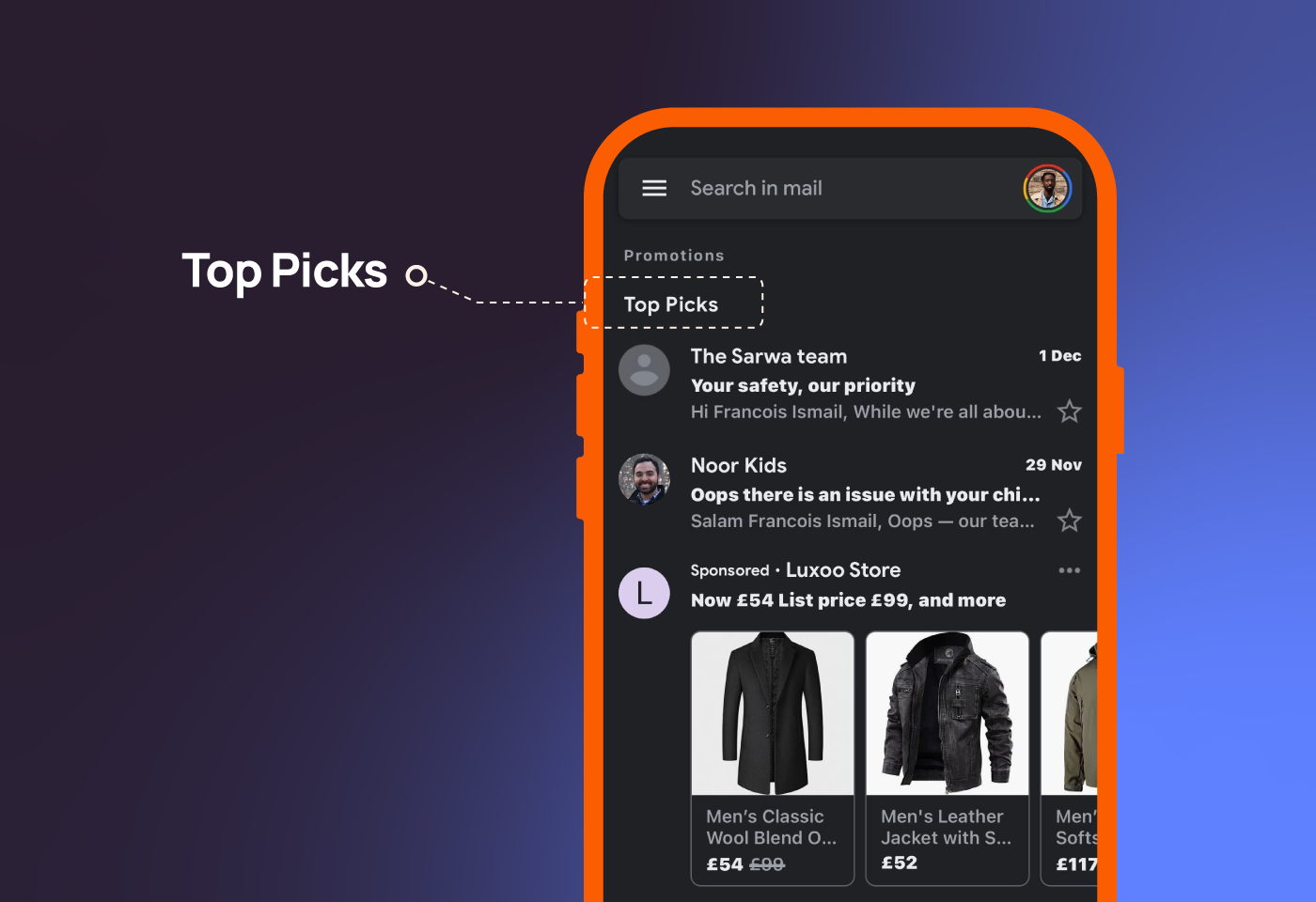
At the top of the Promotions tab,
A small curated row.
Clean thumbnails.
Crisp offers.
Polished designs.
Top Picks for You.
Five emails. Not his.
His email wasn’t failing. It was buried. His customers weren’t rejecting him.
They simply weren’t seeing him.
He wasn’t losing subscribers. He was losing placement.
That moment changed him.
It changes every founder I show it to. Because suddenly they see the truth:
Email isn’t dying. Inbox visibility is.
And Gmail’s “Top Picks” is now the gatekeeper.
Gmail re-ranks you before your revenue drops. The brands that understand this will dominate inbox attention in 2026.
In the webinar Seen > Sent: How Gmail Decides Which Brands Get Attention in 2026, we unpack how Gmail decides who gets seen – and how to engineer visibility before performance declines.
Limited seats available. Register now.
Gmail’s Top Picks: The New Inbox Game Marketers Must Win
Gmail sees inbox fatigue daily. People open fewer promos.
They skim more. They delete faster.
Attention is shrinking.
It began surfacing emails that people actually want to see.
Deal hunters get deals. Loyal shoppers get favourites.
News lovers get updates. Routine ignorers get… less email.
Top Picks is Gmail saying: “Let me help you find what matters.”
For marketers, this isn’t doom. It’s an opportunity.
A new channel upgrade.
A new distribution advantage.
Because with Top Picks, Gmail now asks:
- Who sends good stuff consistently > recommends the right products.
- Who creates relevant content > uses browsing, purchase, and category signals.
- Who respects user behavior > segments intelligently and controls frequency.
- Who earns engagement naturally > opens and clicks driven by value.
And those senders win prime placement.
Every single day.
So What Exactly Is Gmail’s Top Picks?
Inside the Promotions tab, Gmail has created a premium shelf.
A spotlight row.
A high-traffic zone where only top-performing brands appear.
These emails aren’t always the newest.
They aren’t always the flashiest.
They aren’t even always the latest campaign.
They are the most relevant.
The most engaged.
The most personalized.
Gmail’s new inbox logic is brutally simple:
- Relevant emails rise.
- Ignored emails sink.
- Personalized content wins.
- Time-sensitive offers get surfaced.
- Strong engagement signals boost ranking.
- Clean lists beat bloated lists.
Not theories.
Not hacks.
Not guesses.
This is behavior-first design.
And Gmail is betting big on it.
So the message to marketers is clear:
Stop chasing volume.
Start chasing engagement.
Because inside Gmail’s new world:
Engagement = Visibility.
Visibility = Revenue.And in this new inbox economy,
visibility is everything.
The 5 Winning Strategies We Used to Break Into Gmail’s Top Picks
To help my friend rise back into visibility,
I shared the five strategies that winning brands use today.
And I’m sharing them here so you can apply them too.
These aren’t hacks. These are behavior-driven fundamentals.
1. Write emails people actually want to read.
Short lines.
Clear value.
Useful content.
Examples that consistently lift engagement:
– Weekly skincare or wellness routines
– Personalised fashion picks
– Real-time price drop alerts
– Cart-based product recommendations
No noise.
No filler.
Relevance. Every time.
And here’s why relevance matters even more now:
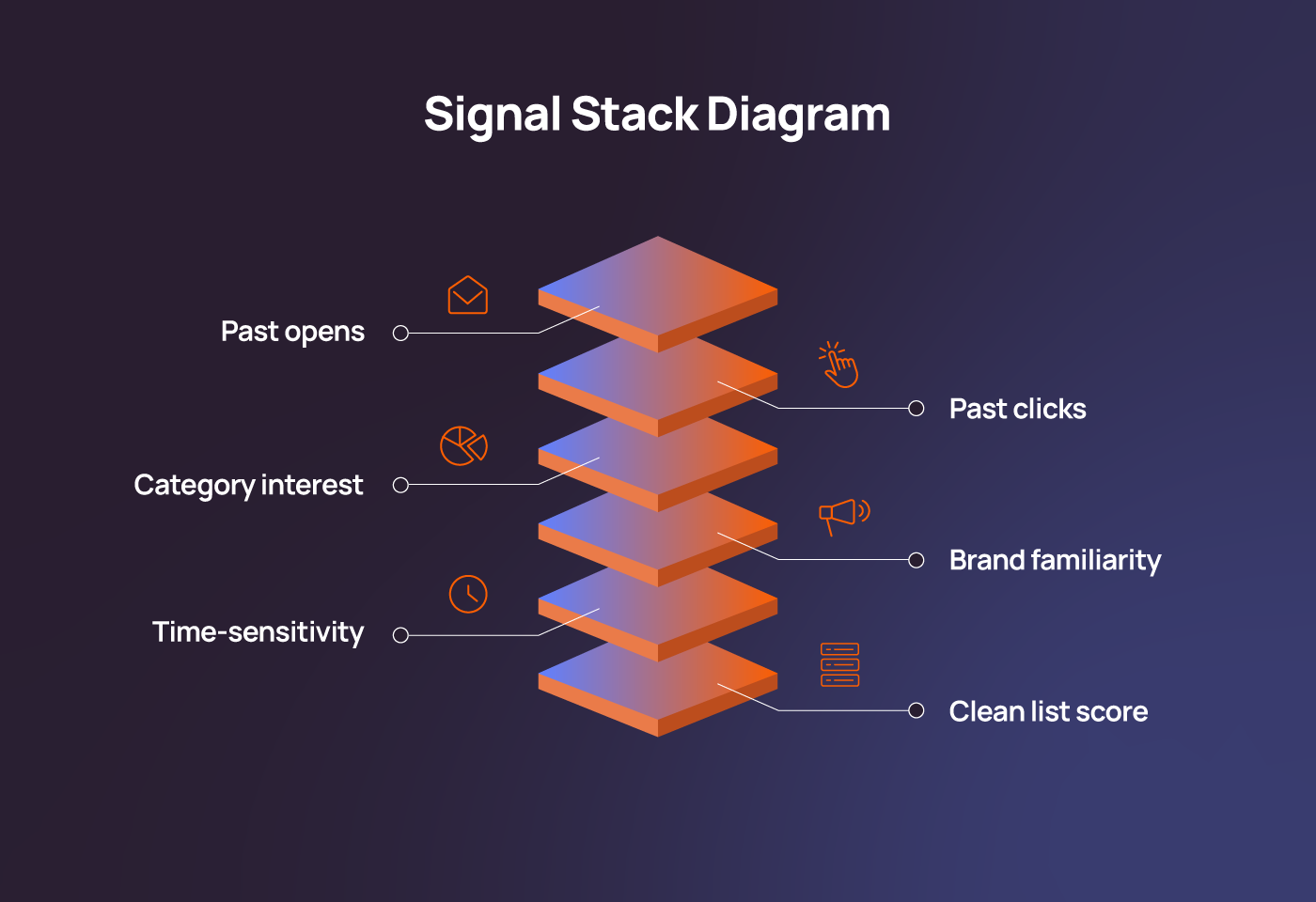
Gmail’s Promotions tab now defaults to Most Relevant, not Most Recent.
Your emails are ranked by:
- Past opens
- Past clicks
- Brand familiarity
- Category interest
So if your content isn’t consistently valuable, you won’t even show up.
Your emails don’t lose because they’re bad.
They lose because something more relevant beats them.
Winning Strategy #1 isn’t just about writing well.
It’s about earning visibility in a relevance-first inbox
2. Stop mailing your entire list, sunset non-engagers.
Winning brands don’t chase volume. They protect engagement.
The principle is simple:
Sunset subscribers who haven’t engaged in 6 months.
Move them to low-frequency flows.
Run a final reactivation sequence.
And stop mailing them if they remain inactive.
Clean lists outperform bloated lists in deliverability, engagement, and Gmail ranking.
3. Use genuine urgency, not manufactured pressure.
Gmail boosts clear, time-sensitive signals. Users respond to authentic deadlines.
Examples that consistently rise in Top Picks:
- 48 hours left.
- Ends tonight.
- Last items remaining.
Clarity performs. Honesty converts.
4. Design for Gmail’s scanning behavior.
Gmail reads structure before users do.
That means:
- Clean HTML.
- Clear sections.
- Readable hierarchy.
- Badges and thumbnails that pop.
If Gmail can easily interpret your layout, your chances of rising increase instantly.
Clean design = higher placement.
5. Personalise intelligently, not intrusively.
Modern inboxes reward contextual relevance.
Not creepy over-personalization.
Not gimmicks.
Simple, powerful examples:
- You viewed this.
- You saved this item.
- You might like this style.
These signals increase engagement. Engagement increases ranking. And ranking unlocks visibility.
6. Use Gmail Annotations, the simplest way to get noticed.
Most marketers think annotations are technical.
They’re not.
They’re simply extra hints you give Gmail so it knows how to feature your email.
Annotations tell Gmail:
- This is a deal.
- Here’s the image to show.
- Here’s the discount.
- Here’s when the offer ends.
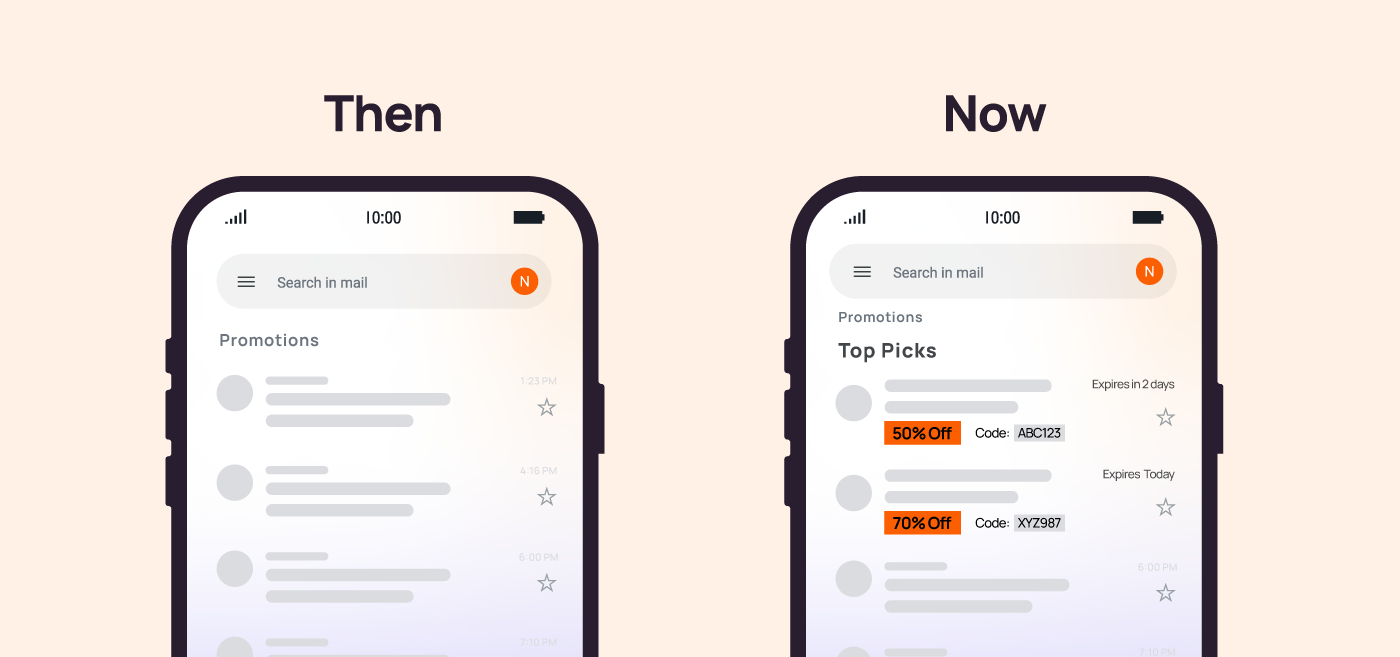
When Gmail understands your offer, it can highlight your email visually inside the Promotions tab.
Annotations help Gmail:
- Recognize your offer
So your discount or product doesn’t get ignored. - Display your content visually
Promo image, badge, expiry date, sometimes even before someone opens the email. - Prioritize you over generic senders
Structured = useful.
Useful = relevant.
Relevant = higher placement.
If your email follows annotation-friendly standards (especially image sizes + offer fields),
Gmail is significantly more likely to surface it in Promo Cards, Top Picks,
and Most Relevant rankings.
Annotations don’t replace good content.
They amplify good content.
What happened to my founder friend next
He listened and adapted. He rebuilt his campaign flow.
He cleaned his list. He improved his design.
He personalised his offers and added urgency and clarity.
Two weeks later his brand appeared in Top Picks.
Open rates doubled. Revenue rebounded.
Confidence restored.
Not because email was revived. But because visibility returned.
The Final Truth
Email isn’t dead, it’s evolving.
And Gmail is curating it.
Gmail’s Top Picks isn’t a tactic.
It’s a mindset shift.
If you want to:
- Understand how Gmail ranks promotional emails
- Consistently show up in Top Picks
- Build a performance-obsessed email engine
- Turn relevance into predictable revenue
It helps to learn from people who do this daily.
If you’d like to speak with an expert or explore how to win the Promotions tab the right way,
Let’s help you move from sending emails to earning inbox visibility.

