





Marketing is standing at one of those rare moments where everything changes. For years, rising ad costs, shrinking returns, and what many now call “AdWaste” — money spent reacquiring customers brands already had — have chipped away at growth. That inefficiency has ballooned into a $500 billion challenge.
And yet, a new force is emerging: agentic AI. Unlike the “AI-powered tools” of yesterday, agentic systems don’t just analyze. They act. They plan. They optimize. They learn and adapt on their own. These aren’t add-ons to marketing. They’re AI-native, designed to reshape it entirely.
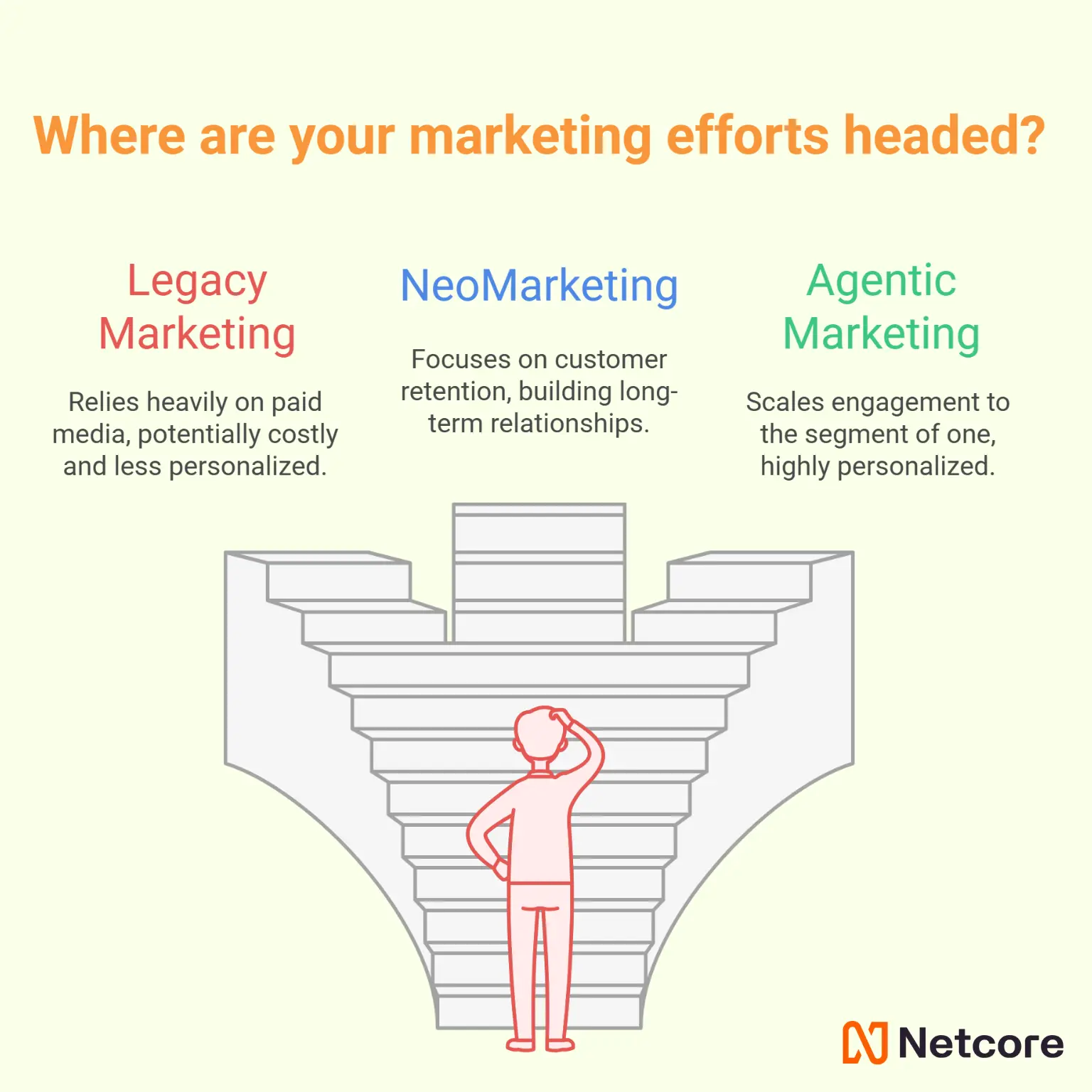
The future of marketing can be understood through three eras: Legacy Marketing (declining), NeoMarketing (transitional), and Agentic Marketing (the future). But first, let’s understand what agentic AI is and how it differs from AI agent.
What Is Agentic AI?
Agentic AI goes beyond tools and dashboards. It’s the broader ecosystem of systems, platforms, and practices that enable autonomous agents to work.
Think of an AI agent as a program that’s plugged into a business environment with a clear boundary. It doesn’t just process data — it makes decisions, takes action, and moves toward specific goals. Sometimes it works hand-in-hand with humans; other times, it operates on its own within defined guardrails.
Unless you’re drawing a strict technical line, the terms agentic AI and AI agents are often used interchangeably.
A Longer History Than You Think
Agentic systems aren’t new. Businesses have been using rule-based or non-AI versions of them for years. What’s changed is the intelligence inside the agent.
Recent breakthroughs — in language models, reasoning, and adaptive learning — have supercharged what agentic AI can do. Agents today don’t just follow instructions; they adapt, improve, and collaborate, unlocking new possibilities for marketing, commerce, and customer engagement.
The Evolution of AI in Marketing
Legacy Marketing: The End of an Era
From 2000 to 2024, marketing was defined by dependence on paid media. Brands spent up to 30% of their revenue on platforms like Google and Meta, chasing the same customers again and again.
The result was a cycle of diminishing returns:
- Nearly 70% of performance budgets are lost to reacquisition.
- Escalating customer acquisition costs.
- A “spray and pray” approach that buried consumers in irrelevant messages.
- Declining profits as nine out of ten brand messages were ignored.
In short: a model on its last legs.
NeoMarketing: The Bridge to What’s Next
NeoMarketing offered the first real shift. Instead of reacquisition, the focus turned to retention. Instead of scattered tools, unified platforms. Instead of paying endlessly for attention, build owned attention.
At the core was the Best-Rest-Test-Next (BRTN) model:
The Best-Rest-Test-Next (BRTN) framework represents a radical departure from traditional demographic segmentation by categorizing customers based on their actual engagement patterns and lifetime value (LTV) contribution—aligning marketing strategy with economic reality.
- The top 20% of customers drive 60% of revenue.
- They’re three times more valuable than mid-tier customers.
- Strategies must reflect these differences.
With this, AI agents began working collectively. Progency solves the persistent “Who Will Do It?” problem that plagues martech adoption—combining proprietary platform capabilities with specialist expertise and AI acceleration in a performance-based model that delivers outcomes, not just software. Progency models shifted focus to outcomes, while networks like NeoN helped cut down AdWaste. NeoN, an alternative email ad network powered by authenticated identity, creates a direct brand-to-brand marketplace that slashes reacquisition costs while eliminating the platform “tax” currently claimed by Google and Meta. The promise? Adding up to 20 points to profit margins while reclaiming wasted spend.
Agentic Marketing: The Leap Forward
The real transformation lies in Agentic Marketing — where AI agents evolve from orchestrated tools into self-organizing ecosystems.
These systems go beyond simple campaigns. Built on the SONIC framework (Segmentation, Orchestration, NeoN networks, Integration, and Commerce), they leverage fundamental psychological drivers to create genuine, lasting engagement. The technology constantly refines itself, scaling engagement down to the level of an individual’s ‘customer twin.’
The endgame is a new kind of advantage: Profipoly — a profit monopoly created by superior customer relationship technology.
What Are Agentic Systems in Marketing?
Agentic systems are autonomous, goal-driven marketing agents that:
- Act with minimal human input.
- Learn recursively with every interaction.
- Collaborate as an ecosystem, not as disconnected tools.
- Adapt in real time to customer signals.
The marketer’s role doesn’t disappear. It shifts — from operator to orchestrator. Humans set the vision and strategy; agents execute at scale.
Why Marketing Needs Agentic Systems
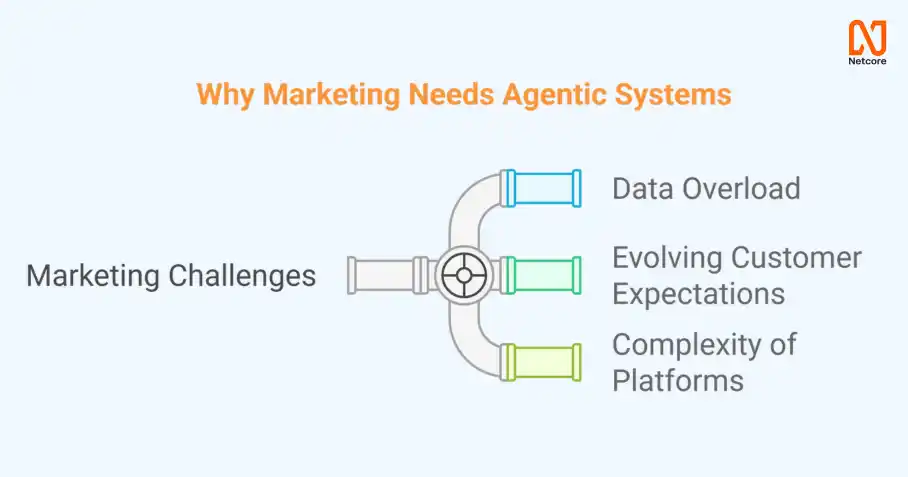
The urgency for the need of agentic systems in marketing is clear:
- Data overload: Millions of signals per second are beyond human capacity.
- Customer expectations: Shoppers want relevance, immediacy, and personalization.
- Channel complexity: Managing campaigns across email, web, messaging, and marketplaces has outgrown human bandwidth.
Agentic systems meet these challenges with real-time, personalized, self-optimizing engagement.
The Four A’s of Agentic Marketing
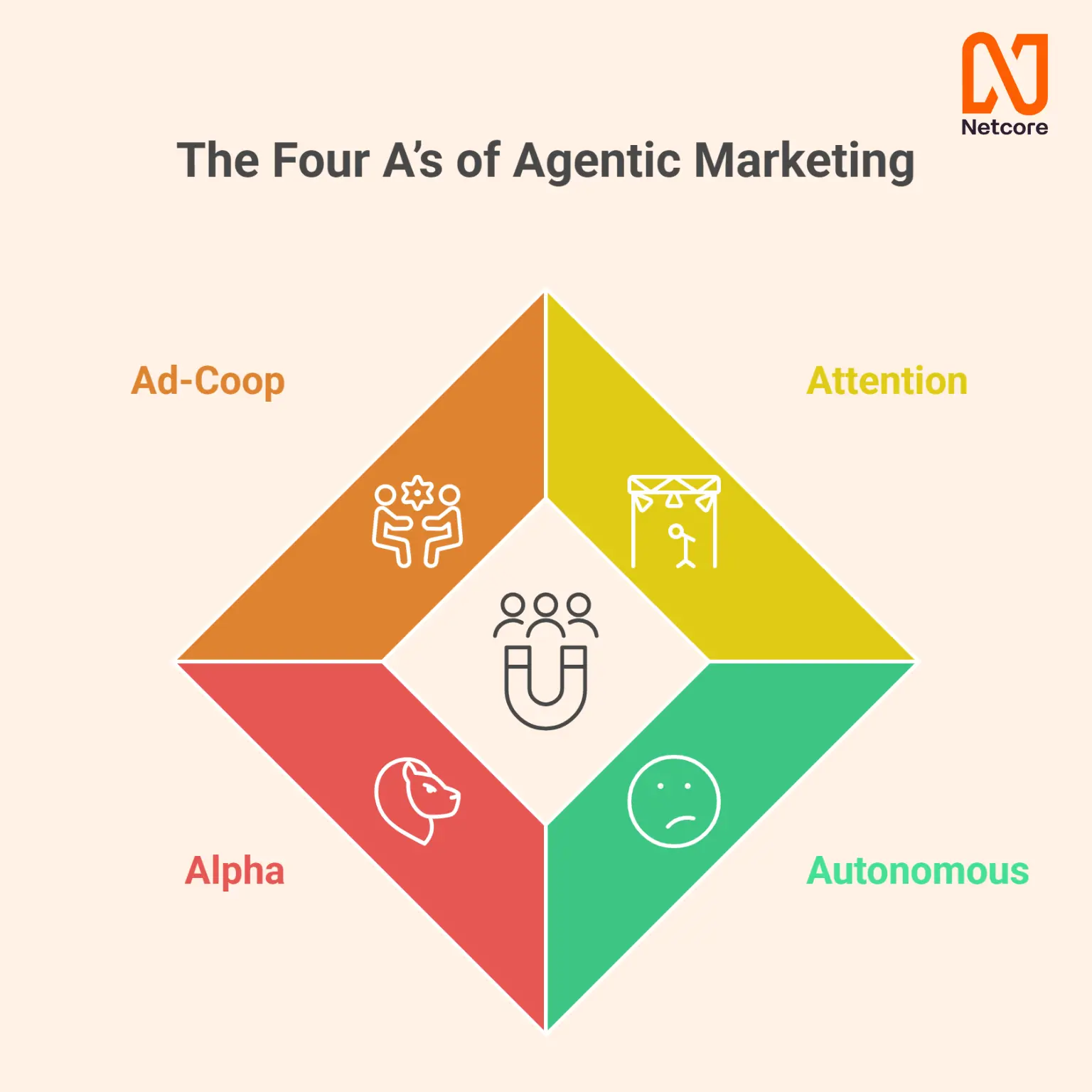
Four innovations define the new model:
1. Attention – The Core Moat
In an attention-scarce world, capturing daily engagement is critical. The Brand Daily — evolving through interactive inbox formats like AMPlets — is the next frontier. Tomorrow’s version? My Brand Daily: a personalized engagement kernel that captures micro-moments every day.
2. Autonomous – Emergent Intelligence
Specialized AI agents evolve into emergent superintelligence. Customer twins — “a department of one for a segment of one” — anticipate needs and orchestrate journeys in real time.
3. Alpha – Self-Optimizing Systems
Marketing shifts to outcome-based execution. Brands pay for results, not flat fees. Over time, continuous learning compounds performance, boosting conversions and ROI.
4. Ad-Coop – Predictive Networks
From cooperative networks to predictive systems powered by customer twins, brands move into anticipatory marketing. Instead of reacting, they predict needs before they’re expressed.
Together, these 4 A’s create a system of compounding advantage.
How Agentic Systems Play Out in Practice
Campaign Orchestration
Instead of manually setting up campaigns, agentic systems design, test, and optimize them in real time. For example, a retail brand like Sephora can run thousands of micro-campaigns across email, push notifications, and in-app channels simultaneously — each optimized by AI agents that decide timing, creative, and audience automatically. The result: less human intervention, more continuous optimization.
Personalized Journeys
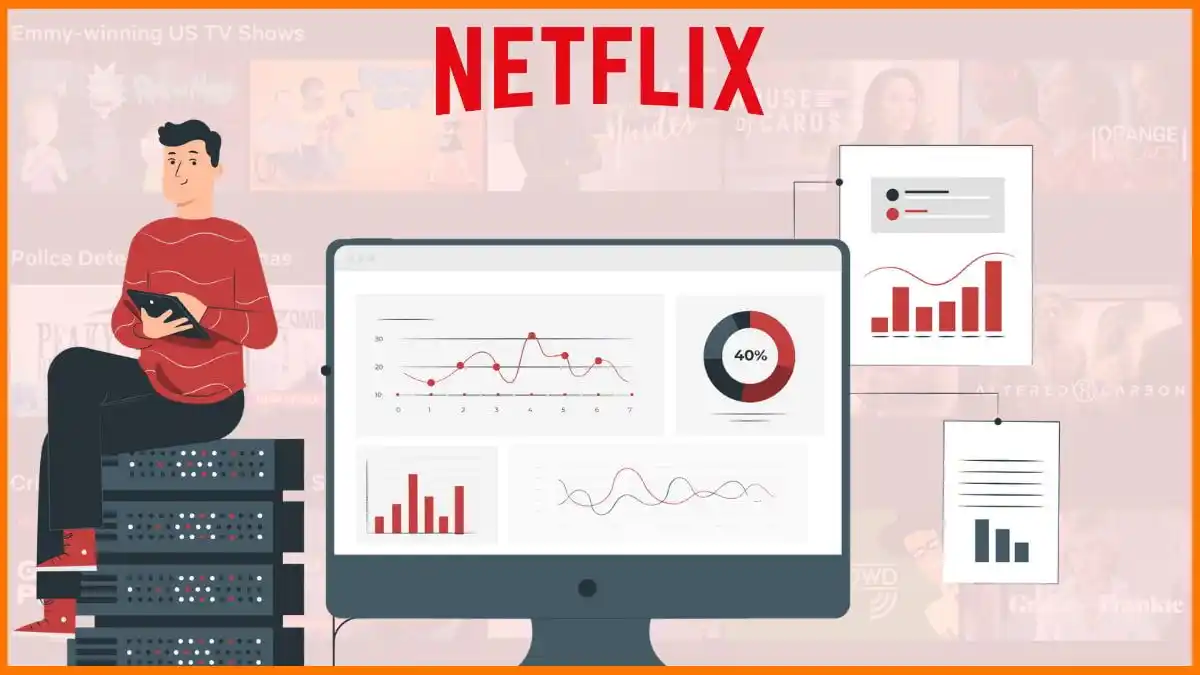
Every customer’s experience becomes unique. Netflix pioneered this with recommendation engines that create individualized “content journeys.” Read here how they actually do it. In marketing, Nike uses similar personalization in its app — tailoring product drops, content, and offers to a customer’s browsing and purchase behavior. Instead of static drip campaigns, agentic systems adjust in real time, ensuring no two customer paths look the same.
Predictive Engagement
Agentic systems can spot churn before it happens. For instance, Spotify identifies when users might disengage and nudges them with personalized playlists or offers. In ecommerce, a platform like Amazon predicts intent signals — if a user abandons a cart, the system doesn’t just send a generic reminder but dynamically adjusts messaging based on product category, price sensitivity, and historical behavior.
Commerce Integration
Shopping agents close the loop by handling sales directly. Instacart and DoorDash already deploy AI-powered agents to suggest add-on items (“complete your meal” or “don’t forget milk”). Read the detailed case study here. Similarly, Zalando uses AI to automatically recover abandoned carts, recommend complementary products, and process checkout without additional steps. For brands, this means higher basket sizes and more seamless customer experiences.
For ecommerce brands, this all adds up to repeat purchases, higher lifetime value, and less dependency on expensive paid media.
The Benefits of Agentic Marketing
- Efficiency: A consumer electronics brand like Samsung saves hundreds of hours by automating global campaign orchestration — freeing teams to focus on creative strategy instead of execution.
- Effectiveness: Starbucks’ Deep Brew AI delivers hyper-personalized offers, like suggesting a customer’s favorite drink at their usual order time. The AI Report has created a detailed case study with studying innovation & the business outcomes with Brew AI initiative of Starbucks.
- Scalability: Large marketplaces like Flipkart or Amazon manage millions of individual journeys — from product discovery to checkout — through AI-driven recommendations.
- Profitability: Subscription companies like Adobe or Spotify use AI to reduce churn, proving that marketing can be a profit center, not just a cost.
Challenges and Guardrails
Like any transformative technology, agentic systems come with responsibilities:
- Avoiding over-reliance: Even the most advanced AI campaigns need human creativity to connect emotionally. Coca-Cola’s AI-driven “Create Real Magic” campaign still leaned on human storytelling to resonate with audiences.
- Privacy and compliance: Regulations like GDPR and India’s DPDP Act make data governance critical. Brands like Apple have positioned privacy as a feature, showing how trust can be a differentiator.
- Transparency: Customers want to know why they’re seeing an offer. Explaining AI-driven decisions builds credibility.
- Preserving creativity: AI may generate campaigns, but big ideas — like Dove’s “Real Beauty” or Nike’s “Just Do It” — still require human imagination.
The leaders will be those who fuse AI-native execution with human oversight, creativity, and governance.
Preparing for the AI-Native Future
Marketers don’t need to overhaul everything overnight. Instead, they can start with pragmatic steps:
- Audit data readiness: Retailers like Target invested early in first-party data systems to prepare for the cookie-less world.
- Experiment with AI agents: Ecommerce brands test AI-powered segmentation and personalization first — a low-risk entry point.
- Upskill teams: Companies like Unilever run internal “AI literacy” programs to ensure marketers understand the technology.
- Reframe KPIs: Subscription businesses like Netflix measure success not just in sign-ups but in lifetime value, retention, and engagement lift.
Agentic systems are not a “future state.” They’re here now. The brands already experimenting will own the next era.
Conclusion
Marketing has always evolved — from print to digital, from digital to data-driven. The next leap is here: from data-driven to AI-native.
Agentic systems aren’t just inevitable. They’re unstoppable. The question isn’t if marketers will adopt them, but when — and whether they’ll be among the early leaders building Profipoly, or stuck in the fading loop of Legacy Marketing.
The future is agentic. The time to act is now.
Agentic AI, Applied: Netcore’s Execution Stack
Marketers don’t need yet another dashboard. They need outcomes. Netcore’s Agentic AI stack turns the ideas in this article into action — autonomously executing high-precision marketing tasks at scale.
- Right-time delivery, per person: The AI identifies the best send times for every individual, continuously learning from behavior signals.
- Human-grade creative, at machine speed: It generates text and images tailored to each user and context.
- One-to-one relevance, beyond segments: It builds 50× deeper audience micro-segments, then personalizes experiences in real time.
- Operational velocity, unlocked: Teams see up to 25× faster campaign launches with automated setup, testing, and optimization.
The result? Exponential improvements in conversion, at roughly 10% of the usual effort. This is Agentic Marketing moving from slideware to system: precise, personal, and perpetually optimizing.
See how it works → Book a walkthrough

